[00:00:00] Speaker A: Hello.
[00:00:30] Speaker B: Foreign.
[00:00:37] Speaker A: It's every other Sunday again and you're listening to Sustainability Now, a bi weekly case good radio show focused on environment, sustainability and social justice in the Monterey Bay region, California and the world. I'm your host, Ronnie Lipschitz. Who knew that ponds make music? To the eyes and ears, they seem silent and tranquil, except at night when maybe choruses of frogs sing serenade listeners. But ponds are much noisier than that. You have to be very quiet and have the right equipment to really hear what's going on. And there is a lot going on. Both the critters and the plants speak out, some quite loudly indeed. Nature is full of sounds, many of them musical. It's entirely possible that nature sounds were the original sources for human music.
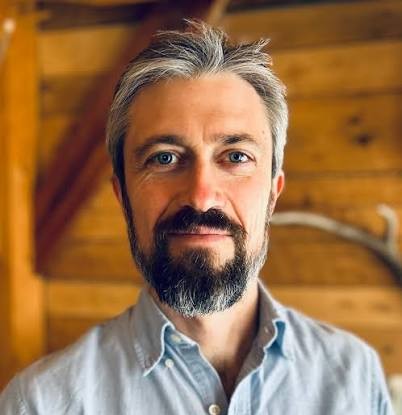
My guest today is Dr. David Rothenberg, scholar, author, composer, and interspecies musician.
He is distinguished professor of Philosophy and Music at the New Jersey Institute of Technology and studies records and accompanies animal sounds as music.
Rothenberg has released and published more than 40 books and jazz albums about the sounds of nature, including why Birds Sing Thousand Miles Song On Making Music With Whales and Bug Music, How Insects Gave Us Rhythm and Noise.
In some of these recordings, as we shall hear, he accompanies pond music with his own.
A number of his books and albums have been produced as films and documentaries, and he's given many public performances of his work in music. He's also a charge d' affaires with the Dolphin Embassy.
Rothenberg's most recent book is Secret Sounds of Ponds, in which reports the blurb on the back of the book. Rothenberg tosses a microphone into a pond and we read about an entirely new world, a realm of the unexpected and stirring rhythms and tones of some of the smallest and loudest creatures on earth.
And not only does the book include text both descriptive and philosophical and stunning photographs, there are also online recordings of sounds dredged up from each pond he studied, as we shall hear.
Professor David Rothenberg, welcome to Sustainability now.
[00:02:46] Speaker B: Thanks for inviting me.
[00:02:48] Speaker A: You know, I just want to start by saying that the Secret Sounds of Ponds, I think, is a remarkable and fascinating book.
And of course, I had never thought about this before, so when I read about it somewhere, I thought immediately, you have to look at that and listen to it.
Well, let's begin with an obvious question. How are animal sounds music? How do you define music? And why do animal sounds qualify?
[00:03:14] Speaker B: Well, you know, like many of us, I went to college and took classes where they tried to define things for us. And, and there was a standard definition of music that you got in music classes, which is music is organized sound, sound, or some of the theorists said music is humanly organized sound to make sure that, you know, not everyone was allowed to make it.
But even back then, I thought that was a pretty lame definition because there are a lot of organized sounds out there, like somebody drilling up the pavement outside your house, extremely organized. You make noise, and yet that is not generally considered music. But then you start to think about it. I realized listening to all kinds of things, Just about any sound has been considered music by somebody, Whether it's noise or silence or gestures or anything. And I seem to think, many years later, something is music. If someone tells you it is and say, consider this as music, consider this to be music. Consider architecture to be frozen music. Consider this incredibly unpleasant noise to be music. When someone says, this is music, they're asking you to take something in as a sonic event to appreciate it rather than to translate it. To, say what it means, to listen.
[00:04:35] Speaker A: More closely, I guess, right?
[00:04:36] Speaker B: To take it in. Like, consider this as music.
Close your eyes, listen to it, and just take it in. Don't try and figure out what it is.
And when this comes to understanding what animals are doing, it gets very interesting. Because if you think animals are talking and you don't know what they're talking about, you start to think things like, I wish I could translate that. I wish I could figure out what this dog is talking about, what it's saying to me. I wish I could figure out what this bird is talking about. What is it trying to tell me? But if you consider the sound to be musical, you don't ask those same questions. You say, hmm, let's just listen to those patterns of sound.
Are they not beautiful? Because music doesn't necessarily mean anything. It doesn't really refer to something very directly outside itself. Sure, it can be a language of emotions. Sure, it can be a song with words that's happy or sad. But take the words away, and the music is kind of about the music.
So, that being said, this is not really a new idea. There's plenty of sounds made by birds that people have always called bird songs in many human languages for tens of thousands of years.
So why is that? Why did we decide that's a song this bird is singing? Because it sounded musical to us in some ways, but also its function. You know, not all sounds bit by birds are considered songs. Some of them are calls, others are songs. The calls are supposed to be things with very specific meanings where you could maybe translate it like an Animal makes a sound like, I'm hungry. It's more like language. It's more like a call. It's a song. If they're kind of performing these patterns over and over again where the meaning is separate from the structure, it's immediately like a analytical, not emotional answer. But what does that mean? The meaning is separate from the structure. It means that, you know, a chickadee goes chickadee, chickadee, dee dee dee dee chickadee. That's not the chickadee song, that's a call.
We name the bird after that sound. Why is it a call? Because we say we. We think of it as having a specific meaning, like identifying. Here I am, I'm sort of indicating my presence. Where's the song of the chickadee? At least the black cap chickadee around here is just two notes.
So why is one the song the other the call? The songs are the ones usually sung by male birds to attract the attention of females and to defend their territory. But okay, the chickadee does that with do do.
How come the mockingbird has to sing for hours repeating all these different sounds constantly innovating, improvising, you know, remixing the sounds of other birds just to do the same thing the chickadee does in two notes. The function that's the same in both cases doesn't define the structure of what's. What's going on, if that makes any sense. Like it's about something else. What's it about? It's about itself, like music. It's about the structure that evolved, that it only evolved because, you know, by the chance directions of evolution or by those listening, the female birds just happen to like this. Why did just a peacock have to drag around his huge tail, can barely fly.
It's not very useful. It's not very efficient. It's not survival of the fittest. It's survival of the beautiful, the weird, the interesting. That's also going on in evolution. Stuff just evolves because it's cool, because it's weird, because it's fun. The female peacocks, called peahens, they just happen to like those feathers a lot. And so they just push this evolution in this extreme direction. It's called extreme sexual selection, extreme aesthetic selection. It's not very useful to be like a peacock. That's probably why they sound so frustrating when they're making noise. The call, not the song they're going to like.
They're so pissed off, they're so unhappy. Most of them never even get to mate because there's Such extreme sexual selection. So go figure. It's not, you know, this is the kind of sound that evolves in nature, that evolves through sexual selection, becomes like, like music. But there's also the music you find in nature, like in underwater ponds where you have some sexual selection type sounds going on there, but you also have a lot of other sounds that are about other things. And to hear it as music is something else. Different ways nature can be musical, the evolution of songs and sexual selection, and also just finding nature to be beautiful and aesthetic and not trying to be ha. Not being satisfied with just figuring out what everything means, but taking it all in, which is something that humans have always done and usually is recommended, makes you have a better day if you pay attention to that kind of stuff.
[00:09:27] Speaker A: I'm sure our listeners though, are wondering how it is you ended up in the department of philosophy at the New Jersey Institute of Technology.
[00:09:35] Speaker B: You know, I agree with Paul Feyerabend, the famous professor at UC Berkeley. He said, I did it for the money.
But actually, that being said, what is philosophy? Philosophy is another thing that's hard to define. It's asking questions that you can't really answer. So certainly music is full of those.
I was always as a little kid, interested in nature, first and foremost, wandering in the woods and talking to myself and listening to things and being kind of more oriented towards plants and animals than people.
When I got older, I started playing music and I liked playing, I liked improvising, I was playing jazz. It also got me more friends. I could hang out with the cool kids.
They were playing rock and jazz and fusion in the late 1970s. But also I thought there were more important things to do, like saving the planet. So I was really interested in environmental things and ecology. I went to this hippie summer camp in Vermont, the Farm and Wilderness camps, which are famously full of like naked pre teenagers running around in the woods connecting to nature. It was very healthy thing to do. I think coming back to suburban Connecticut was a lot more boring than these years at summer camp then. So I went to college. You know, I was kind of good in math and science. That sounded kind of practical, but I really wanted to play odd music. And I grew up in Connecticut and there's a musician there who played music. He played jazz with wolves and whales and eagles named Paul Winter, who's 85 years old now. So Paul Winter lived pretty close to me. And I heard about this guy, like, this sounds fun, I should go meet him. So I met him and decided maybe I want to do something like that.
And I said, I want to join this band, the Paul Winter Consort. And the people in the band says, you do not want to join this band. Start your own, do your own thing. Believe me, you don't want to join. Do your own thing. So then when I went to college, I thought I'd study environmental sciences, things like that. I went to Harvard, But I found most people studying science were very pragmatic.
The students were. The professors were great people like E.O. wilson and Stephen Jay Gould. The students all wanted to get ahead in life, go into biotech or medicine. And I kind of wanted to explore. The professors were more exploratory.
But I also was quite arrogant. I always thought I knew just what I wanted to do and it had to be something no one else was doing. So I kind of drifted into this in between music and nature stuff. Although I'd have to say I didn't quite start doing things Paul Winter was doing until decades later.
In between, I went and worked for environmental magazines like the Ecologist in England, alternative environmental publication. And that's where I learned about the environmental philosopher Arnines.
He was a philosopher who was. Who used his.
Who quit teaching philosophy to kind of save the earth on the belief that, you know, nature mattered more than people. And he would chain himself to rocks and protest. It sounded kind of cool. Maybe I'll do something like that. Study philosophy and chain myself to rocks and protest the damming of rivers and turning off of waterfalls. And then I spent a few years, like working with him.
I went to Norway, learned Norwegian trans books all the while. And the more philosophical it got, the less interested. I said, I'm just going to go back home, be a musician because that's what I'm good at and you might as well do what you're good at. But then Arnaness said, oh, you're too deep in. You can't stop now. And so I said, okay, I'll just apply to philosophy graduate schools. And they all rejected me because I'd never taken a single undergraduate philosophy class. Why would they accept me in graduate school? Except for one Boston University, Robert S. Cone, who is a kind of somewhat radical philosopher of science. He said, what? You've been working with Arnones? Well, I was your age. He was my hero.
You can come to my department.
[00:13:23] Speaker A: And so I did, for the benefit of our listeners. Arne S. Was one of the progenitors of deep ecology.
[00:13:29] Speaker B: And yes, and I think most people.
[00:13:30] Speaker A: Know him for that.
[00:13:32] Speaker B: And are you in Santa Cruz? Where are you?
[00:13:34] Speaker A: Oh, yeah, of course I'm in Santa Cruz.
[00:13:36] Speaker B: So Arnett taught at Santa Cruz a few years in a row and I visited him there and met some really good friends who were studying there with him.
So he has a real California and Santa Cruz connection. He loved going there. He loved the idea of a university right in the forest.
I went to grad school in philosophy critiquing from the beginning, critiquing Ardennes and deep ecology in my thesis where I said these people are too, they're too against technology. They're like knee jerk reacting against the modern world. And I wrote a thesis on philosophy of technology, saying technology at its best can bring us closer to nature, not farther away. And if you don't admit that you're not really understanding what it means to be a human being. I talked about technologies like telescopes and microscopes that bring you closer to the natural world, as well as musical instruments that enable you to express things you can express no other way. These are good technologies that connect us to the world. I wouldn't say this thesis is especially pragmatic or very developed in a political way, like it was somewhat naive politically, like I also felt deep ecology was. But it's more phenomenological and like most philosophy theses, it's very hard to read. It's published by University of California Press called Hands End Technology and the Limits of Nature. That was the Beginning of the 1990s, a long time ago.
So over the years since then I kind of got more into finding my true sense of self, which is more doing music and connecting to nature. But it's true. I have a job teaching in a humanities department at an engineering school, so it's wider than philosophy in our department. It's a little known secret those of you who are thinking of, you know, if there's still people getting PhDs in the humanities looking for work. It's a really good thing to teach at an engineering school at a technical university because they let you do anything.
It's not like a liberal arts school where they police everything you say and you have to, like, if you're a philosopher, you can't teach music. That's a different place, like no way. But here in my department, I can do anything. How about a course about this? Oh, that sounds good. Because you know, honestly, they're not paying that much attention to us because they're thinking about mechanical engineering, computer engineering, business AI, pragmatic stuff. And the kind of things I'm teaching are for the general enlightenment of the student and kind of fun things that Everyone knows they need to do just to stay sane. I'm happy to be teaching students who come to my classes because they want to stay sane instead of doing all the stuff they have to do to get to what they think get ahead in life. And plenty of them change their trajectories and end up becoming artists after taking my classes.
So I'm actually much happier teaching people who are not specialists in the things that I know about. Because you want it to be of interest to everyone. I'd rather write books anyone might want to read rather than just for the specialist. The book I talked about going back to grad school, that's pretty specialized. But the things I'm writing now are like the one you found. And thank you so much for saying you enjoyed reading this book about the secret sounds of Ponds.
You know, somewhere in the book I say, when I was much younger, you know, I thought I was going to explain everything. Like, to.
I want to go, this is how the whole world works. I have a theory. Here it is. And then the publishers would say, you know, you should write that when you're older and, you know, you have had life experience, you know what things are about. And now that I'm so much older, I would never dream of writing something like that. I'd rather go deep into one single, very specialized phenomenon at the end show. See, if you pay attention to these secret sounds of pawns, the whole meaning of the whole world comes out by focusing on one thing. That's kind of where I'm at now.
[00:17:14] Speaker A: Yeah.
When we're young, we think. We think in those big terms of saving the world or doing something like that.
And when. When someone came to me with that kind of goal, I said, yeah, it's pretty complicated. It's a big job.
This is sustainability. Now, I'm your host, Ronnie Lipschitz. My guest today is Dr. David Rothenberg, distinguished professor of Philosophy and Music at the New Jersey Institute of Technology, where he studies, records, and accompanies animal sounds as music.
How did you get interested in the ponds?
[00:17:50] Speaker B: You know, when I. The first music and nature project I did was a book. Well, I was editing a kind of nature literary magazine called Terra Nova. And that was in the. In the late 1990s. And I wanted to do something on music and nature.
And I was inspired by 1993, going to a conference for the 60th birthday of Murray Schaefer, a Canadian composer who brought lots of musicians out into the wilderness. He was like a classical music version of Paul Winter. He would write pieces to be performed by six trombonists on canoes in a wilderness lake, dressed up in costumes of the wolf and the moon and things like that, like operas that were, you know, required, like, you know, camping out. He had one piece called the Wolf project that was 10 years to perform. You had to sign up and be. And be with the wolf project for 10 years to get the whole thing done.
That's pretty extreme.
But at the conference, there were people from all over the world doing so many interesting things with music and nature.
So I said, let's just get everyone together to submit something. Let's have an anthology, a book of Music in Nature. Well, first it was a special issue of the journal, and then it became the Book of Music in Nature, like six, seven years later.
And in that process, you know, then I saw how much interesting stuff was going on.
And one of those people, Michael Pestle, who's an art professor at Chatham College, I think now, Chatham University, Pittsburgh, he said, you know, you've got to come with me to the National Aviary in Pittsburgh and play with the birds there.
And I didn't know there was a National Aviary. There is.
And I didn't realize how fun it would be because at the time I was thinking of natural sounds. You would, like, take a recording of a whale and then take it to the studio and play a concert playing along with this whale. But to be live with these animals.
So this is where the real action is, the real surprise. You'll experience things. You don't quite know what's happening. And in the course of that book, there was a composer named David Dunn, and he had wrote a piece called Chaos and the Emergent Order of the Pond. He recorded underwater pond sounds and said, look, it's a whole world right here. And I always had a new that recording. We put it on our. On our anthology CD that went with the Book of Music and Nature. It's all this is online, you can hear now and then. I didn't think about it for years until kind of the pandemic when you couldn't really go anywhere.
And I had a lot of plans to go far places which weren't ended up couldn't happen. So when I go in the woods and start listening to these ponds, then I heard the same things that David Dunn had written about decades before.
He said all the sounds were creatures, they were insects and stuff. But actually many of the most interesting sounds come from plants.
And that's pretty cool. The plants are making all these rhythms and what they're doing is Photosynthesis, exchanging oxygen with the air through the water, tiny bubbles you can't see. You see nothing when you hear all these sounds.
And that's what's going on. The fact you can hear photosynthesis and that it's kind of plants, you know, not quietly, but noisily, saving the planet's atmosphere. I think it's just really very cool. And then it's not that hard to hear this. You can go out and hear it. Most ponds, many times of the year, you can hear this yourself.
[00:21:07] Speaker A: How do you do it?
[00:21:08] Speaker B: You get an underwater microphone called a hydrophone, and then you listen to it, you stick it underwater. And these things are. I'd been using them for whales for years.
It turns out the kind that work best in ponds are not the same type. They're slightly different technology.
So when you get. You stick a whale, ocean hydrophone in a pond, you hardly hear anything. But the different kind of hydrophone, which is better at picking up closer sounds, all kinds of stuff comes out. When I got the right kind of hydrophone, I realized that, oh, okay, this is the problem.
[00:21:40] Speaker A: Does that have to do with frequency? I mean, the ocean versus the pond, the frequency of the sounds?
[00:21:46] Speaker B: Yeah, it has to do with the technology, like you're using. What kind of microphone are you using right now? Are you speaking into your headphones? You have a microphone in front of you?
[00:21:55] Speaker A: I have. Sure. A sure. Microphone.
[00:21:57] Speaker B: That's right. I see it. I see it. It's right here, the cloud. I see the SM7B or something like that. I see, I see it. But it turns into mush because of your background. So that's why I didn't quite see it. But yeah. So this kind of microphone. But you know, your cell phone has other microphones that pick up sound. And Zoom has a technology that blocks the background sound. So there's all these different kinds of things. Like one kind of microphone picks up sound far away, like a telescope.
Another kind just picks up a lot of background noise. A vocal microphone just picks up you here. But a stereo recording microphone picks up everything in the room. So these are different kinds of things.
[00:22:39] Speaker A: And so.
[00:22:41] Speaker B: The ones working for whales tend not to pick up very close sounds because you don't want them. You want to listen to things farther away. Technically, I'm not giving you a very good answer, because I don't really know.
Actually, I know a little bit about how they're made, but not too much.
[00:22:58] Speaker A: That's okay. We don't go.
[00:23:00] Speaker B: But the fact is that it's not that Hard. And there's a lot of kits for making hydrophones.
And the fact is that somehow the ones that I made, which were based on a design from this artist in Brooklyn named Zach Poff, they turned out to be quite popular because they're not that expensive. They tend to work.
They work very seamlessly. Some of the fancy ones require lots of preamps and different plugs and they kind of temp. They're temperamental. And so I became a hydrophone manufacturer. I wasn't planning to do that.
[00:23:31] Speaker A: So you people can go online and find.
[00:23:33] Speaker B: Yeah, from my website, also by publishing company called Terra Nova Press, and the hydrophone called the Aqua Beat, you can just look, type that in. Aqua Beat Hydrophone. And you can.
In fact, one of my friends who's a professional, you know, fish scientist recording fish sound, he goes, how come if you go on Google and look up hydrophone, all that comes up is me? Like, how did you get to be on the top of the search list? I said, I have no idea. I didn't. Nothing.
I did nothing. Zero. So, and then now, now we're manufacturing them, making them in China. Of course, as a true believer in globalization, we have a whole bunch of them manufactured sitting in a factory in China now, waiting to hear what the Supreme Court says about these tariffs before I'm in. But it's quite interesting. The most fun thing is you. You create something that helps people listen to cool sounds. Going back to my PhD thesis, like, technology can bring us close to nature. So this technology, which I never planned to make, ends up doing that for people that I really like that. And in recent years, I got more interested, as I probably say in that book somewhere, in what other people are doing, not just me. Whereas the early books represent me as some kind of lone hero fighting against society.
We're going to bring on the revolution, you know. So, so, so.
[00:24:49] Speaker A: Well, in the book, in the book, you, you know, you talk about previous work on ponds, research and work on ponds. And I thought that was kind of interesting, you know, what motivated these original researchers to do this? Was it biology or was it, you know, sounds and music?
And what did you find?
[00:25:09] Speaker B: Well, like, you know, there's, there's, you know, musicians are always interested, looking for cool new sounds.
They thought new inspiration. Like in Beethoven was working on the Pastoral Symphony, he listened out the window, he heard birds, and he would put some of them into his music because, look, oh, they're interesting, you know, so people interested in sound, composers of various types have often been interested in sound from different sources.
And there's a lot of, not a lot, but a handful of, you know, folk and pop music albums put together with background nature sounds. You know, put it outside or the sound would add later things like this.
I've always been interested in the differences between science and art.
What science say, what artists say.
And I think the basic difference is these human activities have different criteria for truth.
Like I can go out and play music with a, with a whale or an underwater pond creature and just play some live thing and record it and go back and listen and go, this is pretty cool. I want other people to hear this. I mean, we made this cool music together, one species and another, a human and a lesser water boatman, which is a particularly loud underwater bug. Like, oh, we made something together, listen to it. But if I was a scientist, I'd have to do this a thousand times, collect a lot of data, measure what time of day was it, what did the insect sound like before I was there, what did he sound like afterwards. And then quantify it, come up with data and statistics. Sometimes I have done that together with scientists. Like we decoded the mockingbird song. No, no one seemed to have studied that before the way I thought it should be studied, which is like as a piece of music with the kind of strategies and rules that humans hadn't bothered to pay attention to.
And so we did that. That was another pandemic project, some 70 page science paper with me and two scientists.
And I'm very proud of that work because it really crosses the line.
So science, the different criteria for truth and music. One beautiful moment we created, I want you to hear it. And science, statistical analysis of a lot of data so we can maybe have a hunch to make a conclusion. You're never sure of anything. It seems like 80% of the time this happened. Therefore statistically, it's likely that this is going to happen again. That's like a scientific conclusion. That's why people, the general public's frustrated with science, because science is never sure about anything. It's not good for giving you advice. It's all statistical, it's all numbers. And it's like we're never sure. We're not sure if this drug is going to work. We're not sure if this vaccine works statistically. Most of the time it leads to a better outcome. That's why people can shoot science down so easily.
You can shoot down by saying, yuck, I don't like that.
[00:27:54] Speaker A: What did you find out about the mockingbird? I know it's steering off into birds.
[00:27:58] Speaker B: But you were going to sing. What do you think a mockingbird sounds like? What do you remember?
[00:28:02] Speaker A: Well, I know it does. Phrases, you know, very different phrases sequentially. And it's hard to ever hear any kind of repetition.
[00:28:11] Speaker B: Well, the mockingbird actually often repeats things four or five, up to, up to seven times. But we specifically measured in this first study is the transition from one sound to another. What the mockingbird does is morph one sound into another.
And it uses the sounds of other birds. It doesn't copy them, it doesn't mock them. It uses them as musical material, following this morphing kind of very specific rule. For example, there's the bird around here called the oven bird. It goes, teacher, teacher, teacher, teacher, teacher. It's a thrush that's on the ground. You rarely see them, but you hear it a lot. So the mockingbird will go teacher, teacher, teacher, teacher. And then it'll add a blue jay phrase in the beginning, like, teacher, teacher, teacher. And then it'll speed it up like, and then go to a contrasting sound like a red tailed hawk. So it has these senses of morphing one sound to another, changing one thing into another, knowing what all the different birds do. Like, it recognizes that it can change, morph the ovenbird, like into a bluebird phrase. But the phrases have some musical relatedness. It's like they're. It's like you're blurring from one thing to another, like you're merging something like, like changing one feature. It's like you take someone's body and put someone else's face on it, or just change the ears to start. You change a little bit, you don't totally change it until the end of the phrase. Then it wants a complete contrast. So musically you can analyze and show these strategies at work for many, many mockingbirds. And we had to do a lot of different songs to demonstrate. Statistically it happened a lot.
[00:29:46] Speaker A: Do mockingbirds imitate human music that they hear?
[00:29:50] Speaker B: People think they imitate car alarms, but I think the car alarms were designed to sound like mockingbirds. Personally, I never got in touch with a car alarm sound designer to confirm that, but I think I would do that. But they are louder in cities. Sometimes they're so loud it just sounds like someone distorting a mockingbird playing in a high volume. You know, many people remark that they mostly are imitating other bird sounds.
Different birds also imitate, you know, mockingbirds, but have this, this compositional strategy that's very clear. Starlings imitate. They sort of stick other sounds into their own Song. They leave a space.
They're like replacing, substituting one of their sounds with some other sound that's totally anomalous just to show they can do it.
And, you know, parrots imitate human sounds, but they don't imitate anything in the wild. Why is this? The parrots have this ability to imitate sounds, but they don't do it in the wild. Only when they're around with people. I mean, people hypothesize that, oh, they get our attention and we're feeding them. The parrot figures out if I make a sound like this, this being that's put me in a cage, they'll be more friendly towards me and they'll give me more food. You know, things like that have been hypothesized. But then again, some parents, parrots know like 4,000 words and can string together reasonably intelligent sentences.
So lots of stuff is going on. I tended to stay away from parrots because their. Their use of sound seems more linguistic. And I'm more interested in music, and sometimes the music even of, you know, I'm interested in what the musicality of bird sound does to me when I listen to it a lot, when I think about it, when I play around with it.
So mockingbirds are.
One reason that they haven't been studied so much by scientists is there's too much. It's too complicated. Too much is happening. Let's study the chickadee because it's. It's. We chickadees make like, 25 different sounds, and scientists have figured out what many of them mean, which is not the case for most bird species. Like, every species is a world into itself. There's so many of them. So we start to generalize. Whales do this, Ponds do this. There's so much diversity there, and it's very hard to focus on just one thing because, you know, it's not like all the other things. There's so much difference, which makes nature so endlessly fascinating. We'll never figure it out, you know, we'll never exhaust it.
[00:32:15] Speaker A: This is sustainability. Now, I'm your host, Ronnie Lipschutz. My guest today is Dr. David Rothenberg, distinguished professor of Philosophy and Music at the New Jersey Institute of Technology, where he studies, records, and accompanies animal sounds as music. Why don't we listen to some pond sounds?
[00:32:32] Speaker B: Yeah. Okay.
[00:32:33] Speaker A: Okay.
[00:32:34] Speaker B: What do you want to hear?
[00:32:35] Speaker A: Well, why don't we start with very rhythmic pond.
[00:32:38] Speaker B: Yeah, this is a good one. Very rhythmic. Yeah, Very descriptive name.
Okay, ready?
[00:32:45] Speaker A: Yep.
So what are we hearing?
[00:33:08] Speaker B: Yeah, so I heard this when I first heard these things. Me, like David Dunn, you know, we thought, I thought it was an underwater insect, but all the scientists would say those are plants. If it's a continuous rhythmic sound like that, it's. It's tiny amounts of oxygen being released by plants in the middle of photosynthesis. It's like, okay, how do you know if something's continuous and rhythmic? It's supposed to be a plant. If it seems like an incident that comes and goes, like, and stops, it's probably an insect. And fish make kind of grumbly things, like sometimes. And I don't know too much about fish sounds, but there's a lot of those more in the ocean than in. But, but some freshwater fish also make sounds. So why is it so rhythmic? You know, the conditions of, you know, sun is. Light is shining on the plant, it's releasing oxygen. It's like a stream of bubbles. It's like you can get a sound like this with like, you know, you know, stick a hydrophone in some ginger ale or conic water, all the little bubbles. But when it's going on in nature, you don't see any bubbles. They're too tiny. He said, I can play you sounds of plants that sound so insane, nobody would think they're made by any animal. You want to hear one of those?
[00:34:20] Speaker A: Well, before we do that, what, what does it sound like at night?
[00:34:23] Speaker B: A good question. You're not, you're going to hear, you're not going to hear all this plant, plant activity. You're going to hear. There won't be too much. You'll hear more insects.
So you, you need light for this kind of stuff to happen.
[00:34:35] Speaker A: Okay.
[00:34:35] Speaker B: Photosynthesis. Yeah. Yeah. So that is one thing that might help convince someone that, that the light is causing this.
I haven't recorded much in ponds at night, but I've heard plenty of recordings. And you don't. With this activity, you hear more, you know, creatures, but some. But they can be very rhythmic. Insects also.
And, and then even though I described it as if it's perfectly clear, there's plenty of examples where it's ambiguous.
I could play that other one from, you know that. That has the plant and animal together.
[00:35:08] Speaker A: Okay.
[00:35:08] Speaker B: Destructive.
And that's called.
Yeah. Corn. This is from Cornwall, New York.
You just heard the plant underneath and an insect play.
[00:35:23] Speaker A: Hidden lake, water boat.
[00:35:25] Speaker B: Let me just play a little more of this.
[00:35:27] Speaker A: Sure.
[00:35:27] Speaker B: I'll start again. You know, the. In the things that happen that are not continuous are animals. The continuous one is the plant.
Yeah. So the plant Sound slowed down, but it's still a plant. But then you heard, which is a water bug called the back swimmer. They look like they're swimming on their backs, like rowing.
Pretty common. You see them in ponds play us.
[00:36:16] Speaker A: Hidden lake water boatman.
[00:36:17] Speaker B: That one is a lake.
[00:36:20] Speaker A: Interesting and fun.
[00:36:33] Speaker B: It's probably enough. Yeah, enough. It's just the beginning hours.
[00:37:02] Speaker A: Oh, I know, I know.
[00:37:04] Speaker B: These are famously the loudest underwater bugs.
They look like little rowings, little creatures, rowing boats. The back swimmers upside down looks like swimming. And the boatman looks. You see that it's front side up. And the thing about these things is they can be so loud that when the sheer possible volume of the sound was discovered, you know, you know, science has put their hydrophones down. It was so distorted. They were. Something was wrong. And the same thing has happened to me, even though I know the whole story. I put. I put, you know, I put the hydrophone in the water. It's so loud. I said, oh, it must be broken. And it was just one of these. These bugs were so close, and they make this sound vibrating their penises underwater. Which is a good story. Which is what? So this is reported all over the news, you know, and it was discovered fairly recently that this is what was going on. And you might might say, why did nobody know about this? Because no one's listening in ponds. It's not like, you know, little kids are playing in ponds. Like, we love playing in ponds. But scientists want to go listen to whales. They wanted to go, you know, trace coral reefs and tropical fish. Just listening in a pond seemed too boring.
And then we are also trained to want to go far and wide and explore and not realize what's right in our backyards, which is a famous story, both in sustainability and literature. You know, like, the guy who goes to.
He hears there's a treasure halfway across the planet, and he goes on this journey to this dig up a treasure.
And then he meets someone who's also going up to dig a treasure, but he's going back to his backyard, where somewhere far away with another treasure exists. Because we're sort of conditioned to want to go far away and not realizing what's right there, there. And that's kind of.
[00:38:53] Speaker A: So. So why are they doing. Making that noise?
[00:38:55] Speaker B: Oh, this is a song. It's like a bird singing to attract a mate. The males are doing it is. Yeah. Yes, once again. But the plants aren't doing that. Yeah, plants are making some. And sometimes the sounds are hard to tell apart plant and animal. But I. I have Never seen a good video of this. I just got a camera that should be able to film this. But even the people who've raised them in aquariums don't have good footage of this actually happening. I'm not quite sure why. Because you think that. That we can film anything. Can't be that hard.
[00:39:24] Speaker A: Well, I imagine they move around a lot. Yeah.
[00:39:27] Speaker B: And also when you. A lot of the photographs of them, like the ones in the book, you fish them out, put them in a bowl, and then you can. You can easily photograph them. It looks like you're underwater.
Then they get kind of quiet.
They refuse to cooperate. But I think that it's just spending more time with the little creature. You can.
I should take some out and put them in an aquarium and raise them and have a hydrophone in there 24 hours, see what happens.
[00:39:53] Speaker A: So one of the things that you. You also do is play along with the. With the sounds.
[00:39:58] Speaker B: Two different ways I play. I recently especially like playing live concerts out in the field, where you take the hydrophone, stick it underwater, you stick them a small speaker above the water so everyone can hear it live.
[00:40:11] Speaker A: Yeah.
[00:40:11] Speaker B: Pro sound recordist, the field recordist, or the scientist always has headphones. They're privately collecting material which they take home to analyze. That's all fine and good, but it's more fun to play it for people. Be out there listening and then interact, you know.
[00:40:28] Speaker A: Well, one. One of them is a. Was a wasting dam. Busy with clarinet.
[00:40:32] Speaker B: Yeah. Yeah. This one. But this one is one done in. In the. I'm pretty sure this one is done in the studio. Like I added. I took it home. Let's see what it sounds like. Like.
Yeah. So this one, you know, technically we take the recording made from the lake awosting in Minnewaska State park, and they take it home, maybe pitch it down a little bit, and run it through a resonator to give it that tone. Like so. Everything has a slight tonality.
It's all going through this one tone. That's why it sounds more like a percussion instrument. You just add a little bit of this effect.
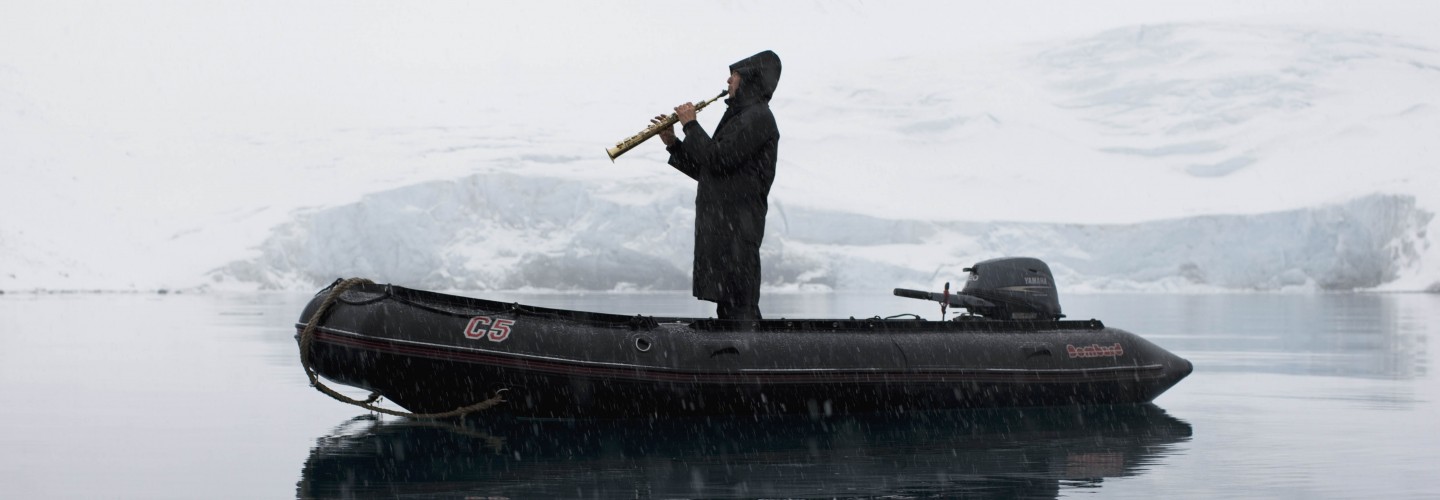
Not too much, so it takes over, and then you use that as musical material and play along with it. That's how I made that one. And as I said in the beginning, it's much easier to take something from nature, take it home, home and make some music out of it. What I got more interested in is playing live in the field with the sounds, putting on concerts. And so we've been doing a whole series of those. Some of the other tracks on the album were live, and I can play one of those. And when I'm live, I'm playing. So the pawn sound is coming up. We're listening to it live from underwater. I'm sometimes playing electronics, usually use an iPad, sometimes playing samples of pawn sounds and then playing clarinet or other wind instruments. So let's try. This one is called Hidden Lake above and Below. That's one. Let's see what happens.
The interesting thing is here is I'm playing samples of what's underwater back to the pond.
And although I'm not broadcasting my sound underwater, you can play the sounds of pond creatures and they'll respond. They kind of feel the vibrations. And I've done this in the middle of winter. I could go right now, put. Dig a hole in the pond and just above water, play some of these rhythms and underneath they're going to wake up and answer me, which is pretty crazy. If we go further ahead in this piece, you'll hear more electronically.
Sam, There. You heard one of those back swimmers there. Yeah, there. Now I'm playing electronic fake cello instrument on the iPad. It's a sound.
[00:44:26] Speaker A: Do you. Do you improvise?
[00:44:27] Speaker B: Yeah, yeah, I'm a. You know, I'm improvising, but also I know what sounds I'm going to use. Like I've rehearsed. I know what things to try out.
[00:44:36] Speaker A: Even in the field like that.
[00:44:38] Speaker B: Yeah, I'm improvising the field. You know, you could, you know, I'm playing, you know, different synthesizer apps on the iPad, and I actually wrote a somewhat scholarly article about what I'm doing because people kept asking. So it's called Touch the Screen Wild. The sound. It's in the Journal of Live, in Live Interfaces Journal, different ways people play live electronic music. This is a sort of somewhat academic piece where I try this app. This one, this one, and explain what I'm doing.
And this particular app is called Geo Shred, which is basically usually imitating electric guitars. But I. I picked the acoustic sounds. So their cello is. It's like. It's a kind of cello. Ish electric guitar sound, but it's very fun to play. I like playing the iPad in the woods because it's so anomalous. And also it's not a computer.
You use your computer for music. It's more like being at the office. You're typing things and it's more like.
Yeah. Whereas the iPad is. No one's quite sure what they're for. You know, they're kind of like a touching the screen making things happen.
And so I. And I like using instruments that make me think outside the box. I do what I don't expect. You know, I am an improvising musician. I studied jazz. I like to not know what's going to happen. I. I'm very bad at planning things out. Like, let's have this concert. Bring a bunch of musicians to this pond. Maybe we'll hear something, maybe not.
Because it's nature. You don't know if the natural world's going to cooperate.
Decide to be totally silent.
[00:46:06] Speaker A: This is sustainability. Now, I'm your host, Ronnie Lipschitz. My guest today is Dr. David Rothenberg, distinguished professor of Philosophy and Music at the New Jersey Institute of Technology, where he studies, records and accompanies animal sounds as music. Listen, let's shift back to birds.
I read why Birds Sing, and I like that very much as well. And you have in there the. The lyrebird. Yeah, and the lyrebird suite. And I. I wondered if you might, you know, talk to us about the lyrebird and maybe play a little clip from that.
[00:46:41] Speaker B: Yeah, I'll play that. So I. I'd always heard about lyrebirds as this kind of ultimate insane bird because they, they imitate sounds like a mockingbird does, but they also have a crazy tail like a peacock, in its case the shape of a lyre. And they also do this bizarre dance where they flip the tail feathers over their head and they do this whole performance and some of the music.
We're playing live with lyre birds in Australia. I went there with Michael Pestle. That's kind of the. It begins. The book begins with Michael Pestle in the National Aviary. It ends. We go to Australia to find the lyrebirds and I'll play Lybird Suite, I believe is. Is. It's a live one rather than pre recorded, but we'll know soon enough. Ready?
[00:47:30] Speaker A: Yep.
[00:47:38] Speaker B: Stop right now because I know it's not live. We took the Lybird recording and this one is made with Robert Uriandal, an Estonian guitarist. We just took the lyrebird recording and improvised this piece live together. Then we did it a few times. We kind of edited it. So this is improvised and composed. And this example of taking sound from nature, considering it as music, and making something together with humans.
Sam.
It.
Yeah. So it begins. This is a good example of the differing aesthetics between species. So, example, the human, in this case the electric guitarist, Robert Uriandal, likes these open, gentle kind of soothing chords one after another. It's one kind of human Music that is made. The lyrebird imitates the sounds of other birds. But in, in his case, he looks, he. He listens for the noisiest sounds the other birds are making and ignores all the more mellifluous ones. Picks the noisy ones and strings them together in an exact composition. In the case of this species, the Albert's lyrebird. So he's not improvising. He's got his composition down, he's learned it, he's figured it out. He imitates the order, always in the same order. Not like a mockingbird.
He's copying different birds. He's copying parrots. He's capping rifle bird. He's copying the kookaburras and picking their noisiest sounds. Makes his composition. He performs it, you know, over and over again, trying to attract a mate. Female lyrebirds lay one egg every two years.
They're not that interested.
Keeps performing and performing.
And this particular liar bird named George, these two guys studied him for 40 years.
[00:50:32] Speaker A: Did he outlive them, I'm wondering?
[00:50:34] Speaker B: No, no, they outlived him. I don't think any of them is. Maybe the photographer's still alive, Glenn, we have to look that up. The famous lyrebird scientist, Sid Curtis is no longer alive. He's the same guy that took the French composer Olivier Messianic out to listen to lyrebirds.
70s. So I went to see him.
[00:50:55] Speaker A: Did Messian write anything?
[00:50:57] Speaker B: Yes, yes. Messian would go out without a recorder, just listen and transcribe live. He would write down what he heard, take it back and. And Messian used the lyrebird in several pieces. And Messian also, after he passed away, his widow published two 600 page books of the raw birdsong transcriptions of Messianic before he turned them into his music. And I did one project based on that where we used them like jazz charts rather than using Messian's exact music.
And that is actually an album that just came out called Fourfold Me and these three extraordinary women musicians. By the time it came out, the Messian connection is more buried. But you can find it and that's news. You can play something from that if you want.
[00:51:43] Speaker A: Okay, what are your next projects?
[00:51:46] Speaker B: I want to write a book about why birds sing at dawn. It's called wake up or you'll miss the world.
And it's about, you know, why, you know, you wake up, there's something called the dawn chorus. Right before dawn, right up to dawn, all the birds start singing. Why? In fact, despite our vast intellect and Endless experience. We have no idea, we don't know.
And so that's the kind of story I like, where despite endless human attempts, we still don't know what's happening. I like stories like that.
[00:52:19] Speaker A: Like to think that the birds, you know, believe that that's what makes the sun rise.
[00:52:23] Speaker B: Well, people say, said that there's, there's the kind of new age science that say the dawn chorus makes the plants grow and that people have claimed to have proven that, but that's more.
It's not really regular science. It's could be true, but could be true, but we don't have that kind of scientific evidence of that. So yeah, there's a lot of, a lot of good hypotheses that have been proven wrong again and again. People are looking for a pattern. They're looking for, you know, they're looking for statistics in the data. They don't find it. And again, of course, what interests me is interspecies communication in the dawn chorus where one species listens to another and not just for its own kind, which, you know, many listeners who are not scientists will hear all the time, but the scientists tend to say, oh, he's listening for his own kind only.
So, yes, that's what I'm working on now. And I've been traveling around doing a lot of dawn chorus concerts and, and also listening to very strange. You hear very strange things. If you actually get up and really start listening, you can hear woodpeckers trying out different trees for their acoustic qualities because they're using drumming as a, as a song.
Try this tree.
This one's better. Oh, I like this. I'm going to use this one like they're really rehearsing and I've heard that a few times.
And you hear birds totally making sounds they're not supposed to make.
And you read in why Bird Sing about the Eastern wood Peewee.
One of the first books about bird song was by Wallace Craig. It was a 200 page book on a three note bird song.
But at dawn they add this extra phrase and he was thinking, why? Why are they doing this? What is this all about?
[00:54:06] Speaker A: Well, I'm afraid we're out of time.
Any last thing you'd like to mention?
[00:54:11] Speaker B: You know, sustainability now, you know, if you pay more attention to nature, just maybe, maybe we'll care a little more about it and we'll realize how valuable it is and not just destroy it through not so much planned destruction, but just our hubris to not thinking about anything else but our own wants and needs. That's kind of what pushes humanity along.
How self centered are all these animals with their special songs and their activities? Is everybody just every species just out for themselves or do they have a sense of togetherness and an interaction and interspecies musicality that maybe should suggest there is some kind of harmony that everyone could live together? I don't know. I kind of naively hope so.
[00:54:55] Speaker A: Well, it's a, it's a good thing to believe, I'd say.
[00:54:58] Speaker B: Yeah, I think we can make it happen by just, you know, paying more attention to what's right around us. The pond in the backyard, the, you know, the redwood forests between the Santa Cruz buildings. The, the, yeah, you can, you know, you can, you can hear the value and power of nature. So.
[00:55:19] Speaker A: Professor David Rothenberg, thank you for being my guest on Sustainability Now.
[00:55:23] Speaker B: Thanks a lot. And you know, need any of those sounds me know, and you can mix them in and see what happens.
[00:55:32] Speaker A: You've been listening to Sustainability now interview with Dr. David Rothenberg from the New Jersey Institute of Technology, where he's distinguished professor of philosophy and music. He's a scholar, author, composer, and interspecies musician.
And he works focuses on animal sounds as music. He has many, many books and albums out and his most recent book and recording are Secret Sounds of Ponds, which you can find online.
If you'd like to listen to previous shows, you can find
[email protected] sustainability now and Spotify, YouTube and Pocket Casts, among other podcast sites.
So thanks for listening and thanks to all the staff and volunteers who make K SQUID your community radio station and keep it going.
And so until next every other Sunday, Sustainability now.
[00:57:38] Speaker B: It.