[00:00:08] Speaker A: Good planets are hard to find now Temperate zones and tropic climbs and run through currents and thriving seas Winds blowing through breathing trees and strong ozone, safe sunshine.
Good planets are hard to find.
[00:00:30] Speaker B: Yeah.
Hello, Case SQUID listeners. It's every other Sunday again and you're listening to Sustainability Now, a bi weekly Case Good radio show focused on environment, sustainability and social justice in the Monterey Bay region, California and the world. I'm your host, Ronnie Lipschitz.
Nuclear weapons have been with us for 80 years. There are fewer now than was the case at the height of the Cold War.
But there are more countries with them than ever before, and some heads of states have been of late threatening to use them. If you've seen Kathryn Bigelow's recent film House of Dynamite, you'll know that human psychology is the linchpin on which the entire system of nuclear deterrence rests. Would the president or premier or whatever exchange their capitals for others?
The United States is now planning a $1.7 trillion overhaul of its entire nuclear arsenal, designing new warheads and investing in new bombers, missiles and submarines to carry them all in the name of modernization.
It's not that the current generations of platforms and warheads won't work. It's more that admirals, generals and presidents don't trust devices put to operation when they were very young. And there is a lot of money and prestige in having the latest generation of gadgets and lording that over the competing services. Oh, and the new weapons are manlier than the old ones.
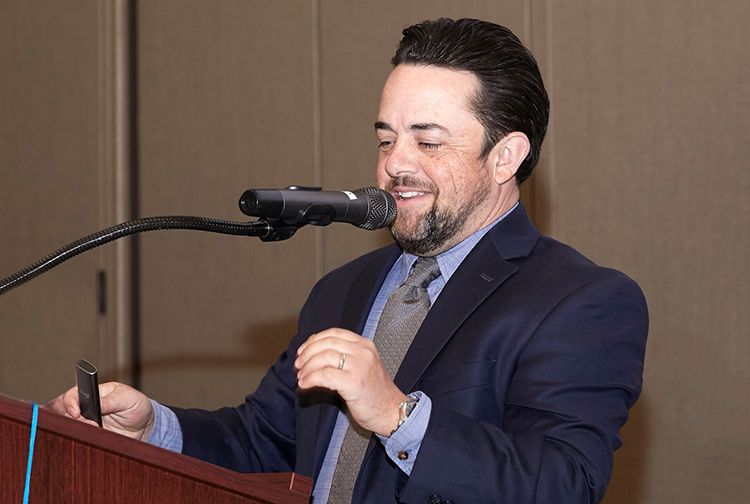
My guest today is Dr. Dylan K. Spaulding, a senior scientist in the Global Security Program of the Union of Concerned Scientists. He holds an undergraduate degree in physics from Brown University and a PhD from UC Berkeley. His work focuses on technical issues related to nuclear stockpile stewardship and policies that reduce the threat posed by nuclear weapons.
He recently authored a UCS report entitled Plutonium Pit the Risks and Costs of US Plans to Build New Nuclear Weapons.
Its focus is primarily on the stuff that makes warheads go boom, but along the way, Spalding covers a lot of other ground. And the report is a good primer on nuclear weapons if you want to learn more about them.
Dr. Dylan K. Spaulding, welcome to Sustainability Now.
[00:02:51] Speaker A: Thanks for having me.
[00:02:53] Speaker B: Before we begin our conversation, I just wanted to note that I used to work at Union of Concerned Scientists back in the 70s, and I worked on a book on nuclear weapons control and disarmament with Dr. Henry Kendall, who was then the sort of the Eminence Greece at ucs, and things don't seem to have Changed very much in the last 50 odd years.
[00:03:19] Speaker A: No, unfortunately, a lot of his work remains as relevant today as it ever was. I was giving a talk just recently where we noted that I think next year would have been Henry Kendall's hundredth birthday, talking about that very fact that a lot of the founding issues of UCS are still very present in the world today.
[00:03:37] Speaker B: Can we begin then with a kind of high level executive summary of your report?
[00:03:43] Speaker A: Sure.
So I'm, I'm the author of a report that came out this past year on what's called plutonium pit production. And so a plutonium pit is the sort of the trigger within a modern thermonuclear weapon or nuclear weapon.
It's a hollow sphere of plutonium, typically that's imploded by high explosives. And this is something that the United States hasn't made in any large number since 1989 when the Rocky Flats plant in Colorado is shut down.
So, you know, until since then we've been maintaining the weapons that we have without the need for new production of these components.
But we're sort of at an inflection point right now with the state of the US nuclear stockpile where the US is starting to turn back towards production of new nuclear warheads rather than sustaining the ones that we have. And that's driving demand for new pits, which we've largely lost the capacity to produce.
So our report focuses on sort of the technical necessity of this program, whether the ones we already have are aging in a way that makes them unacceptable for reuse or sustained use.
It looks at the new warhead programs that are driving this demand and how the United States is planning on meeting that demands, or what does the program look like going forward.
And then it also looks at what are the impacts potentially going to be for communities around where this work is taking place, what are the hazards that come with working with plutonium and what are the accident scenarios that can happen so that people can understand the risk that they're potentially exposed to from these programs.
[00:05:25] Speaker B: Let's do a little bit of background. In your PhD and subsequent research, you focused on high pressure material science, which, particularly in planets, planet cores. And I'm wondering what's the relationship of that to nuclear weapons?
[00:05:43] Speaker A: Yeah, my research is really in high pressure geophysics or high pressure material science.
I used to joke with people that I squeezed rocks for a living because I studied geologic samples at very, very high pressures and temperatures in order to understand what they're like in the deep interiors of planets in the core of the Earth. For instance, you know, one of the big questions now that astronomers are discovering exoplanets, you know, around other stars is how do we explain their diversity? Why do they all look so different? And what does it take for the outcome of planetary evolution to. To be something like the Earth, a planet with an atmosphere and an ocean that can sustain life? Or do you even need that? What. But what explains the diversity?
And how does that depend on the chemistry and physics of planetary formation?
So that may seem really far from the world of nuclear weapons, but understanding what happens to materials in a nuclear explosion or during the function of a nuclear weapon also involves understanding material science at those same very extreme conditions. So mostly I used shock waves to squeeze materials to drive them to very high pressures, these extreme conditions, and look at how their properties change. Because it turns out that there's a lot of really unintuitive behavior at very high pressures and temperatures. The periodic table as we know it gets transformed where you can make new compounds, things that wouldn't normally be stable under ambient conditions.
You can change the properties of things we feel like we know. Well, an example people are often surprised by is that if you squeeze oxygen, it can turn colors, right? Red and blue. You can change the electronic behavior. If you squeeze hydrogen hard enough, it can become a metal.
And the minerals that make up Earth's mantle, actually, when you squeeze them, can become electrically conducting, which could potentially play a role in the magnetic fields of other planets. So understanding things like that helps understand both the structure, but also the properties of the. Of the planet.
You need pretty big facilities, though, to get to those conditions sometimes. And the national labs actually host a lot of the infrastructure that allows us to do that.
They have big accelerators that can drive the kind of shock waves I was describing. They have lasers that are the size of football stadiums, for instance, at Lawrence Livermore National Lab, where you can create those kind of shock waves and compress materials into those states.
My research involved a significant amount of interaction with the labs. I did my PhD at Lawrence Livermore, actually, and a lot of interaction with the nuclear weapons world, because we really use the same physics and the same experimental platforms to understand those high pressure, high temperature material properties.
[00:08:29] Speaker B: Well, while we're at it, can you give us a primer on how a nuclear weapon detonates and, you know, what does the role of high pressure?
[00:08:36] Speaker A: Yeah, it starts with a shockwave, actually. So typically you have a shell of high explosive that implodes that plutonium pit I mentioned. And again, the plutonium pit, it's called a Pit to evoke, like the pit of a stone fruit, like, I think of a core.
That pit is a hollow sphere of plutonium. Typically they can be other shapes, but the sphere is the simplest. The high explosive drives that pit to implosion to a supercritical state, which drives fission reactions. So you get to a state of nuclear criticality, you get fission reactions out of that, and that generates X rays and radiation. That in turn drive fusion reactions in a secondary stage of the weapon which contains other fissile materials, things like uranium or lithium deuterite, things where you can split the atoms apart.
And so the combination of those fission and fusion reactions that start with a, with a conventionally driven explosive and shockwave, that's, that's where the destructive power of nuclear weapons really comes from. There's a tremendous amount of energy released through, you know, splitting apart those, those nuclei.
[00:09:48] Speaker B: And, and then there's also the, the deuterium and tritium. Right, the hydrogen.
[00:09:52] Speaker A: That's right. There's deuterium and tritium that are injected into that hollow sphere of plutonium. Typically it's called boost gas, and that's a source of extra neutrons, which helps kind of kickstart that process in the bomb.
[00:10:06] Speaker B: Well, you know, nuclear weapons are unlike conventional ones because they've, they fill a military role by not being used.
And if they were used, they would have failed in their ostensible purpose. Can you give us an explanation of the theory and psychology of this, of nuclear deterrence?
[00:10:24] Speaker A: I think the, the psychology is, is hard to describe because personally I think of deterrence as more of a belief system than a well founded, predictable military strategy. And at least it's, it's not something that I personally place a lot of belief in. But, you know, deterrence is basically the idea that if, if my adversary knows that I can deliver a devastating blow to them, then they won't strike me back. Or even if they do strike me in the first place, I can still strike them back with a second strike.
And if that expectation is reciprocal, then, you know, the thought is there's a balance that holds. And so during the Cold War, that led to this idea of mutually assured destruction, where the, the idea was that if there was ever any exchange, both, both countries would be completely annihilated and therefore that would keep it from ever happening.
But in practice, you know, there's a significant element of showmanship where you have to convince your adversary that you have that capability. And so, you know, we see a lot of political rhetoric coming into play. We see things like Missile tests. And, you know, from North Korea or Russia, we see military parades where they roll out intercontinental ballistic missiles and things to kind of show off their capabilities.
You know, so there. There's a. There's a strong degree of. Of psychology there in convincing your adversary that you have a capability that is sufficient to overcome theirs. Right? Or at least to match theirs.
And there are people, war planners and people in the defense community who really believe that deterrence is a reliable and stable means of achieving the peace.
You know, during the Cold War, that was heavily leaned upon.
But to me, there's always been a kind of an absurdity to that.
I go back to Joseph Nye, who was a political scientist who passed away last year at Harvard. He was also Assistant Secretary of Defense under Clinton, and he wrote about something he called the usability paradox, which was basically that for deterrence to work, there has to be some lingering prospect that nuclear weapons would actually be used either deliberately by government or accidentally.
And the fact that accepting a paradox or accepting that danger is part of the calculus is part of what makes it work is something that really bothers me.
You know, just a couple of weeks ago, I was listening to a talk from someone from the nnsa, the National Nuclear Security Administration, who is saying that we have to remember that deterrence could fail. Right? Which was an alarming quote to hear from someone in his position who's responsible for overseeing the US Nuclear stockpile, because it's. It's hard to understand how that doesn't reduce the whole situation to kind of Russian roulette, right? If we. We rely on it so heavily, but at the same time, we have to admit that it could fail.
So the way I've often described my. My view of it is that it. Deterrence often feels like a situation in which every party has a gun and they're all holding their guns to each other's heads and saying, you know, if you move, I'll shoot you. And the other party says, yes, same. Okay, we agree.
And then they go off patting themselves on the back for having achieved a state of perceived stability, right? And proponents of deterrence would obviously criticize that as a caricature. But, you know, people who are working on our side of the aisle trying to work towards disarmament are basically saying, you know, what if we put the guns down? Wouldn't that result in a greater stability?
And I think in today's world, especially, you know, where Cold War understanding of deterrence relied to some degree on this idea of rational actors in charge of the nuclear arsenals, but today we have Vladimir Putin, Donald Trump and Kim Jong Un, for instance, overseeing three of the nine nuclear arsenals in the world.
I'm not quite sure that the dependency on rational actors can still be thought to hold in the same way. So that's why it's just not a situation that I'm personally prepared to accept as a stable one, and why I say that deterrence seems to require some degree of faith.
[00:14:24] Speaker B: And then the person who makes the final decision has to believe that he or she would actually launch, which is also we have to put our faith in someone whose mental stability at this point is not wholly certified.
[00:14:43] Speaker A: That's right. In the United States, the President has what's called sole authority to launch nuclear weapons. So that's Donald Trump right now.
[00:14:50] Speaker B: Yeah.
Well, at the peak of the cold war, the US had more than 30,000 nuclear weapons in its arsenal and the USSR had even more.
So after many treaties and reductions, we're down to about 1700 deployed warheads and about, I think, 3000 in storage.
Why do we need so many? Where are they located and where are, you know, where are the warheads deployed and where is the, are the extras located?
[00:15:21] Speaker A: Yeah, the numbers have come down significantly, particularly in the, in the 90s following the collapse of the Soviet Union.
So the US and Russia still have, you know, roughly an order of magnitude or more weapons than any other nuclear state. 3, 3 to 4,000 each, compared to a few hundred for the UK or France, probably under 100, for instance, for North Korea or Israel. So why so many? The question is sort of a, I guess goes back to that question of faith in nuclear weapons. And do we need, do we need that many? You know, the UK and France are quite content to consider themselves adequately protected by a few hundred. The US believes they need several thousand.
Where are they located, I think was your second question. The second part of that.
The US has what's called a nuclear triad. So we deploy part of our nuclear arsenal on land based intercontinental ballistic missiles. And those are spread across the Northern plain states in the continental U.S. so Montana, north Dakota, Wyoming, Nebraska and Colorado mostly. There's 400 warheads currently on top of those missiles, although they can carry more than one each.
Arms control treaties have limited us now to one each, which is a more predictable scenario.
The US also has 14 submarines that can carry nuclear weapons at sea. And each of those submarines can carry about 80 to 100 warheads each on 20 ballistic missiles.
So that means that at any given time we have about 800 to 1,000 nuclear warheads roaming the seas as we speak.
And a single one of those submarines carries about 600 times the destructive power of the bomb that was dropped on Hiroshima. And we have eight to ten of those submarines patrolling, typically at a given time, when they're not patrolling, they come back to port in Bangor, Washington, in Puget Sound or in Kings Bay, Georgia, so both Atlantic and Pacific sides.
And then finally we have the. So I mentioned the triad. Land, sea, and air.
Third part of the triad is Air.
The US has about 60 bombers that fly out of air bases in North Dakota, Louisiana and Missouri.
And each of Those can carry 16 to 20 or so nuclear weapons. So there are weapons stored at those Air Force bases. If those planes are called to deploy, deploy immediately.
The remaining ones in the US Arsenal that aren't deployed, which are a few thousand more, are mostly stored in at Kirtland Air Force Base in Albuquerque, New Mexico, deep underground. And those constitute what are called the, the hedge or the reserve, basically, so that if one weapon is taken offline for maintenance or checks, another one can be put in its place to, to eliminate any military capability gap.
[00:18:16] Speaker B: You're listening to Sustainability Now. I'm your host, Ronnie Lipchitz, and my guest today is Dr. Dylan Spaulding, a senior scientist at the Union of Concerned Scientists who recently authored a report entitled Plutonium Pit the Risks and Costs of US Plans to Build New Nuclear Weapons.
And we were just talking about the numbers of nuclear warheads that remain in American and Russian arsenals which dwarf that of the other, what, eight or nine?
I guess it would be seven nuclear nations, but and are still a considerable number. Well, do those warheads, the ones, the 3000, still function as intended? And if so, why do we need $1.7 trillion worth of new nuclear warheads?
Who's going to benefit from this? You know, in whose interest is this?
Is it, is it strategy or is it, is it monetary interests?
[00:19:14] Speaker A: Yeah. Well, first I want to go back briefly because the, you know, the answers I gave to all the previous questions about how many deployed weapons there are could be about to be upended by the end of the expiration of what's called the New START Treaty, which is the Strategic Arms Reduction Treaty with Russia, and that's the last remaining nuclear weapons arms control treaty that, that caps those numbers of deployed permissible weapons.
That's going to expire on February 6th of this year, just a few weeks from now, after which point it's unclear, you know, whether the United States and Russia will choose to upload more than what we currently have. And that would be the first real reversal, sort of post Cold War, really going in the wrong direction.
You know, Russia has reached out to the United States to say that they are willing to maintain the numbers we have currently without any further negotiation or until a new treaty can be eventually negotiated. But to our knowledge, the Trump administration hasn't taken them up on that offer. So it could be that, you know, the number of deployed weapons will soon be without limit.
But to come back to your question about do we need $1.7 trillion of new ones?
You know, I think the answer is no.
The United States has, has maintained a very successful program since the end of the Cold War in which they've been able to refurbish and life extend the weapons that we had at the close of the Cold War.
And those are continually monitored, you know, to, to the nth degree through detailed, you know, forensic analyses, literally almost of all of their components. You know, they're taken offline, they're disassembled, they're checking, checked things like gaskets and seals and other things that could be life limited or have, you know, limitations to their age are replaced and then those warheads are put back into service. So in that sense, the, the United States stockpile has been kept, you know, refreshed basically since the end of the Cold War, even though we haven't introduced new designs. And that's been permitted through a program called Science Based Stockpile Stewardship, which, which is a combination of laboratory based experiments to study how materials change, but also advanced computer simulations of how the weapons themselves work and this kind of iterative back and forth between experiment and simulation and ground truthing those experiments by inspecting the weapons themselves.
So every year the heads of the national lab certify the stockpile to be safe, secure and reliable. And that hasn't changed. So. So this modernization that you mentioned is going to cost upwards of $2 trillion probably over the next couple of decades is really, it's forward thinking to actually introduce new weapons rather than continue to sustain the ones we have.
I think you asked who's being served by this modernization, whose interests are being served? And I think the answer is clearly the giant defense contractors in this case.
There was an article a few weeks ago in the New York Times that was highlighting the fact that the defense industry has basically consolidated from 51 major players in the early 1990s to five today.
And those are Lockheed Martin, RTX, which used to be Raytheon, General Dynamics, Northrop Grumman and Boeing.
You know, this has been kind of this quiet monopolization of the capabilities. But these are the companies that are building both the warheads. They run the national labs through limited liability corporations.
But they're also getting, you know, no bid, 100 billion plus dollar contracts to make the new intercontinental ballistic missiles and submarines and things like that. So it's really led to this culture where there's, there's very little competition, there's very little constraint, therefore, in cost and profit in that case.
[00:23:04] Speaker B: This is not a new thing created by the Trump administration. I mean, this had started some years ago.
[00:23:11] Speaker A: That's right.
[00:23:13] Speaker B: So whoever is benefiting was probably going to benefit then.
President Trump has also, I don't know, threatened or mused about resuming nuclear testing, presumably underground and not in the atmosphere. But, you know, he seems to think it's a very easy proposition. What, what would be required to actually do that, to resume testing?
[00:23:35] Speaker A: Well, first of all, you know, I think there's absolutely no technical necessity to resume testing. I just mentioned the science based stockpile stewardship program, which has been tremendously successful, I think, in actually allowing a much better understanding of how our weapons work, but also how they age and how they perform than actually was, was possible in the era when we used to blow up nuclear weapons underground.
You know, we can now conduct laboratory experiments that are more heavily diagnosed, that have more refined measurements than you can do in a borehole, you know, a few thousand feet under the Nevada desert, for instance.
So I think first of all, this call to resume testing belies a complete misunderstanding of how our nuclear weapons stockpile is maintained and of what the US Capabilities to do so actually are.
I think instead it's coming from a sort of desire for political showmanship and kind of chest thumping internationally.
You know, I mentioned that deterrence involves showmanship. And this is, you know, this is, this would be the most extreme manifestation of that. I think, again, it's technically completely unnecessary.
But to get to your question of what would be required, you know, it's not something that the United States nuclear complex, the national laboratories, are particularly well positioned to do right now because, you know, they've, they've, they've moved away from that quite simply. They've, they've taken their capabilities elsewhere to, to new kinds of experiments. And the United States still does conduct what are called subcritical experiments, which are pretty close to a nuclear explosion, but they, they remain in a subcritical state. They don't generate a self sustaining nuclear chain reaction, and those are allowed by international agreement. So other countries do that as well.
In Donald Trump's statement about resuming testing. He said he was directing the US to resume testing and I quote, on an equal basis, unquote, with other countries, which, you know, again, seems to show that he doesn't understand that we already do test our nuclear weapons and our delivery systems in all the same ways that every other country does, including Russia and China.
So to do so would be not only extremely politically harmful, but it would also be, you know, fiscally wasteful and technically unnecessary.
[00:26:07] Speaker B: Well, let's get, let's get to your report. So, I mean, at the heart of your report are the repeated efforts of the nuclear, civil and military establishment to restart plutonium pit production. Right, which stopped, as you mentioned, in 1989.
What's the history of pit production and why is it claimed that new facilities are needed?
And how did Los Alamos become the primary site for this activity? And how's that going?
[00:26:38] Speaker A: Yeah, so to go all the way back in the history of pit production, you know, throughout most of the Cold War, you, when you mentioned, you know, we had more than, you know, 30,000 weapons, pits were made at Rocky Flats. So this was a, you know, factory that at its peak could churn out between 1 and 2000 pits per year to sustain that, that demand. During the peak of the Cold War, when the Cold War ended and Rocky Flats was shut down in 1989, by the way, by the FBI for EPA violations, it was one of the only instances of, I think, one federal agency shutting down another one by raid because of really egregious environmental violations at the site.
But, you know, just shortly after that, the, the Soviet Union was dissolving. The Cold War was coming to an end. We were beginning this program of science based stockpile stewardship in which we were maintaining the weapons we had rather than making, making new ones. And so there really was very little demand right through the, through the late 90s. And in the early 2000s, Los Alamos was given the ability. They were, they were tasked with keeping up sort of a warm capability, so to speak, to produce pits of up to about 20 a year. But that's not really a capability that they exercised again because there's relatively little demand. All the science at the time is pointing to aging of pits not being a problem.
But at the same time, you may recall, you know, there were proposals in the Bush administrations, for instance, for new nuclear warheads. There was the bunker busting bombs or reliable nuclear earth penetrator.
In the early 2000s. Those, those proposals came along with proposals to resume pit production as well.
There have Been a handful of times that Los Alamos has tried to resume this capability proposal, a facility to do so, only to have it get canceled when it was realized it was going to be too expensive or deemed unnecessary at the time.
So this is really sort of continuation of that history and that this is the, this latest effort, which began really with the Obama administration's agreement to modernize the stockpile in 2010, but has really gained traction with the first Trump administration in 2018.
This is the latest effort that's gotten the most traction.
You asked how Los Alamos became the primary site for this facility or for this activity, and it's really because they were the only place capable of handling plutonium in large enough quantities within the nuclear complex.
There's one facility at Los Alamos called Plutonium Facility 4 PF4 that has carried out other activities like making spacecraft batteries out of plutonium 238, helping to work on a process that down blends plutonium for disposal from excess plutonium in the stockpile.
So really, you know, it was one of the only places in the country that could do this when the demand was stipulated by Congress officially in 2015.
But the United States right now is pursuing a two site solution. So they're, they're trying to make pits now at Los Alamos, but, but they're also building out another site at Savannah River, South Carolina which won't be ready for at least a decade. It's under construction right now.
And so they would build pits at both sites to meet the congressional mandate of up to 80 pits per year, at least having the capability to make 80 per year.
As for how it's going, I would say it's not great.
Production is behind schedule.
Were supposed to be approaching that 80 PIT mandate by 2030 and the NNSA has frequently acknowledged they won't make that, that deadline.
We know they made at least one new certified pit as of the end of 2024, but we don't know how many may have been made in 2025 because that information is being kept classified.
But it's unlikely they will get to the congressionally mandated level anytime soon. And one of the major things our report argues is that they don't need to. That that mandate to produce 80 pits per year is actually somewhat arbitrary. It's not tied to the warhead programs that these new pits would supply.
And there's time I think, for the NNSA and for the Department of Energy to really re scope this program to see what, what the real demand is going to be going forward and then appropriately match the timelines of the, of the programs to that.
One of the big criticisms, including from the Government Accountability Office, is that this program still doesn't have an integrated master schedule or a complete cost assessment, even though it's been underway now for, you know, the better part of eight years.
And for a program of this magnitude, you know, tens of billions of dollars have already been expended and many tens of billions. Will you continue to be expended.
It's somewhat outrageous that there's no complete cost estimate or schedule and that NNSA seems unable to provide that. So Congress is appropriating money for this process without knowing what the final price tag is going to be.
And that's another one of our criticisms, is that it's ripe for re scoping, particularly until that's known.
[00:31:54] Speaker B: The Savannah river plant has proven to be much more expensive. Right. Than originally.
[00:32:01] Speaker A: That's right.
[00:32:01] Speaker B: You said it's not going to be completed for what, one or two decades?
[00:32:05] Speaker A: 2035 is the estimate.
[00:32:08] Speaker B: Given the cost, isn't it likely to be canceled again before that date? I mean, the whole program seems to operate on, you know, let's do this, and then it gets too expensive and canceled.
[00:32:20] Speaker A: Yeah, that's one of our big concerns. The NNSA has kind of an alarming history of starting projects with a projected cost and then those projected costs dramatically rising and then having to revisit the necessity for the program and ultimately, as you say, canceling them down the road. And in fact, the facility at Savannah river is a perfect example of that.
It was originally pitched to be a facility that would turn excess plutonium from the stockpile into what's called mixed oxide fuel for energy, for reactors.
I think it was supposed to cost something like $4 billion when it was originally certified. And when the cost went up more than 25 fold, it was finally canceled by the first Trump administration in 2018.
But that's the building that they're now trying to retrofit for pit production. And one of the reasons it's now so expensive to retrofit is that it was built for an entirely different purpose.
So they, they spent something like $7.6 billion on what ended up being a concrete carcass of a building that never served its originally intended purpose. And now we're looking at spending something like 25 billion more just to complete construction for plutonium pit production for that single facility, which I believe one of our colleagues said would make it one of the most expensive buildings in history, period.
And so we have exactly that concern is that, you know, in a couple of years the difficulties will have mounted, the cost will have risen, and Congress will finally say, hey, what are you doing?
Can you get by with a single facility to produce the 80 pits we mandated? And I think the answer to that is probably yes. That's not to say that the facility at Los Alamos is ideal either. It's a 50 year old facility, it's constrained for floor space.
It's also difficult to retrofit because of its age and because of other constraints in the building.
But it's also important to point out that's not the solution Los Alamos asked for either. They asked for a new facility to do this process. That's not what they were given.
Both facilities face tremendous challenges, but I think again are ripe for revisiting the necessity and scope and cost of the entire program.
[00:34:37] Speaker B: You're listening to Sustainability Now. I'm your host, Ronnie Lipschitz. My guest today is Dylan Spalding, a senior scientist at the Union of Concerned Scientists. We've been talking about plutonium pit production and the obstacles to increasing the numbers, amongst other topics.
Dylan, we've got a lot of excess pits, as I understand it, right from those 30,000 weapons.
Why can't they be, you know, assuming we need more, why can't they be recycled?
[00:35:12] Speaker A: That's one of the primary things that our report recommends, actually. So, you know, at the peak of the, of the Cold War, when we had tens of thousands of weapons, those weapons were, were disassembled and those pits were put into storage at the Pantex facility, which is near Amarillo, Texas.
Pantex is responsible for actually the assembly and disassembly of warheads in the stockpile.
So some 15,000 or so pits are sitting in casks in bunkers at the Pantex facility. And, and we believe there's no reason that at least a subset of those cannot be reused.
So the current plan is to, is to basically melt them down, recast them into brand new pits and put those pits into new weapons. But that's not necessarily required if the designs are not radically different.
And in fact, the NNSA has already admitted that they will be reusing pits for some fraction of two new warhead programs that they're undertaking. One of those is for the land based intercontinental ballistic missiles, a new word for those. The other one would go on the submarines. And again, the NNSA has said they will be reusing pits for some fraction of both of those. So the question is if you can reuse for some of them, why not all of them? Because obviously that would alleviate the near term demand and allow a more measured approach to pit production that really, you know, comes when the, when the time is there. And we think that time is still decades away from the perspective of plutonium aging.
[00:36:41] Speaker B: Yeah. I'd like to turn to questions about health risks and environmental impacts. Plutonium doesn't exist in nature. Where does it come from?
[00:36:52] Speaker A: Yeah, plutonium is man made.
It was first made in 1940 at UC Berkeley.
It's something you make in a reactor and it's radioactive. So, you know, it's constantly undergoing radioactive decay, which is one of the reasons that it's harmful biologically.
[00:37:10] Speaker B: What does that mean to say something is radioactive? You know, just.
[00:37:14] Speaker A: Yeah. So that means that the, the nucleus of the, of an atom of plutonium is, is generally in an, in an energetic state that is, that it's unhappy with. Right. It wants to find a lower energy state. Right. In nature, everything wants to find a lower energy state. Right. The ball always rolls downhill. And so you can kind of think of radioactive decay as a way for nuclei that are unstable to find that lower energy state. And they can do that in, in three different ways.
But typically it's by booting out some particles from the nucleus, either protons and neutrons together, or converting a proton to an electron and kicking that out, or they can kick out a packet of energy, which is a gamma ray.
But either way they're, they transform themselves. They take a step on the periodic table, up or down, depending on which way they go, to become a dot, what's called a daughter product. So plutonium is radioactive. It's an alpha emitter, which means that it, when it decays, it kicks out two protons and two neutrons.
But it can also spontaneously undergo fission and kick out neutrons, which is one of the other things that makes it dangerous to handle.
Oh, I was going to say when you asked about when plutonium gets in the environment, you know, one of the reasons that it's dangerous is because it has pretty complex chemistry. It, it kind of sits in the middle of the periodic table.
Its electrons don't quite know which direction they want to go. It means they can, they can be happy bonding in lots of different ways. And that means that plutonium is kind of quirky and that it can kind of hitch a ride on lots of different things in nature and attach itself to different things in ways that are somewhat unpredictable and a little bit hard to understand.
But it can move through groundwater it can be uptaken by plants and animals, including people.
And, you know, so contamination of plutonium in the environment is something that is an ongoing risk. And in fact, the. The sites where work was done throughout the Cold War, Rocky Flats in Colorado and Hanford in Washington, where the reactors were, where plutonium was made, remain some of the most contaminated sites, you know, in the country in terms of nuclear weapons production.
So, you know, the. The current proposal to start remaking pits doesn't match what happened at Hanford or Rocky Flats. But the risk is still in terms of human fallibility and people being exposed to plutonium, especially workers, they're trying to go faster than they need to, or if there are accidents that somehow release that plutonium into the environment where it could expose the public.
[00:39:45] Speaker B: It's tricky stuff to work with, as I understand, right. It exists in multiple isotopes with different half lives, multiple chemical phases and forms. It fissions easily if enough is brought together.
Highly flammable in certain forms, and highly toxic chemically and radioactively. I mean, this is nasty stuff.
[00:40:06] Speaker A: It is.
[00:40:06] Speaker B: Right. So what are the risks associated with working with plutonium to begin with? And I know that there have been accidents, criticality accidents. What is that all about?
[00:40:20] Speaker A: Yeah, So I think you summarize the risks pretty well.
You know, it's especially dangerous to inhale. So any kind of form, powdered form or dust is, Is especially toxic to people because once it gets in your lungs, it stays there, and it can migrate from your lungs into the rest of the body.
You know, all the work that would be done today for pit production, for instance, is done inside glove boxes. So the idea is the plutonium doesn't ever come into contact with human skin.
But, you know, as you mentioned, accidents happen all the time. In fact, gloves breach in those glove boxes. You can tear the gloves, people get pinches or punctures.
There have been many cases of workers being exposed at Los Alamos to plutonium. In fact, two just in the last couple of weeks were treated for potential skin exposure.
But there have been cases of known ingestion of plutonium as well.
You mentioned that it's. It's flammable. Right. When you machine plutonium, the shavings are what are called pyrophoric. They can spontaneously ignite in the presence of oxygen. And that actually, that happened at Rocky Flats, which resulted in a really catastrophic fire that spread radioactivity across a good portion of the. The plains to the northeast of the site there.
But Lanl has had glove box fires as well on a smaller Scale, they've had four floods that have washed plutonium residue into the basement of the building where they're doing the work.
You know, the issue again is really human fallibility and that even, even the best procedures don't always protect people who can become complacent over time.
And then you mentioned, you know, criticality accidents and what, what that refers to is having basically too much plutonium in, in one volume at a given time.
I mentioned a few minutes ago this idea of spontaneous fission. Plutonium can spit out neutrons randomly on its own, which normally is not a danger until those neutrons get reflected back in to the plutonium, which can start sort of a snowball or chain reaction causing more and more fissions.
And while that doesn't result in a nuclear explosion, it does result in a huge burst of radioactivity of radiation.
And that's happened several times. There was a famous pit accident too, actually in the early days at los Alamos. In 1945 and 1946, two people died working with plutonium from criticality accidents. But there have been more since, including nuclear reactors and other places.
The person in the 1946 accident at Los Alamos is estimated to have taken in something like the equivalent of about 100,000 chest x rays in a fraction of a second, and he died within days of that accident.
One of the reasons we're concerned about safety at Los Alamos is that they've had a history of criticality violations, not necessarily accidents, but situations that could have led to an accident. And the most famous of Those was in 2011 when workers placed a number of plutonium rods right next to each other to take a picture, which is just a violation of all common sense rules about working with plutonium. You don't put a lot of it in one place.
It has to be accounted for. Material is tracked from room to room by the gram. But in 2011, quite a bit of it was put together and that was reported on widely in the, in the news, resulted in a multi year shutdown at Los Alamos, the very same facility where plutonium production is occurring now.
So, you know, one of my biggest concerns is not that something like that necessarily will happen again. It's that from having run a lab myself and been responsible for lab safety, I know that complacency is a real problem when you do the same thing over and over and over. You know, and I think we've all probably been guilty of not putting on safety glasses for some process we should have done or thinking, you know, I'll just Go paint this window frame without putting on my, you know, my painting shirt or something, and pretty soon you've got paint on yourself. Right. It's the same logic applies in the lab. We become complacent about protective measures we should take, and then we don't take them. And that's when accidents happen.
And we're seeing that indeed at the facility at Los Alamos. They've had a pretty troubling record of safety incidents and violations where people have been exposed.
So we're worried that by hurrying and by pursuing an unnecessary deadline, that those kind of accidents are going to accelerate or continue.
[00:44:47] Speaker B: Have there been any kind of studies of the results of exposure to plutonium in health studies around Los Alamos or Rocky Flats or even.
[00:44:57] Speaker A: There have been some studies are pretty limited, largely because the population of exposed people is small.
I addressed some of that in the report.
There was a program, for instance, at Los Alamos to collect human tissue from lab workers and community members who passed away to see what kind of exposure they may have had.
The results of those experiments were somewhat troubling in that they showed that it was likely that workers were taking plutonium home on clothing and exposing family members to high levels of radiation.
We would hope that wouldn't happen today because of improved safety and security measures. But, but we do know that plutonium is still moving in the environment from times when it was discharged directly out into canyons in Los Alamos and for instance, at, at Hanford, where it's, it's in the ground.
So the, the epidemiology and toxicology is not my area of expertise there. But we, you know, we, we have enough evidence to know that it's harmful and to know that we need to remediate what's already in the environment and limit anything more that can get out.
[00:46:07] Speaker B: You're listening to Sustainability Now. I'm your host, Ronnie Lipschitz. My guest today is Dr. Dylan K. Spaulding of the Union of Concerned Scientists, who recently published a report on plutonium pit production, production, not reduction production for new nuclear weapons and warheads. And we've just been talking about the health risks of plutonium and the risks of working with the stuff in, in, in highly controlled environment, even in highly controlled environments overall. You know, do you think, first of all, that this program, this modernization program is going to be seen through the end. Through its end, through its, you know, proposed end. I mean, it's a lot of money. It's a long time.
We've seen this, this before.
What, so, so the question is you know, how much do we need to worry about is actually happening? What do we need to worry about actually happening?
[00:47:09] Speaker A: That's a good question. I, I don't think that all of it will come to fruition. And there are a number of reasons for that.
You know, one is that the United States has struggled to achieve its previously set out goals. We're not very fast at building things like submarines.
The new intercontinental ballistic missile program is facing huge troubles and cost overruns. That's called Sentinel, in case listeners are interested in looking that up. It underwent congressional review because its cost ballooned so much in the last couple of years.
We're simply not good at building these things very fast. We're not very agile in that sense.
And so I think that alone will be reason for some of the US's current aspirations to fall by the wayside.
There are technical reasons that other parts will not come to fruition. You know, Trump has proposed a new missile defense system called Golden Dome.
And you know, most of that is simply technically unfeasible.
No matter how much money we pour into it, it just will not provide the, the perceived or purported protective benefits that I think the administration wants to hope it will. It's frequently compared to Israel's Iron Dome, but it's a completely different scenario and protective system, you know, and a lot of that, it just simply can't be done on the timescales and for the amount of money that is, is being put towards it. Although what we worry is that a lot of money will be put towards it before that realization is, is really widely accepted.
It's not clear to what degree, you know, all of the new warhead programs will go forward.
The US seems fairly stuck to the idea of having a triad, although at Union of Concerned Scientists, we frequently advocate for the land based leg of the ICBMs to be done away with entirely.
[00:49:04] Speaker B: The bombers seem sort of like excess as well.
[00:49:07] Speaker A: In, in a way. This, the submarines offer sort of the most agility and stealth because they're hidden at sea and can be relatively close to their targets.
I won't pretend to, to make, you know, have very good opinions about what the balance should be. Right. That's way above my pay grade.
But I think we can all agree that, you know, eliminating the least stable legs, which include the ICBMs, is one way towards stability.
Those are the leg that requires the President, you know, to make a decision about launching within just a few minutes, for instance, that give us this kind of use it or lose it mentality of get them out of their silos or have them blown up by an adversarial incoming warhead. So I think, you know, it makes a lot of sense to get rid of the land based leg of the, of the triad.
But again, you know, arguments about how you compensate for that, if you compensate for that are, I think, above me.
I will point out that other countries like France only have submarines. There's, you know, the idea of a triad is sort of a US dogma.
And so I think, I think there is room to question it.
[00:50:12] Speaker B: Well, there's a lot of, in your report about weapons strategy and policy, you know, that we don't really have time to cover. But is there anything else you might like to say about the report, something that we didn't address?
[00:50:28] Speaker A: Sure, I think, you know, I think one thing, I said this earlier on, but I think one thing is to remind the audience that we're kind of entering a new nuclear era right now where the US is gearing up to return to production of nuclear weapons, which is something that we haven't done since the end of the Cold War, that is introducing actual new nuclear weapon designs.
But unlike the Cold War, today, it's not just the US and Russia. Today there are nine nuclear armed states in the world and the stakes are not the same, particularly when you add in emerging technologies to that cocktail.
I think public awareness of what's going on with nuclear weapons has been largely overshadowed by all the other crises that we face that might feel more immediate to the average person, right, things like climate change and political unrest.
But I think it's important to remember and pay attention, you know, to the fact that you can write your representatives, you can let them know what you think about nuclear weapons and where your tax dollars are going.
Your voice still matters, despite how it may feel. And there are organizations like us at Union of Concerned Scientists who can help you to do that either by providing information or, or training to do that quickly. I want to mention that with regard to the environmental impacts from pit production, there's an opportunity for that. Coming up, the National Nuclear Security Administration is carrying out what's called a Programmatic Environmental Impact Survey, which is where they are supposed to consider the impacts of this entire program across all the sites where it will occur. And there's a opportunity for public comment coming up this spring or early summer. And Union of Concerned Scientists will be providing toolkits and opportunities to get engaged in that. If you want to express your opinion or if you're concerned by that, you can also go online. You can find our reports on pit production, on what may happen after the expiration of this latest arms control treaty, New Start, and about the Environmental Impact Survey. You can find all
[email protected] we also have a blog called the Equation where you can read about some of these issues, where we respond and write about current events across our team.
[00:52:39] Speaker B: Dylan Spaulding, thank you so much for being my guest on Sustainability Now.
[00:52:44] Speaker A: Thank you so much for having me.
[00:52:46] Speaker B: You've been listening to a Sustainability now interview with Dr. Dylan K. Spaulding, a senior scientist in the Global Security Program of the Union of Concerned Scientists.
He recently authored a UCS report entitled Plutonium Pit the Risks and Costs of US Plans to Build New Nuclear Weapons, which you can find on the UCS website. If you'd like to listen to previous shows, you can find
[email protected] SustainabilityNow as well as Spotify, YouTube and Pocketcasts, among other podcast sites. So thanks for listening and thanks to all the staff and volunteers who make K Squid your community radio station and keep it going. And so, happy New Year. And until next every other Sunday, Sustainability Now.
[00:53:41] Speaker A: Good planets are hard to find out Temper zones and tropic climbs through currents and thriving seas Winds blowing through breathing trees Strong o zone safe sunshine Good planets are hard to find yeah.