[00:00:08] Speaker A: Good planets are hard to find. Now.
Temperate zones and tropic climbs and run through currents and thriving seas.
Winds blowing through breathing trees, strong ozone and safe sunshine.
Good planets are hard to find. Yeah.
[00:00:36] Speaker B: Hello K SQUID listeners. It's every other Sunday again and you're listening to Sustainability Now, a bi weekly case good radio show focused on environment, sustainability and social justice in the Monterey Bay region, California and the world. I'm your host, Ronnie Lipschutz. Indigenous peoples around the world are under threat, especially from massive development projects engineered by governments and corporations which promise to destroy the lands, forests and waters on which those peoples depend.
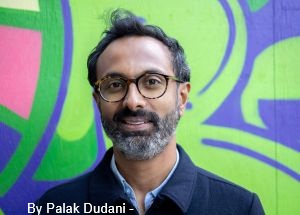
My guest today is Anjan Sundaram. In an article that appeared in a recent issue of the New York Review of Books. We think they'll kill someone. Journalist Anjan Sundaram reported on one such project in the southern Mexico Oaxacan town of San Blas Atempa, where a new factory will wipe out a community owned forest. Sundaram is an Indian author, war reporter, academic television presenter and and the founder of the Stringer Foundation. He's author of three memoirs of journalism, Stringer, Bad News and Breakup. His forthcoming book, Double Exposure. Two Reporters in the Climate War is scheduled for publication this coming fall.
Dr. Anjan Sundaram, welcome to Sustainability Now.
[00:01:50] Speaker A: Thank you, Ronnie. Pleasure to be here.
[00:01:52] Speaker B: Why don't we start with some basics? You know, who are you and what do you do?
[00:01:57] Speaker A: I am a reporter and a writer. I have just launched the Stringer Foundation, a non profit that recognizes and supports courageous journalists.
But really for the last 20 years I've been reporting from conflicts and dictatorships. I'm from India, I grew up in India and Dubai. I studied mathematics, pure mathematics at Yale, had a job as a quant, as a mathematician at Goldman Sachs, had a job offer. I turned that down and bought a one way ticket to Kinshasa in Congo in 2005, this is 21 years ago.
And became a stringer for the Associated Press. Stringer is a freelance journalist paid by the word.
No institutional support, no insurance, no backup. I wrote a book about that experience called Stringer A Reporter's Journey in the Congo. That book, Stringer A Reporter's Journey in the Congo, ended up on the Daily show with John Stewart in 2014. And that kind of launched my career as a writer, as a reporter. And for the 20 years, you know, since I started that experience in Congo, I've covered conflicts and dictatorships in Congo, Rwanda, the Central African Republic, Cambodia and now Mexico.
About five years ago I moved to Mexico because I wanted to move from the humanitarian front lines to the environmental front lines. I believe that the environmental war is a great war of our time.
And I read about environmental defenders who are defending ecosystems and are killed in great numbers, but aren't really featured in the mainstream press. I didn't know anything about them, and this is the kind of story that I love to cover and investigate. Mexico in that year, 2021 was the deadliest country in the world for environmental defenders. 54 journalists, 54 environmental defenders were killed. Mexico often is also the deadliest country for journalists. About 20 to 22 journalists are killed often every year. Besides Gaza, it's kind of one of the most dangerous territories for journalists. And I moved here in 2021 and began reporting from indigenous territories that are fighting to protect their ecosystems. A couple of years ago, I gave a talk at TED on the main stage, and a couple of philanthropists approached me and said, hey, you're doing this work all alone, without institutional support, without a home. Would you start a nonprofit? And that's really how the Stringer foundation was started.
[00:04:19] Speaker B: What, what I want to know is, how did you decide that you were going to become a war reporter? I mean, it's not something that, you know, you wake up one morning and say, oh, I think I'll do this. What was the, what was the incentive?
[00:04:33] Speaker A: You know, I mean, I. I think there was a mix of things. I. Now it's easier to trace a thread and tie back, you know, I, I now I know that I really feel a calling to illuminate parts of the world that for me, were kept in darkness. I grew up in a family where, they told me, in India, where they, my parents told me, you know, asked me, where would you want to move to the US or Europe? Successful countries?
Where do you want to make yourself a success? And places like Congo were kind of shrouded in darkness, were seen as failures. Why would you want to go there? It's typical immigrant upbringing. And I wanted to complete my world. I wanted to illuminate those areas that had been kept away from me.
But back then, you know, I was 21, I was a young man. I also wanted to travel the world. I wanted to know the world. There was a sense of adventure.
And really, it was an interview of the journalist Richard Kapucinski, the Polish journalist that I read in Granta magazine, where he said he was in Africa in the 60s and 70s covering coup d', etats, revolutions, human history unfolding before his eyes, history in the making.
And he said, where were all the writers, poets and philosophers Those who write about the human condition.
It was just him and a couple of blokes recording human history in the making. And I asked around and I said, I asked around and, you know, is this still the case is human history is still unfolding across the world and there aren't that many witnesses? And the answer I got was yes. And so, you know, that's what drew me. And I thought, you know, I can do something meaningful here as a mathematician. I was starting a PhD and they said to me, you need to go to the periphery of mathematical knowledge and make some small contribution, and then you earn the right to come to the center. And I was like, you know, why would I do that? Why would I spend 15 years proving myself and earning the right from whom? And I thought, you know, in Congo, in these places, true, they are the center. Human history is unfolding there. We should be reporting on them. And when I was at Yale, there was I at the lunch hole. One day I opened the newspaper and there was a little article in the middle of the New York Times at the bottom of the page saying about the war in Congo, saying 4 million people had died there. And I thought, why isn't this on the front page?
And I thought for myself, you know, as a young man, I thought this was an opportunity. I can maybe go and make some small contribution, but make a small contribution to the center of world events and events that are affecting millions of people, but that don't get the recognition they deserve. That's kind of how I started out. And, you know, I was paying my final bill at Yale. The cashier at Yale was African. I asked her, where you're from? She said, zaire, which is the old name for Congo. And I said, oh, I might go to Zaire. And she said, oh, you stupid Yale kids. You don't even know how to sign a check. I could steal all your money and you wouldn't know it. You get robbed or raped or killed, you can't go there. And she had a second job at a parking lot in. On Chapel street in New Haven. And I would go there after. After school, every day after her work, you know, when she was doing her second job. And I would buy her Dunkin Donut milkshakes and became her friend. And half of my first book was about my life with her in laws in Kinshasa, who lived in a slum. And so she put me in touch with them and gave me access and gave me an invitation and I could live with them. And I was paying their rent basically every from my articles, but I was learning from them. I was immersed in local Congolese life with all the joy and the poverty and the misery and the violence. And also hearing the stories that they told each other, which were very different from the stories that the AP was asking me to publish. And so very, you know, raised a lot of questions in my mind. Why are the stories I'm telling and publishing so different from the stories that they tell each other?
[00:08:19] Speaker B: Yeah, I've been following the Congo for about 40 or 45 years, you know, learning about its history and. And of course, the way that it's always presented is a source of vital minerals and. And metals. Right. I mean, that's it. And everything else is more or less icing on the violence cake.
When you went there, just, I mean, Kapachinski was a great writer and reporter.
And when you went there, who was president? Was that the elder Kabila or the younger?
[00:08:52] Speaker A: 2005.
I showed up a couple of months after I graduated. I knew nothing about the country, really. I just showed up, you know, with an idea that I wanted to write about this place and wanted to make something of myself. It was a coming of age kind of story.
And Kabila's father had been killed, I believe, in 2003.
And this Kabila's son had taken power. Yeah, I'm not sure if it was 2001 or 2003. Yeah.
[00:09:18] Speaker B: Well, how do you decide where you're going to go? There's so many conflicts around the world.
I mean, I know now you're in Mexico, you're reporting from Mexico, but before, you know, what, what. How did you decide?
[00:09:32] Speaker A: I think this was the key instinct of mine. I choose conflicts and world events that are affecting a lot of people, but that don't make sense. Mainstream news, they don't make the front page. And I feel like here in these places, I can be useful, I can make a contribution, because often I'm the only journalist or one of a handful of journalists in that place. In Congo, for example, when I showed up, there were just three international correspondence. One for the fp, one for BBC, and one for Reuters. And there was no one for the ap.
And this is for Congo, a country the size of Western Europe, you know, with the deadliest war of our times undergoing there, ongoing there. And, you know, same thing in Mexico.
The environmental war is a huge war. Our survival and our future generations depend on it. And yet the bravest people fighting on the front lines, putting their lives at risk, putting their children's lives at risk. Don't get much mainstream recognition and, or support from global institutions that are ostensibly trying to protect the environment and solve the climate war. And some other people who are doing the most to solve it don't get support. And so those are kinds of the situations that capture my attention and that convince me that I can spend. They're worth spending the next five years of my life on supporting those people. When I showed up in Mexico on my first journey, I was sitting with an environmental defender whose life had been threatened. And I asked him, aren't you afraid they'll kill you? You know, cartels and the government for trying to protect his forest? And he said, yes, of course I'm afraid, but I would rather people remember me for what I actually believe than remember me as someone afraid, hiding in my house and his children were running in the yard before us. It sent chills up my spine. And I thought, you know, if I can do. If the media and I, as a journalist can do something to elevate this community's cause and bring it greater attention and therefore greater protection, that is very meaningful to me. It makes me feel like I'm doing something worthwhile with my life.
Yeah.
[00:11:46] Speaker B: In the article, your article in the New York Review of Books about, about this conflict in Mexico, which again, I want to talk about some more, you. You describe a hidden war across the planet against indigenous peoples.
And I wonder if you could talk about that. What exactly does that entail? Who started these wars? I mean, who are the antagonists?
[00:12:07] Speaker A: So, yeah, I mean, yeah, it's a long history.
Mexico is very interesting because more than 50% of Mexico's land is communally governed. They're called tierra egidal or tierra comunal, communal land, or ejidal land. And they're collectively governed by local groups and many of them indigenous. And what we are facing in the world right now is a rush for resources. We have exhausted our natural resources across many accessible territories. And we are now, we, meaning industrial society, modern society, global, you know, is coming for lands that are. Have been carefully protected in many cases by indigenous communities. And we are coming for their copper, tin, gold, iron, cobalt, wood, rivers, energy, everything we can get our hands on for the next revolution, which is, you know, data centers, AI, next technological needs. We need materials, we need energy to sustain those. And many of the resources we need are on these indigenous lands. Now, these indigenous lands have been taken care of by indigenous communities for, in many cases, hundreds of years. In Mexico and places like Mexico, they actually have a constitutional right to decide how their land is used. And so what's happening is that companies are coming in and they're looking for gold or whatever they need for their solar panels or, you know, renewable energy data centers. They come into these territories, the federal government often gives them a permit to exploit the land.
The community in many cases pushes back and refuses and says no. And they have the legal authority. And then what happens? Suddenly the cartels show up and try to push the communities out of their land. This has been documented in many articles and research.
The drug cartels show up and attack these communities. And some of the communities I've been in fight back legally in the courts, but when they, the courts are weaponized against them, they take up arms and they fight full blown battles against some of the most powerful criminal groups, the drug cartels in the world. And they fight drone wars, they fight with anti aircraft guns, and they do everything they can to protect these lands which for them represent their identity, their way of life, the jaguars on mountains, the local flora and fauna, or part of who they are. And they're willing to put their lives on the line to protect them. And so what we're seeing now is a global environmental war. Latin America is the front line. Over the last decades, about 70% of assassinations of environmental defenders have occurred in Latin America. But there are other hotspots, Kenya, India, Philippines, where defenders are similarly fighting. But I see it as a conflict between two ways of life.
One is an industrial extractive way of life that seeks to extract wealth and resources from nature. And the other a communal way of life that seeks to have humans live in harmony with ecosystems and nature. And the front line of that battle between these two ways of living and thinking are these industrial mega projects between industrial groups and their allies, governments, and in some cases cartels, drug cartels. And on the other side are these indigenous communities that are fighting to protect nature themselves and us.
[00:15:36] Speaker B: Well, I mean, I don't want to be cynical here, but I mean, this is nothing new.
And you know, I mean the sort of classic example of this was the East India Company in, in India, right? And, and the, and eventually the Indian government's appropriation of, of what it called wastelands.
So I mean, can you tell us a little bit about, you know, about that? I mean that, you know, and, and that was in the name of a certain kind of capitalism too. What's the difference?
[00:16:05] Speaker A: No, I think, I think the, you know, as I see it, I was a mathematician. I think mathematics and technology have tied up with industry to take our society in A particular direction of increasing abstraction. And this is the reason why I left mathematics was I didn't understand what the abstraction was for, and it left me uneasy.
And what I've come to realize is that capitalism, industrial technologies are taking us in a direction where it provides us a vision of perfection, a vision of immortality.
Whether it's uploading our consciousness as you're in California, uploading our consciousnesses, or living forever on some other planet, it's an idea of that mathematics, the perfection of mathematics can help us escape some of the tragedies of human life, of life itself, of suffering, of death, of losing our loved ones, of dying ourselves. And I think this is part of a long tradition of the direction which mathematics, technology, and capitalism has been moving us. And you're right, East India Company is part of that, that tradition.
And I feel that these indigenous communities, on the other hand, provide us a different vision of immortality, a much more humane vision where. Which is also age old, you know, where people choose a cause and are willing to die for that cause and become martyrs for that cause. And we celebrate them, we tell their stories, and they become immortal in that way. Maybe as a human being, in a biological, as a biological entity, they die young in that battle, but we as a society choose collectively to remember them for decades and centuries and, you know, millennia afterwards.
You know, sometimes when I was meeting these environmental defenders in Mexico, I felt like I was, you know, to bring up a cliche, but I was. I was reminded of the Spartans and Herodotus's stories of the Spartans who, you know, the 300 Spartans who died for truth and, you know, for a noble cause, you know, and that is a story we still tell today. Even though they died and they lost, we recognize that they f for something important. And I think these environmental defenders, these indigenous communities, however we call them, they're engaged in a similar battle that is very noble and very important. And yet a huge array of forces that want wealth, growth and ultimately immortality, a form of immortality that I think is a poor form of immortality, are fighting against them. And I think we can learn something from them, not only about how we protect nature and how we live in harmony, but we can learn something about what it means to be human, which is, you know, how do we elevate and fight for a cause that is worthy and how do we choose that? And we are all free to choose that. It can be our family, it can be our community, and can be a community in the broadest sense, which is nature. And that's where they are.
[00:19:05] Speaker B: Listen before we go on, I want to just bring up one other thing and that is that between about 1950 and I would say the early aughts, you know, this kind of expropriation was called economic development.
[00:19:20] Speaker A: Sure, right.
[00:19:21] Speaker B: I mean, it begins with point four and Harry Truman back in, in 1950.
And you know, somewhere along the way, I think in, in the last couple of decades that whole sort of notion has been lost, you know, and, and I'm not lauding the whole theory of economic development because it didn't work very well.
Do you see any virtue in that at all?
In that concept of the, the, the resources being used to improve the lives of, of people who are living in these, in these areas?
[00:19:53] Speaker A: So in Mexico, these communities, they say economic development. Development for whom? And that's a common expression.
And I think the reason I came out to Mexico was because I saw, I noticed a couple of trends in our world. We are getting wealthier and wealthier. We're generating greater and greater wealth.
Gap between, the inequality is rising, gap between those who have wealth and those who don't. Concentrations of wealth are increasing and we are destroying the nature that we depend on to survive. And this together didn't seem like a productive or useful, a good way, direction for society. So I wanted to learn from the people on the front lines, these individual indigenous defenders who are practicing what they believe with a conviction. They're putting, they're risking their lives. This is not academic thought in a university or you know, studying or research, which I'm very familiar with as a mathematician. You know, beautiful thoughts, beautiful ideas.
I think they go only so far. And I would rather learn from people who are on the front lines and living out their convictions and not just presenting mere ideas.
They have embraced the fruits of capitalism. They're not Luddites. They're, you know, they have phones, they have televisions, they have satellite dishes. And they recognize the benefits that technology and development has brought to us. They're just very, very aware of the costs. And we are developing at great cost. We are destroying aquifers, we're contaminating ecosystems and we're abstracting ourselves from nature in a way where it will become necessary to live on some biosphere on Mars or some, you know, you know, separate society that is protected from the nature that we have destroyed or in, you know, in the metaverse or in some consciousness uploaded some silicon wood chips.
[00:21:52] Speaker B: You know, Zuckerberg has, has basically closed down the metaverse division. Yes, of, yes, so, so that particular utopia may be, may not be available Anymore.
[00:22:04] Speaker A: But. But he's doubled down on AGI and, you know, this idea that a version of us or our moms or our dads or our loved ones can be uploaded and we can, you know, chat with them, and we don't have to reckon with their.
With the cycle of life and death, which is the fundamental cycle of nature. And so I think, you know, development is, you know, development, capitalism. These are forces that can be harnessed for good and to improve people's lives. And we shouldn't deny that either. But right now, they're being deployed without much consciousness, I think. And that's where we need conscious development, I think. And that's where these indigenous communities really provide a perspective that is, I. I think, quite reasonable.
[00:22:52] Speaker B: You're listening to sustainability now. I'm Ronnie Lipschitz, your host. My guest today is Dr. Anjan Sundaram, who is a journalist, stringer and war reporter, and recently published an article in New York Review of Books. We think they'll kill someone, which is about the southern Mexico, Oaxacan town of San Blas Atempa. So let's go and talk about that particular case.
So what's going on there?
[00:23:17] Speaker A: Yeah, so geographically, you have to look at Mexico's slimmest part. It's Mexico's waistline. It's called the isthmus. It's. It's a narrow part of, in the state of Oaxaca that is on one side has the Atlantic Ocean, and on the other side, the Pacific Ocean.
[00:23:34] Speaker B: And just, just a quick note. The Gulf of Mexico is to the north. Right. And the Pacific is to the south. I mean, the isthmus goes east, west.
[00:23:43] Speaker A: Exactly. Yeah. Mexico curves around. And so there's been for many, many, you know, more than a century, there's been a dream of connecting the two coasts, much like the Panama Canal. And, you know, various Mexican presidents and US Presidents had dreamt of connecting them. And only recently has the Mexican government acted upon in a powerful way on the stream to create an industrial zone. It's called the interoceanic corridor, and it's a corridor that connects the two coasts. And along the way are huge industrial zones. So you have raw materials coming in at one port, traveling along this interoceanic corridor, being processed at different industrial facilities along the way and exported from that port or from the other coast, depending on if it's going to China or Europe or, you know, where it's being exported.
And this dream, the government, the previous president, Andres Manuel Lopez Obrador, often referred to as amlo, really pushed forward on this project. And I was in this community called San Blas Atempa, where one of these industrial zones was to be installed on their industrial. On their ancestral forest called El Pitayal. It was a sacred forest to them. It is a sacred forest. And the government had marked out a huge piece of this forest to install factories, to clear out the forest and install these factories to do all this industrial work. And the community is an indigenous community. And so they have a constitutional right over their land. And they began to fight back. They began to protest against the government and say, we don't want to lose our forest for this industrial project. And I asked them, I showed up and I was at a protest on the highway, on the Pan American highway, the longest highway in the world, which passes that area. And they blockaded it to protest against this industrial project. And I asked somebody, what's going to happen next? And a protester and the protester said, they're going to kill someone. We think they're going to kill someone. That's the title of the New York Review piece. And I asked, who are they going to kill? And they pointed at this man called David Salazar, who was the leader of the protest. And they said, they're going to kill him. And so I sat down with him, and he's the man I referred to. I asked him, aren't you afraid they're going to kill you? And he said, of course, but I want to be remembered for what I actually believe. David Salazar has been arrested, disappeared, beaten up, threatened court cases against him. Sentenced to 46 years in prison, effectively a life sentence, for ostensibly allegedly burning a couple of government trucks. Completely disproportionate sentencing, basically intimidated to stop and back down.
And on the other side of this indigenous community is the government which is installing this industrial mega project, are huge investors.
There's billions and billions of dollars. I believe it's, you know, $100 billion or something like that that's about to be invested in this. That's being invested in this industrial mega project interoceanic corridor. The government says they'll create hundreds of thousands of jobs.
There's huge, huge forces aligned against this very small community of about a thousand people that says they want to protect their forest. And I was interested to understand how what it takes to protect nature.
And what I understood from this community was that they have been peaceful, they have been protesting peacefully, they've been lobbying legally, and they found that the law was weaponized against them, was used against them, and they were threatened. And my last communication you know, about this project, and the protest with this community has been. They said, listen, we've received too many threats from drug traffickers, from the cartels, from narco traffickers. And we've been told to back off and not protest and not fight for our ecosystems. And now that our families are being threatened, we don't see how we can continue.
And this, for me, taught me that other communities watching this felt that the law is not on their side. The law in Mexico, but also international law, international institutions, you know, the COP summits and all these international institutions that say they're for nature, they're just absent here. They're totally invisible. And many other communities in Mexico have realized or decided that if they want to protect their nature, they need to be revolutionaries, like the Zapatistas or the revolutionaries of Mexico, you know, Emilio Emiliano Zapata or Pancho Villas back in the day. They're like, we need to take up arms because the elite institutions in our country and in the world do not have an interest in protecting the nature that we care about. And so that was kind of. That's the story of my book, and that's how this New York, this community sort of informed that story. I believe that this is a trend that will continue around the world. We can mark reserves as protected land as much as we want, but when industry and governments want the resources on that land, they will find a way, as they do in Mexico, to attack and exploit the resources on that land. And the only real defense I think nature has, in my view, from my reporting, is not the law. The law will be circumvented. It is people, people who care about that land and who will defend it and will, you know, give everything they have, including their lives, to protect that land. And I think that's a trend we're going to see more and more around the world. And I think that's where those of us who care about nature should direct our energies to supporting these groups.
[00:29:20] Speaker B: Just a question about the forest. Is it a heato land? My understanding was that the heatos were basically abolished back in the 90s as a result of NAFTA so that corn for export to the United States could be grown.
[00:29:34] Speaker A: Actually, the heaters are still in effect. What you're describing is that the heroes have the ability to sell their communal, their collective land to private entities. And that's what's been happening a lot. And that would happen under duress, under threats, under bribes, you know, by the corn companies or whoever, plantations or mining companies that wanted that Land, communal land communal is a bit different. It's indigenous, can only be granted to indigenous communities. And from what I understand, there's very strict conditions for how the government can expropriate it. It has to be for national interest or something like that. And so this forest is communal land. It's an indigenous community, it's communal land. And the community legally and constitutionally actually has the right to push back the government and the industries and say no. But the interests here are so strong that this is when the cartels get called in. So how this works is the government and industries want the land, the communities say no, and then the cartels get called in.
And the cartels, the government and the private companies are all aligned in their interests. Once the industrial project is installed, the companies make a profit, the governments extract taxes and the cartels run protection rackets. They're called the retro de piso. And so they ostensibly protect these industrial zones and get, you know, extort payouts. Except, you know, obviously the companies, I should be very clear, the companies deny all links with the cartels. They deny making any payments, directly or indirectly. That's very important to say also for legal reasons. But when I speak to researchers, they describe the cartels as now an advanced army for capitalism. They clear out the land, they push out the communities so that industrial interests can move forward and evolve and be installed on those lands.
[00:31:30] Speaker B: One of the interesting things, again, you know, thinking back 20 or 30 years, was that there was a period when, and I think it probably came out of international concern about the burning of the Amazon. The whole idea of setting aside lands, right, the lands of indigenous peoples as special areas with special qualities, special legal characteristics.
But the underlying idea was if you do this, you know, then it's still possible to exploit resources in a so called sustainable manner. And so a lot of these protected areas now are under siege because the possibilities of that kind of exploitation simply didn't develop.
[00:32:16] Speaker A: Indeed. And I think this again, you know, I love natural reserves, I love walking in national parks and so on. But this was again a western notion, I think, to clear people out of lands and then leave them, protect them as pristine lands. And what you want and what is more sustainable is to leave people who care about those lands on those lands and allow them to sustainably coexist and protect those lands. And so it's not about leaving it pristine, it's about a harmonious coexistence. And that's, that's what we still have in Mexico.
[00:32:51] Speaker B: Well, that was the theory, at least. I don't know how well the theory is, is working out.
[00:32:55] Speaker A: You're right. Some communities, some indigenous communities have, you know, when a mining company or lumber company shows up and offers them ungodly amounts of money, they do. Some of them do accept the money and give away the land and it gets exploited. And so they don't offer much protection. But in Mexico, what you're finding, the communities that I've been to, the subjects in my book, they refuse and they are defending. They go to the extent of even, you know, losing their lives in order to protect the land from industrial interests. And so that's again, my feeling is, my question is, can the army, can a national army really protect these lands?
You know, we saw in Atlanta and Georgia, Tortuguita, you know, there were environmental activists in the army actually, you know, quite violently attacked the environmental activists and defenders over there.
A friend of mine, Will Potter, he's written about environmental activists in the US Targeted by the FBI and so on, is not eco terrorists. Whereas Mexico, and that's a very centralized conservation philosophy and approach in Mexico. It's very decentralized, which has its pluses and minuses. It's like a local community in some place that has been living in that place for 500 years.
They're in charge. And sometimes it doesn't work, and sometimes, many times it does work.
And I have to stress that many of these communities are fighting to protect their ecosystems with near zero assistance. And I can only imagine how much more of nature could be defended if the world, and if Mexico and the world were to offer them even small assistance, like even minimal assistance, would do a huge deal for protecting nature. But they are right now fighting with very few resources in dire poverty, in many cases self organizing, under siege from cartels and with the government largely absent. You know, does.
[00:34:52] Speaker B: Does the army have a presence in that part of Mexico? Basically, if you rely on the cartel implicitly and the cartel is using force against these communities, the army doesn't have to get involved. And there's never any kind of explicit responsibility for exactly happening.
[00:35:11] Speaker A: Often these areas are voids of authority.
There are army bases, naval bases in the, in the vicinity. But often the communities complain that the army and Marines don't intervene. And often the communities believe that the army is paid off and has economic interest.
When, when these industrial projects have billions of dollars at stake, you know, tens of thousands, hundreds of thousands of dollars of jobs, the interests are just huge, huge.
It's very, very difficult for institutions, poorly paid institutions or, you know, to.
It's very it's very easy to imagine that they could be corrupted.
[00:35:52] Speaker B: Okay. I want to ask you about the current president of Mexico, Claudio Sheinbaum, who, you know, made her reputation as a climate scientist in the United States.
Has she changed anything?
[00:36:04] Speaker A: Yeah, I mean, she's, I think she's, she's done a good job in some respects, and in many respects she hasn't changed much. What, what has she done? Well, she stood up to Trump. The Trudeau lost his premiership in Canada and Claudia in Mexico only became stronger, it seemed, in her confrontation with Trump, which is very hard to do.
Should commend her for that. She's moved forward many renewable energy projects in Mexico, taking the focus away from her predecessor, AMLO's kind of obsessive obsession with fossil fuels. She's done that and she's really popular. She has like something close to a 70% approval rating. So that's what she's done well. What she hasn't done well is the government. She's used her huge popularity in Parliament, in Congress to become more and more authoritarian, changing fundamental things in Mexican society like reforming the judiciary and concentrating power even more and more. Her government is more and more authoritarian.
She hasn't really changed the state's relationship with the narco traffickers, with the cartels.
Last month, the El Mencho, the head of the Jalisco cartel, was killed. It seemed, he seemed like he was killed only under severe pressure from the Trump administration to take him out. It's widely believed in Mexico that the government knew where he was all the time, is collaborating with him. And so she seems to be taking those steps only under pressure. And, and that's, these are huge problems for Mexican society. The cartels have significant sway and influence and power. They are still, you know, collaborators with the government. And unfortunately, she's not sort of doing anything significant on that front. Another thing that she's done well, I forgot to mention, was she, she and her predecessor have raised the minimum wage, which hadn't happened in Mexico for decades. And we're talking raising the minimum wage for the most vulnerable in society by a little bit. And so, and her government has done that. You know, it's worth recognizing and congratulating the government on that. It's important.
[00:38:13] Speaker B: Where does she stand on the interoceanic corridor?
[00:38:16] Speaker A: She's moving forward with it.
[00:38:17] Speaker B: She's a big supporter.
[00:38:19] Speaker A: Yes, yes, she's, I mean, it's, it's a classic left wing Latin American government which believes in industrial mega projects to create jobs, generate wealth. And then obviously they believe that that wealth could be redistributed through society through social programs, anti poverty programs, or health programs.
In her case, she's actually, they've emptied the state's coffers or are emptying them. You know, so many social and government programs, many hospitals are running out of money. They've been giving direct aid in the form of cash handouts to the population. And it's unclear, even though there's economic evidence for how the cash handouts can be helpful, it's unclear how helpful they will be while if state infrastructure at the same time is being degraded, if health and education and other institutions are being degraded. So, yeah, lots of questions there.
[00:39:12] Speaker B: Your, your new book is coming out in the fall, right? Double Exposure to Reporters in the Climate War. Is that about Oaxaca or is this a broader, broader perspective? What is it, you know, what does it address?
[00:39:26] Speaker A: The book is titled Double Exposure to Reporters in the Climate War. And it's a journey that I made with a young Mexican reporter across the Mexican environmental frontline and boarding and covering these communities that are fighting with our lives to protect the ecosystems that we all need in order to survive.
And yeah, it's as much a journey about these environmental defenders as about the friendship between me and this young Mexican reporter understanding who's trying to evaluate whether he wants to become a journalist, whether he wants to become a, a war reporter. And in the deadliest country in the world, you know, one of the deadliest countries in the world for reporters. And it's also a journey that sort of questions where independent journalism stands today in the world.
You know, when I started that journey story in the book, I really wondered, I have a daughter who's 12 years old. I really wondered if this was a sustainable career for myself. Pay rates are dropping. Protection is minimal. There's very little institutional support. And it ends with, we're going through this journey and ends with this vision for creating an institution, which is my nonprofit, the Stringer Foundation. And how can such an institution transform journalism to bring to the fore courageous reporting? What is necessary in the world today? How can we support brave reporters around the world? We opened applications for our prizes and fellowships last year. We got nearly 800 applications from 126 countries in 14 languages. It's. The response is incredible. This is. Even though there's such little support financially and security wise, a lot of people around the world are moved to do this kind of reporting and they're working on their own, largely. And so can we be a home for them? What does that mean? And this journey was kind of like the incubator for that vision. And so it describes that, you know, that journey as well. Like, so, yeah, it's indigenous communities. It's my relationship with this reporter, with my daughter, personal relationships. And it's also on a global level. Where does journalism stand today? What does it need and how can we build what it needs?
[00:41:43] Speaker B: Does the foundation have a brick and mortar base somewhere?
[00:41:47] Speaker A: No, it's. Well, it's a 501C3. It's, you know, incorporated in Delaware. And so it's a nonprofit. And, you know, donations are welcome to support reporting of in the Bain, as we've spoken about, but much, much more vast around the world, like from Ghana to, you know, covering the mafia in Italy and in India and Burundi. Really incredible people giving them the support that they need. We will announce our finalists, our inaugural finalists on a full page in the New York Times, in the international New York Times on April 11th. So we're gearing up for that in just about 10 days.
I'm really thrilled to give these journalists the recognition that they deserve and create a truly global Nobel style prize that honors courageous reporters around the world. Many, many prizes, including the Pulitzers, are restricted by nationality or geography. And so there isn't a forum to honor journalists around the world, regardless of their gender, nationality or the areas in which they work. And it's kind of surprising that journalism, you know, this old profession doesn't have such a prize and so we're creating it.
[00:42:59] Speaker B: Well, we're just about out of time. Is there anything else you want to talk about?
[00:43:04] Speaker A: No, it's really great. Thank you, Ronnie. I appreciate all the questions. And it's an incredible time for us. I think there's a lot happening in the world and there's a lot to do and a lot of us are motivated and inspired to make some kind of positive change.
[00:43:19] Speaker B: And you just might mention, you know, where can our listeners find out more about your work?
[00:43:24] Speaker A: Oh, sure. I think the best way is on the nonprofit's website, the stringer foundation. It's stringerjournalism.org you can find out more about our work. There's more about me on the who We Are page and you can see kind of what we do. Yeah, that's kind of my main initiative.
[00:43:41] Speaker B: Okay, well, Anjan Sundaran, thank you so much for being my guest on Sustainability Now.
[00:43:46] Speaker A: Thank you, Ronnie. Appreciate it.
[00:43:48] Speaker B: You've been listening to a Sustainability now interview with Dr. Anjam Sundaram about threats to indig indigenous peoples around the world, and particularly in southern Mexico. Sundaram is an Indian author, war reporter, academic television presenter, and founder of the Stringer Foundation.
He's the author of three memoirs of journalism, Stringer Bad News and Breakup. His forthcoming book, Double Exposure to Reporters in the Climate War, is scheduled for publication this coming fall. If you'd like to listen to previous shows, you can find
[email protected] SustainabilityNow as well as Spotify, YouTube, and Pocket Casts, among other podcast sites. So thanks for listening, and thanks to all the staff and volunteers who make K Squid your community radio station and keep it going. And so, until next every other Sunday, sustainability now.
[00:44:46] Speaker A: Good planets are hard to find out Temperate zones and tropic climbs, Natural currents and thriving seas.
Winds blowing through free ceiling trees.
Strong ozone, safe sunshine.
Good planets are hard to find. Yeah.