[00:00:08] Speaker A: Good planets are hard to find out Temperate zones and tropic climbs, Mercurrents and thriving seas Winds blowing through breathing trees and strong ozone and safe sunshine.
Good planets are hard to find. Yeah.
[00:00:33] Speaker B: Hello, CASE SQUID listeners. It's every other Sunday again and you're listening to Sustainability Now, a bi weekly K SQUID radio show focused on environment, sustainability and social justice in the Monterey Bay region, California and the world.
I'm your host, Ronnie Lipschutz.
Over the past four centuries, the transformation of the greater San Francisco Bay region, let's call it Baylandia, has been extraordinary. What was once a near paradise for a few tens of thousands of indigenous first peoples is now home to nearly 8 million whose accumulated activities over those centuries since the arrival of Europeans have created an industrialized landscape interspersed with large areas of open space where nature is protected or is in recovery.
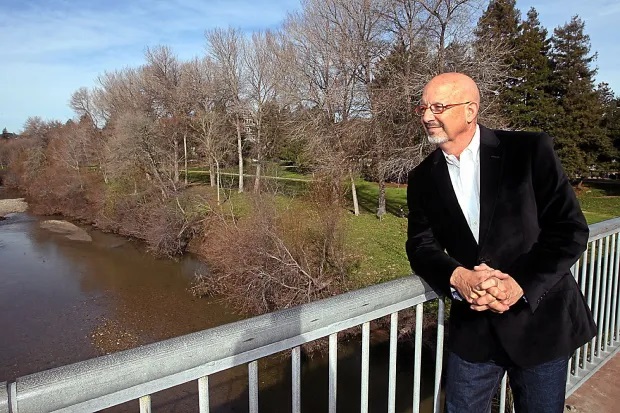
My guest today on Sustainability now is David D. Schmidt, who spent two decades writing San Francisco Bay Area An Environmental history published in 2025.
His book is a magisterial tome addressing virtually every aspect of Balandia and its environmental transformation over the past 400 years. From 1991 to 2021, Schmidt was a writer in the public affairs office at the San Francisco U.S. environmental Protection Agency.
Much of the book is based on his experience in that position.
The book has just received the California Book Awards Gold Medal for contributions to publishing.
David Schmidt, welcome to Sustainability Now.
[00:02:04] Speaker C: Thank you, Ronnie.
[00:02:06] Speaker B: I want to start with something that I published 25 years ago. I was dabbling in environmental history and published an article with the title Environmental History, Political Economy and Change.
And I quoted Donald Worster in that article. He was then the dean of U.S. environmental historians, and he wrote the following.
We environmental historians are not concerned merely with the history of literary reactions to nature or of conservation policies, as important as those are. We are in the largest sense interested in all the ways people organize themselves into patterns of power production and ideology in the presence of what we conventionally call nature, the non human world. Our goal is to discover through the study of the past some general ideas about how to make those patterns work better in the future for both ourselves and the rest of the world. What I'd like to do is proceed with Worster in mind, although I want to talk again about the, you know, the content of your book and some of the stories that you've, you've included in there, stories and histories that you've included in there, but also think about environmental change and transformation in a kind of a broad way.
Okay, so although the sort of aggregation of all of the people who have lived in this area for the last 400 years are not necessarily sort of directed towards, you know, particular outcomes. They, they act in particular ways, they live in particular kinds of environments which have been influenced in many respects by, you know, the European environments from which the original settlers came.
And those things sort of resonate through history. In terms of that environmental history.
I'm not going to hold you to that level of, of detail, but I just wanted to for our listeners. I wanted to make that clear that that's how I read, read environmental history. Why don't we begin by having you give a broad overview of the book and what motivated you to write it, especially given the massive amount of research that it required.
[00:04:11] Speaker C: Well, I worked on this for many years and what I wanted to do is tell essentially the life story of the San Francisco Bay Area, its lands and waters, all nine counties surrounding the bay, plus Santa Cruz County.
I wanted to give Bay Area residents an appreciation of both their natural and built environments.
How it was during indigenous times, what were the impacts of colonization, agriculture, all the different industries, urbanization, including forces of nature, fires, floods, earthquakes.
And also what are the lessons of environmental history and how people have fought successfully over the past more than a century to protect and restore the natural areas.
And that's the history of the Bay Area's environmental movement, which has really been a nation leading environmental movement that the rest of the country was kind of patterned on or was an inspiration for the rest of the country from 1970 onward.
[00:05:24] Speaker B: Well, I will say in reading the book that I was impressed and depressed by the levels of exploitation that people engaged in, you know, and the ways in which the, the land and it's and its resources were simply seen as things, you know, to put into self interested accumulation of wealth and, and industrialization and all.
So what is your background? I mean, you were at the epa. How did you end up there and what did you do there and did that experience influence you in how you approached the topic and wrote the book?
[00:05:58] Speaker C: Definitely it did.
Let me start at the beginning. I have a bachelor's degree in history from Santa Clara University and that's in Silicon Valley. I was an environmental activist there with the public interest research group Calperg in the mid-70s.
And I worked on a campaign to stop building nuclear power plants in California and to promote clean energy.
That was somewhat successful.
After graduating I went to Washington D.C. i wrote a book and a newsletter on ballot proposition campaigns and that included some of the environmental initiatives that were on the ballot here in California.
Like the California Coastal conservation initiative in 1972 and the anti Nuclear Power Initiative that I worked on in 75 and 76.
As a result of that, I wrote a book on ballot proposition campaigns called Citizen Lawmakers.
And then in 1991, I started working for the U.S. environmental Protection Agency's regional office in San Francisco and I was in the Office of Public Affairs. I was a writer. I wrote press releases, I spoke to the news media.
I wrote annual reports about what EPA had accomplished in California, Arizona, Nevada, Hawaii.
And I wrote for an internal website about the work that EPA people were doing.
And about three years into that job, I thought how useless my degree in history was for that job. But then I went home and thought about it again and I said, no, a degree in history is not useless because I can put together an environmental history of the San Francisco Bay Area, the area that I know so well.
And, you know, I was gathering more information all the time that I worked at EPA 29 and a half years.
So it gave me a, a perspective on how environmental history was happening all the time.
And I was gaining a perspective on, you know, which news stories had the most impact on the real environment, you know, both in the Bay Area as well as statewide and other states as well.
So, yeah, it gave me a great perspective on what had real environmental impacts and was, you know, making a big difference in, in the environment and making a big difference for people as well as for biodiversity and pollution and all the different environmental issues that are out there.
[00:08:55] Speaker B: Did you encounter any environmental history while you were doing your degree at Santa Clara?
[00:09:00] Speaker C: I read a little bit about the development of water infrastructure in Los Angeles. The so called water grab, where the LA Department of Water and Power secretly bought up lots of land in the Owens Valley and then started building a pipeline to take the Owens river water out of the Owens Valley and bring it to la.
And that was, you know, very interesting, informative.
And there was, there was soon a, a movie that fictionalized, right, that whole thing, Chinatown.
[00:09:43] Speaker B: Yeah.
[00:09:44] Speaker C: And it was fascinating because not only did I learn about what happened in la, I was beginning, just beginning to learn about what happened in San Francisco with the Hetch Hetchy water system, which had some similarities to what had happened in LA with the Water and Power Department there.
[00:10:09] Speaker B: Yeah, I remember that book, although I cannot remember either the title or the author.
But anyway, for those of you who are interested, there is this great book was published what, 30, 35 years ago about the LA water grab around Lake Mono. The area around Lake Mono. Well, okay, so the book is organized, has. Has quite a lot of chapters. It's organized topically first and then geographically.
I'm curious how you decided to use that particular approach. I mean, it's. It makes a lot of sense, but it also then, you know, goes from place to place to place. So what made you decide to use that particular approach?
[00:10:55] Speaker C: Well, it just developed over time.
At first, I just had an idea for a very limited product that would be a map showing the environmental battlegrounds of the Bay Area.
Things like the nuclear power plant at Bodega Bay.
It was stopped after an earthquake fault was found in the hole that PG&E dug back in the early 60s and the save the Bay movement. I was going to put, you know, just the highlights of the fights over environmental issues that had occurred in the Bay Area. But I soon found out that there was way more information than I could show on a map.
I came up with an idea for 10 maps, each on a different topic, with little pieces of text that would be attached to various points on each map. And I worked on that for a couple of years and finally realized that there was too much information, even for a series of 10 maps.
So I brought it to a publisher and said, can you make this into a book? And they said, yes, we can, but we want you to turn it into a narrative and turn each of those maps into a narrative.
And so, you know, I worked for a number of years on doing that, and I was able to put a lot more information, tell the whole story on all these different topics. And it turned out that I had 20 topics and I had an individual history of each topic. And that made sense because if I had gone completely chronological, I would have been jumping from topic to topic all the time. And each topic needed background information.
And it was much easier, and I thought easier to understand if I separated out the topics and. And made a separate narrative out of each topic so that the. The later information would build on the background information at the beginning.
[00:13:11] Speaker B: Well, I mean, if you think about. About the topics I'm trying to think about how to frame this. That water, let's just say water, right. Was extremely important in the development of American civilization around the bay. Obviously, it began with water. With the Spanish. Well, it began before the Spanish.
But, you know, can you. Can you give us a kind of a broad history about how water and the moving of water, you know, transformed the society that had begun to appear around here, the European society?
[00:13:48] Speaker C: Right. That's actually a good example.
The water story begins with the native tribes, and they generally located Their villages around a perennial source of water, which would be a perennial stream with fresh water or a spring, because these communities were small enough that a small stream, a spring, would be enough for a tribal village site.
But then came the missions and the Spanish colonizers, and they pretty much did the same thing, Locating their settlements, their missions, around creeks, streams, rivers, or springs that had a source of fresh water that was sufficient for these small communities.
But during the gold rush, that suddenly became unworkable because there were so many people in San Francisco. There was this 25,000 people in 1849, where there had been about 400 a year earlier.
And for 25,000 people, the sources of water inside San Francisco were just not enough. There were a few springs, a few small streams, but they were completely inadequate. And so entrepreneurs began to take boats to other places outside the city to fill up barrels of water with, you know, water from springs or streams that emptied into the bay at two places, namely Hunter's Point, which is now the southern southeastern tip of San Francisco, and Sausalito across the bay in Marin County.
But these, yeah, these water purveyors, they would fill up barrels of water, put the barrels on a boat, bring them back to present day downtown San Francisco, which is where, you know, the city was.
And then these barrels of water would be placed onto wagons, and someone with a horse and wagon would then go throughout the streets of San Francisco selling water by the bucket. And it was. It was very expensive to the point where only a rich person could afford to take a bath. If you were, you know, just a average worker, you could only afford to get the water that you needed to drink and maybe clean a few dishes, but that was it. And then, of course, different entrepreneurs started to build larger systems of pipelines.
The first one was to build a pipeline in a pumping plant that went from the Lobos creek in the Presidio over to Ghirardelli square. And then a pump house there would pump it over the top of the ridge to the city, where the first people who got this were, of course, the rich people and the businesses. But that first pipe, piped water system didn't get water into the city until 10 years after the start of the gold rush.
And by then, there was a population of at least 100,000 people. And they were, you know, still getting their water from these, these wagons, buying it by the bucket. And of course, as the years went on, one company got a monopoly on all the water sources in San Francisco. And with that, they had the capital to build dams and Aqueducts and flumes from San Mateo county to San Francisco. And that was the. The Spring Valley Water Company. They built five dams in San Mateo county, just one after the other after the other, bigger and better each time. And more and more water would flow into San Francisco each time they. They finished a dam in a pipeline.
[00:17:54] Speaker B: Those are the. That's the chain of lakes along Highway 280, right?
[00:17:57] Speaker C: That's. That's correct. It's the Crystal Springs watershed. It's larger than the city of San Francisco, and it has five lakes. And then those sources of water proved to be insufficient for the growing city of San Francisco.
So the. The city government started looking for. Well, first, if it was the Spring Valley Water Company, went over to the East Bay, found some water sources there, started piping water from the East Bay into the Crystal Springs watershed.
And then the earthquake happened. 1906, earthquake and fire.
There was a widespread belief in San Francisco that the Spring Valley Water Company was responsible, that they had built insufficient pipelines, breakable pipelines.
And the fact was that, you know, no matter who built the pipelines, they still would have broken during the. During that earthquake, and the city still would have burned. But because there was this belief that the Spring Valley Water Company had done a bad job, there was a successful movement to take over the Spring Valley Water Company and, and to buy it out and to build a whole separate and new system that incorporated the Spring Valley Water Company, but tremendously expanded the capacity by tapping into a very large water source in the Sierra Nevada, which happened to be the Tuolumne river in Yosemite National Park. And that would have required a big dam within the national park. John Muir and the Sierra Club and other environmentalists throughout the nation fought that for years. But San Francisco's lobbying power was greater, and they got the congressional permission to build the dam. They built it, built the Hetch Hetchy Water and power system, and 20 years later, all that water started to flow into San Francisco. It took 20 years to build the water and power system.
[00:20:02] Speaker B: When did it start flowing? What year?
[00:20:04] Speaker C: It started flowing in 1934.
And the.
The architect of the system, Michael M. O', Shaughnessy, who was, you know, head of San Francisco's city engineers, he was, you know, working on that for the entire 20 years that it took to build it.
And he actually finished it and then promptly died of a heart attack before they could have a ceremony at the.
At the Crystal Springs watershed, where they initiated the flow of water.
[00:20:37] Speaker B: How did they get the water across the bay?
[00:20:40] Speaker C: They built a Very large pipeline on a sort of a platform, a bridge platform that crossed the bay down at the Dumbarton, near the Dumbarton Bridge.
And they very slowly and carefully lowered that pipe down to the surface of the bay. And it, you know, rested on the very flat bottom and, you know, worked its way into the.
Into the soft mud of the bay.
And the biggest engineering challenge, though, was getting the water under the Coast Range. They had to build a tunnel from Tracy practically to Fremont. It was a 20 mile long tunnel. It took 10 years to build.
People died building it. And there was a work stoppage after an incident where some of the workers died, and finally they got it done. But it took 10 years just to build that tunnel alone.
And the reason they needed to build it was so that the water from the Tuolumne river would all flow by gravity all the way into the Crystal Springs watershed. It would flow, you know, up and down without having to be pumped. So they didn't have any pump houses. It was all, you know, one single pipeline. And the force of the water on the Tuolumne river end, which was higher, would push the water all the way through to the Crystal Springs lakes.
[00:22:16] Speaker B: Wow.
You're listening to Sustainability now. I'm your host, Ronnie Lipchitz, and my guest today is David Schmidt, an environmental historian who recently published San Francisco Bay Area An Environmental History, which basically covers the nine county area in terms of every topic and location you could ever imagine. And we've just been talking about how the pipeline from Hetch Hetchy to San Francisco, the route that it ran.
David, there's some other things I want to catch up on, but does San Francisco consume all of the water that it gets from Hetch Hetchy?
[00:22:55] Speaker C: No.
San Mateo county is the biggest customer for San Francisco's water.
So, yeah, most of San Mateo county, in fact, almost all of the county, gets its water from that Hetch Hetchy water system that San Francisco owns and operates. In fact, even Palo Alto gets its water from the San Francisco system.
[00:23:21] Speaker B: Indulge me with a counterfactual. Could San Francisco have found its water supply elsewhere in the Bay Region, or was really Hetch Hetchy the only answer?
[00:23:35] Speaker C: Hetch Hetchy wasn't the only answer. In fact, it wasn't the only place that was considered.
Among the first places that was considered was Lake Tahoe. And I can't remember what the reasoning was that they were not going to use Lake Tahoe. But, you know, it was possible, conceivable that they could have built a pipeline from Lake Tahoe and of course there were other rivers in the Sierra. There's actually many rivers that come down out of the Sierra into the San Joaquin Valley and one of them was used by Oakland.
That's the Mokelemne river where Oakland built a series of dams on the Mokelumne river and uses most of that water.
So, you know, that's another possible source. There were several other rivers that were considered that had a, a good substantial year round flow of water. But Hetch Hetchy was chosen because it had the best quality water, very clean water and it had a really good dam site where you could build a major dam that would hold back a tremendous volume of water. And that happened to be at Hetch Hetchy in Yosemite National Park.
[00:24:58] Speaker B: There's a movement, not a very big one, to tear down Hedge Hetchy. Do you think that that will ever happen?
[00:25:07] Speaker C: I think that it's possible. It could happen.
It's going to be very expensive if it does happen. But the, you know, the reason why it's feasible at all is that there are a couple of dams that are downstream from Hetch Hetchy and the city of San Francisco and all its customers could just tap into the same water by taking the water out of those downstream reservoirs and demolishing the upstream reservoir in, in the national park.
[00:25:45] Speaker B: That's interesting.
Well, let's change, let's change stories.
Most of the people who live around the Bay Area and since I've lived around the Bay Area direct in Berkeley for 10 years, really have no idea what was here before the Europeans arrived.
You know, I mean that, that's sort of, we, we get these kinds of stories but, but those are really, I don't know, difficult to imagine. Can you tell us what did the area, the region look like before the Spanish arrived? Who was here? You know, how did they survive all that stuff?
[00:26:23] Speaker C: Well, when the, the first Spanish explorers arrived in 1769, the Portola Expedition, they found that there were small Indian villages all over the Bay Area. They could see the, the smoke from the fires.
Currently, anthropologists estimate that there were about 40,000 people living in the Bay Area, all in villages of less than 400 people. Usually only about 100, maybe 150 people in most of those villages.
They were widely spaced all over the landscape, but most of the landscape was open. It was oak savannah, widely spaced oaks, grassland, but tremendous numbers of oaks, tremendous numbers of square miles of grassland over the hills and over the plains of the Santa Clara Valley and the Napa Valley, the Sonoma Valley, the Santa Rosa Plain up here in the North Bay.
And the indigenous people used the grasses and the oaks as their main source of sustenance.
They harvested the grass seeds, they harvested the acorns to make their staple foods, which were acorn mush and tamales made from grass seeds.
They also harvested the fish and the wildlife. Every river and every perennial stream had migratory salmon and. Or steelhead, and these during the spawning runs of the salmon and steelhead. There were plenty of salmon and steelhead in every stream, and it was easy to catch them either with spears or with nets, or even throwing a little bit of ground up soap root from the soap plant. It was something that would stun the fishes and they would float to the top and you could just grab them.
So the indigenous people made use of all these resources and, you know, they hunted game animals like rabbits and deer.
It was very abundant in terms of food resources to such an extent that the places that had the highest population density in all of North America during indigenous times were Palo Alto and the Santa Rosa Plain, because these areas had the lushest grasslands, the most oaks, and the greatest numbers of salmon and steelhead migrating on the streams, especially along the Russian River. Up north of Santa Rosa, there was village after village after village of people whose mainstay were the. The grasses and the acorns, but even more importantly, the salmon. They had four different species of salmon and steelhead migrating on the Russian River.
So that supported a. A bigger population, a denser population than other parts of indigenous America.
[00:29:44] Speaker B: How much of the bay was marshland?
[00:29:46] Speaker C: Many, many square miles, probably several hundred square miles. And these marshes were along the shores of the bay.
There was a very great expansive marshland around the south bay, at least 100 square miles, maybe 200.
And then a similar expanse of marshland around Suisun Bay and more marshland at the upper edges of the bay between the north edge of San Pablo Bay and Sonoma and Napa. Many, many square miles of marshland there, too. But if you. Yeah, if you looked all around the bay, some of these major, major marshlands are now being restored. They were used as salt ponds, salt production ponds, for many decades, over a century. But now about half of them, or even more than half, are being restored as fresh water. Excuse me, saltwater wetlands, salt marshes.
And some are being retained as salt ponds because there are many bird species that depend on the little creatures that the little shrimp that live in salt ponds.
[00:31:04] Speaker B: Well, I mean, that's an interesting story, right?
One wonders what the flights of birds looked like, right, when the marshes were there. Before those particular sources of food, did the, did the birds coming through change the species change?
And I mean, the same thing is true in the Central Valley, right?
[00:31:23] Speaker C: Well, absolutely. The, the numbers and species of birds changed a lot due to the two things, hunting, and there was unlimited hunting during the 1800s. And secondly, the conversion of salt marshes into salt production ponds.
And so in the South Bay, the shorebirds and birds that wintered in the salt marshes decreased tremendously.
One of the birds, the Clapper rail, also known as Ridgeways rail, declined due to hunting in addition to the salt production ponds. And that bird became an endangered species.
But the flights of millions of birds in the salt marshes of the southern San Francisco Bay disappeared. And there were still.
There was a remnant population that lived in the very small remnants of salt marsh that existed, you know, after 1950. But it was a very small remnant, and that's why the salt marsh harvest mouse became an endangered species.
Also, the huge numbers of birds that, that still existed up around Suisun Bay, because Suisun Bay was not converted into salt marshes.
Those disappeared in the rest of the bay where the salt marshes were converted into salt production.
[00:33:03] Speaker B: Well, in the course of doing the research, you've mentioned that you found a lot of sort of interesting and somewhat bizarre stories.
Maybe you can tell us about a few of those.
[00:33:15] Speaker C: Yeah, just briefly, I want to mention that during the early 1800s, grizzly bears were seen on Ocean beach in San Francisco, feasting on the carcasses of dead whales.
Grizzly bears were also seen all over the East Bay, all over the South Bay. In fact, everywhere in the Bay Area there were grizzly bears.
Another interesting story that I ran across was the origin of Alfred Hitchcock's movie, the Birds.
Alfred Hitchcock was living in Santa Cruz during the summer of 1961, and he read a very bizarre story that happened only about five miles away from Santa Cruz. It was one night in August, foggy night in August of 1961 in the small beach town of Capitola, which, as you know, it's only a couple miles from Santa Cruz. But at that time, it was kind of an isolated little beach town, and there weren't very many people awake in the middle of the night. But those few who were awake, they witnessed thousands of seabirds suddenly coming into the town, flying crazily every which way, bumping into windows, bumping into cars, flying into.
They seem to be attracted by light. They flew straight at the car lights and, and bumped into them. And one of the police officers who was on duty at the time said he had to get out of the car in order to verify that he was actually seeing what he thought he was seeing. All these seabirds, you know, crashing into his car and crashing into houses all over town.
And some of them were even biting people. So this got written up in the Santa Cruz newspaper and the San Jose newspaper. A day or two later, Alfred Hitchcock read about it, and it became the. The inspiration for his movie the Birds.
[00:35:26] Speaker B: What was. What was motivating? I mean, what was the cause of this? Was it something the birds ate? It must have been something they ate, right?
[00:35:34] Speaker C: Well, at the time, it was a complete mystery. And that's what made it so eerie, was that no one could figure out what made these birds all fly into town. There was 4,000 birds that flew into town, bumped into things, and dropped dead on the streets in yards of Capitola. And no one figured it out until 35 years later when researchers at the UC Santa Cruz were trying to figure out why some sea lions had died. They were doing autopsies and, you know, looking at what they ate, and turns out they had eaten a lot of anchovies.
And inside the anchovies, it turned out that they had been eating toxic algae. And this toxic algae was not poisonous to the anchovies. They ate it and, you know, continue to live without a problem. But when other animals ate those anchovies, they were poisoned with the product of the toxic algae, which is domoic acid. Domoic acid is a neurotoxin, and it's like mercury. It makes you act crazy before you drop dead. And that's what happened to these.
These birds. They. They. You know, they flew crazily into town, bumped into things, and then dropped dead.
[00:37:00] Speaker B: Did you find anything else? Any other interesting stories?
[00:37:03] Speaker C: Oh, I've. I've got dozens of them.
[00:37:06] Speaker B: We'll just pick one.
[00:37:07] Speaker C: Yeah. One happened up here in the North Bay. There was a tribe of Indians that were very resistant to the Spanish. They were very proud people, very fierce people.
And the Spanish called them Wapo, which means proud, brave, or fierce.
And if you know Spanish, you know that many teenagers are like that. They're Wapos. Well, these.
This tribe of Indians, the Wapos, the Spanish had multiple battles against them, and they fought back with everything they had.
But one of the things they had, which, you know, no other tribe used in their. In. In, you know, fighting against the Spanish, was the sling. And this was a sling, like David in the Bible, used against Goliath. It was a long leather strip, and the fighter would place a small stone into that strip and swing it around his head several times and then let it fly.
And it could take out a giant named Goliath or it could take out any, any person if it hit them in the right place.
But of course, the Wapo people proved to be no match for the Spanish, and eventually they were defeated militarily by overwhelming numbers of Spanish soldiers, together with Mission Indians. Hundreds and hundreds of Mission Indians from Sonoma who were led by the leader of another tribe who became known as Chief Solano. But eventually, of course, these.
This tribe was defeated by a smallpox epidemic which, you know, wiped out most of the remaining Indians of the late 1830s throughout the bay Area.
[00:39:09] Speaker B: You're listening to Sustainability Now. I'm your host, Ronnie Lipschitz. My guest today is David Schmidt, an environmental historian, recently published a magisterial tome called San Francisco Bay Area An Environmental History. And we've been talking just about, about interesting stories that he discovered. In the course of. How many years did you, did you work on this?
[00:39:34] Speaker C: I started it in 1994. Worked on it.
[00:39:37] Speaker B: Okay.
[00:39:37] Speaker C: One years.
[00:39:38] Speaker B: So in the course of 31 years of doing research on all kinds of topics and areas of the bay.
[00:39:47] Speaker C: Can I mention one more interesting.
[00:39:49] Speaker B: Yeah, sure. Of course. Of course.
[00:39:52] Speaker C: Yeah. In the, in the North Bay, near the Carquinus Bridge, there used to be a smelter, a, you know, a factory that converted the rocks containing copper or lead or silver, and, you know, got the copper, lead, and silver out of the rocks. They would crush the rocks and they'd heat them to high temperatures in furnaces, and they would create this waste product called slag, which was molten rock, and they would dump it into the bay. Well, a mile away, there was the Union Oil Refinery, and they would typically have oil tankers which would bring in oil that would be refined at the refinery. And then, you know, after they had a product like gasoline, they would pump that into another oil tanker and which would take it away.
And they often had spills of oil and gasoline on the bay.
One time in 1922, there was a gasoline spill from one of these, you know, tanker loading operations, and it started to float on the surface of the North Bay, and it reached the boundary of the Selby smelter, where they were dumping hot molten slag into the bay. That hot, molten slag ignited the gasoline, and there was a fire of floating gasoline over San Pablo Bay that extended more than a mile. And it seemed like the whole bay was on fire in the middle of the night.
And that's the story of the time the bay caught on fire. Eventually of course, it burnt out when the fuel was all burnt.
[00:41:48] Speaker B: Let's again, transition and talk about the environmental movement that began, I guess, in the 1960s to save the bay. Tell us about that, how it got started. You know, who started it, what's its goals were.
[00:42:04] Speaker C: Okay, well, again, I want to start at the beginning. There was an environmental movement that preceded the Save the Bay movement. It started in 1899, and it was the Save the Redwoods movement. And there was a photographer down in San Jose named Andrew Hill and a resident of the Santa Cruz mountains, Josephine Clifford McCracken, who started this movement to save the redwoods that resulted in the first state redwood park, which was Big Basin, and in fact, that was the only state park in the early 1900s. And of course, that movement resulted in the Save the Redwoods League, which went on for decade after decade. It was on the back burner for a while. Let's just say it wasn't a major issue.
But there were four women in Marin county in the 1930s that saw that the Golden Gate Bridge was about to be built and that there would be a lot of development in Marin County. So they started the Marin Conservation League to save some of the natural areas of Marin county from development. And they worked for the next three, 30 years building up the regional and state parks in Marin County. They were, you know, they were very successful. And then in 1957, a journalist at the San Francisco Chronicle, Harold Gilliam, wrote a book on San Francisco Bay. The title was simply San Francisco Bay. It told about, you know, the history and the beauty of the bay and all the resources of, you know, fish and shellfish and oysters that had once been harvested from the bay. And of course, some of them still were harvested from the bay, not the. Not the oysters. But, you know, there were still plenty of fish in the bay. And that got a lot of people thinking as to whether the bay actually was something worthy of being saved, or was it just a dumping ground for all of the Bay Area's garbage, which was happening in the 50s. Every city on the shores of the bay had a bayside dump where they were dumping all their garbage.
And one of these dumps was really unavoidable. Everyone who drove to the airport, the SFO airport, from San Francisco or from Berkeley, they all had to drive by San Francisco City Dump, in which huge amounts of trash were being dumped into the bay every day just south of the city limit.
And one of the people who often, you know, made this. This trip was Kay Kerr, and she was the wife of the chancellor of UC Berkeley. And one of her jobs was to go down to the airport to pick up visiting dignitaries and professors from around the world who were visiting UC Berkeley.
And she would find that when she drove by this part of the bay, it was the first view of the bay that these visiting dignitaries and professors had. And of course, the first view that they had was a, a wide bay on one side of the freeway and huge amounts of trash being dumped into the bay on the other side of the freeway. And it was, she found it cringe worthy. She wanted to do something about it. She thought that this bay should not be just a dumping ground for garbage. And she could also see that there was garbage being dumped into the bay at Berkeley by the city of Berkeley.
And she could see it from her home. She was, you know, her home up in the Berkeley hills. She could see it every day, it was so visible. So she knew that she couldn't do much about it if she was, you know, just one person.
So she talked about it with a couple of her friends, Esther Gulick and another friend whose name will come to me in a few seconds.
[00:46:20] Speaker B: That was Sylvia McLaughlin.
[00:46:21] Speaker C: Anyway, they got together and they said, we've got to do something about this. Let's start right here in Berkeley. Let's see if we can, if we can stop this garbage dump in Berkeley from expanding into the bay.
And they got a couple of the environmental leaders to meet with them and like, like Harold Gilliam, the guy who wrote San Francisco Bay, and David Brower, who was then head of the Sierra Club.
And they said, no, we can't help you. But David Brower said, tell you what, we'll give you.
I'll give you the, the mailing list of all the Sierra Club members in Berkeley.
And, you know, you can see if anyone's interested, do a mailing to them. And so they sent out a mailing to every Sierra Club member in Berkeley and they asked people to come to a public hearing. City of Berkeley was holding public hearings on the expansion of that garbage dump into the bay. And that public hearing was mobbed with hundreds of people who were irate about the filling of the bay with garbage. And that started the Save the Bay movement. They expanded it around the entire bay with the help of Harold Gilliam, who wrote about it in his column in the San Francisco examiner and later the Chronicle.
And after eight years, they were able to get two laws passed that prevented the filling of the bay with anything, with very limited exceptions. And the first bill was signed, you know, a temporary Ban on filling the bay was signed in 1965 by Jerry Brown's father, who was governor at the time, Pat Brown. And then four years later, they had to pass another bill in the legislature to create a permanent ban on filling of the bay.
And they were happy to get that signed by Governor Ronald Reagan, who, despite the fact that he was a conservative Republican, he listened to the wishes of the thousands of people in the Bay Area who had written the legislature or called the legislature and said, we want to stop the filling of the bay. And he signed that bill and it saved the bay.
[00:48:42] Speaker B: Well, David, we're getting toward the end of our time together and I was wondering if you might be able and willing to prognosticate about the environmental future of the San Francisco Bay region.
[00:48:55] Speaker C: Well, I have given that some thought. There is the problem of rising sea levels and wetland scientists are working on that. They've been building levees that have very gradual slopes so that wetland plants can slowly move up the slope as the sea level rises.
So that's going to be important in the future, although it is going to cost a lot of money to rebuild all the levees around the bay to keep them from flooding places like the San Francisco Airport and all the other low lying areas like Foster City.
But in addition to that, I foresee a continuing struggle over urban development. It's been going on for the past 70 years, like my entire lifetime. And in recent years it's been depicted in the media as NIMBY vs YIMBY, not in my backyard vs yes, in my backyard. There's actually a group that advocates for housing development for about the past 15 years called yes, in My Backyard.
But at the heart of these development issues is whether or not to develop, to build more housing or other developments, where that's going to go. There's broad agreement that there is a need for more housing, lots more. But where to develop it? Will it be within city limits, within development boundaries that almost all the counties now have development boundaries and cities are only allowed to build within the development boundaries boundaries, or will the cities expand? Will the counties allow the cities to expand onto nearby farmlands like they used to do in the 50s and 60s and 70s? And there's a really big development proposal in Solano county where, you know, this is an issue. Right now there's a group of Silicon Valley billionaires that are trying to build a new city in Solano county on a piece of farmland that is bigger than the city of San Francisco. And they went up and secretly bought farm after farm after farm.
And now that they have all that land, they're trying to build a city up there in the farmlands with Solano county, you know, not within the boundaries of any city.
And environmentalists and farm advocates are fighting that tooth and nail. They have defeated it so far. But the Silicon Valley billionaires are not giving up now. They want to build something that's right on the, on the Sacramento river at Rio Vista, which would be a similar development.
And this fight is going to go on for years, but it's it's actually, you know, ongoing pretty much throughout the Bay Area.
And for the foreseeable future, it's going to continue.
[00:52:04] Speaker B: All right. Well, David Schmidt, thank you so much for being my guest on Sustainability now.
[00:52:10] Speaker C: All right. And I would thank you for, yeah. Talking about my book, San Francisco Bay Area and Environmental History, which is available from me.
And my email is David Nature SF that's DavidNature SFmail.com thank you.
[00:52:34] Speaker B: You've been listening to a Sustainability now interview with David Schmidt, a lifelong San Francisco Bay Area resident, naturalist and environmental historian who worked for the EPA for 30 years and recently published San Francisco Bay Area An Environmental History, a magisterial tome addressing virtually every aspect of the Bay Area and its environmental transformation over the past 400 years. The book has just received the California Book Awards gold medal for contributions to publishing.
If you'd like to listen to previous shows, you can find
[email protected] SustainabilityNow and Spotify, YouTube and PocketCasts, among other podcast sites. So thanks for listening and thanks to all the staff and volunteers who make KSQD your community radio station and keep it going. And so until next every other Sunday, sustainability Now.
[00:53:33] Speaker A: Good planets are hard to find out.
Temperate zones and tropic climbs through currents and thriving seas, Winds blowing through breathing trees, strong ozone, safe sunshine.
Good planets are hard to find. Yeah,