Episode Transcript
[00:00:00] Speaker A: Hello K SQUID listeners. It's every other Sunday again and you're listening to Sustainability Now, a bi weekly case good radio show focused on environment, sustainability and social justice in the Monterey Bay region, California and the world. I'm your host Ronnie Lipschitz.
[00:00:16] Speaker B: Come and listen to a story about a man named Jed. A poor mountaineer, barely kept his family dead and then one day he was shooting at some food and up to the ground come a bubbling crude oil that is black gold Texas
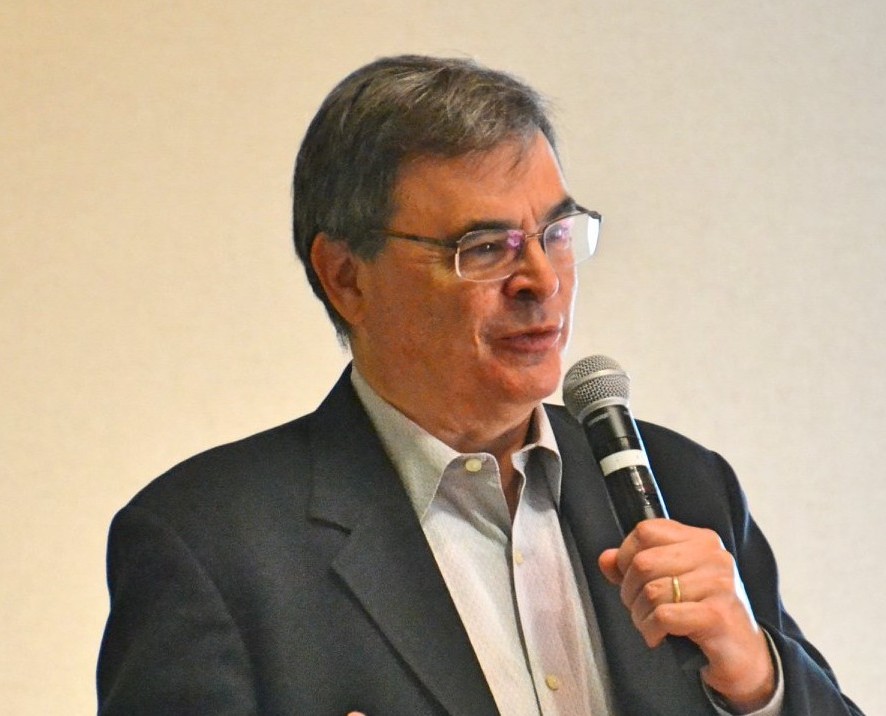
[00:00:33] Speaker A: black gold, Texas tea. Every day we're regaled with news about the current price of Brent crude which goes up and down like a yo yo. Depending on what our president has said about Iran and what is going on there. The spot market price of Brent is around a hundred dollars per barrel. If you're good at math, that works around out to around $2 and 40 cents per gallon. But in California we're paying $5 a gallon which works out to $210 per barrel for gasoline. So why the big difference? What does it cost to pump, refine and ship oil? What determines the final price? And why did the big oil companies realize more than $130 billion in profits since the United States and Israel attacked Iran? The ways of oil are mysterious and my guest today will help us to unravel some of those mysteries. He's Harold Skip York, Ph.D. a non resident fellow in energy and Global oil at the center for Energy Studies at Rice University's Baker Institute in Houston. Before joining the Baker Institute, York was head of community commodity strategy for petroleum at bhp.
He's also the chief energy strategist at Turner Mason Co. An energy consulting and advisory firm focused on the crude oil refining midstream and biofuel industries.
He recently published an op ed in the New York Times entitled think diesel prices are bad, wait until your house needs heating.
Skip York, welcome to Sustainability Now.
[00:02:02] Speaker C: Great. It's great to be on. Thanks for having me.
[00:02:04] Speaker A: Listen, I think the best place to start is with a little background. First of all, who are you, what is the Baker Institute and what do you do for them?
[00:02:12] Speaker C: So my career, I've been in the industry around 30 years. Roughly half of that time has been with operating companies like Exxon Mobil and bhp, the Australian mining company.
And then the other half has been in consulting firms like McKinsey and Company, Charles River Associates, Wood McKenzie.
Right now I'm kind of working, wearing two hats. I'm a non resident fellow at the Baker Institute and I also am chief energy strategist at a niche consulting firm called Turner, Mason Company. The Baker Institute is a nonpartisan policy research institute founded by James Baker, the former Secretary of State and Treasury Secretary, about 30 years ago.
And he was a Houston resident, he still is a Houston resident. And when he retired from public service, he wanted to give something back. And so he worked out an arrangement with Rice University to create the Baker Institute. We are. What we think makes us disparate is we try to be. We are a nonpartisan research group, so we do not advocate on specific pieces of legislation. Rather, we do analysis of a piece of legislation or about a public policy issue and just try to weigh the pros and the cons and let decision makers use that information to make their decisions. What do I do at the Baker Institute? I'm the non resident fellow for Global energy, which means that I try to have a fairly broad portfolio across the energy value chain and energy systems. But you can imagine, because we're focused in Houston, and we are in 2026, most of this year has been spent specifically on oil, a little bit on natural gas because of all of the, you know, kind of just because of all the turmoil in between Russia, Ukraine and the Hormuz crisis. It's really been a year to focus on, you know, focus on the hydrocarbons.
[00:04:02] Speaker A: Yeah, well, you know, I think. I think people, as a rule, you know, hear certain things about this and of course they see the price at the pump, but other than that, you know, know how the price is determined, what determines the price is pretty much a mystery. And so I really want to focus on oil markets today, sort of as an explanation. So the first question is, what is Brent crude and why is it the benchmark for oil all over the world?
[00:04:31] Speaker C: So Brent crude is now, it. It is now sort of a. It's a shorthand version of essentially saying light, sweet crude oil traded in northern Europe. And what do we mean by when we say a crude oil is light and sweet? Well, what we mean by that is that it's very low in gravity, which has.
There's a calculation called the API.
And the API is the inverse of the specific gravity. So very low specific gravity, very high API point. So it flows very easily. It's a very easy to refine crude. And then there are medium crudes, and then there are heavy crudes. And as you go from light to meet light to heavy, the crudes get increasingly more complex to refine and turn into finished petroleum products like gasoline, jet and diesel fuel. When we say something a crude oil is sweet, we mean that it is low in Sulfur. And within the industry where that, where that cutoff is kind of depends. But broadly speaking, most people say if it's 1% sulfur by weight, it is 1% sulfur or less. It is light, it is sweet, and if it's more than 1%, it's called sour.
And what that means is that that's another processing it is that it is hard. We want to get sulfur out of fuels because it's better for the engines and better for emissions. And so, you know, light crude, light sweet crudes are easier to refine into finished products than heavy sour crudes. So the Brent complex, the reason why I say that it's now a shorthand, is that it was originally named after the Brent fields in the UK in the North Sea, back when, when the North Sea started to open up in the early 1980s. The reason why it's a shorthand is that the Brent field, the last Brent field, closed in 2022. So there actually is no more Brent in Brent crude oil. What it is is it's a mixture of other light sweet crudes that are all blended to a specific specification of this API gravity and this percent sulfur. And if you blend your crude to those two specifications, it goes into the Brent complex.
So why does, why is it the benchmark? Well, when the Brent field was opening, when the North Sea was opening up in the early 1980s, there was actually two things that were going on at the same time. One is we were starting to see one of the consequences of countries nationalizing oil production in their countries like Venezuela, Saudi Arabia, Iraq, Iran is prior to that nationalization, crude oil largely just traded among the large, the seven sisters, the large seven oil companies in the world, which was like Exxon Mobil, Chevron people, bp, Shell. And when we nationalize them, you started to get the, the market started to fragment down in that there. We now started to get other participants into the value chain beyond just the integrated oil companies. So now you need a way to value crude. So before the 1980s, crude was just kind of, it was just a transfer price inside a refine a company like Exxon from the upstream through the midstream transfer logistics group and to the refining. Now that we've got nationalization and this fragmentation of the private sector part of the oil industry, we needed a way to value crude that was trading between companies and we needed to go and find one. So the Brent Field was coming online and it was growing up to about a million barrels a day of production. So it was a natural candidate because it was a light sweet Crude. It was representative of the last barrel of crude oil that a refiner puts into our refinery because refineries will stack the crude slate. What we mean by that is they will start loading the atmospheric distillation tower with heavy crudes and then medium crudes. And as downstream units start to bottleneck and fill up, you'll have, you have to start going to lighter and sweeter crudes. And the marginal barrel that goes into the refinery is a light sweet barrel. So we needed a benchmark because it's that marginal, the economics of that marginal barrel that then drives product prices down to the service station. And so we needed a benchmark so that we could trade all those not only light sweet crude oils, but the medium crude oils and the heavy crude oils as well. So it really kind of came down to two crudes. The Brent crude, which was a light sweet crude oil coming out of the North Sea or Arab light, which was a light sour crude in the Middle east, very large volumes. And that's, we want physically large volumes. And the Saudis were not interested in being a benchmark crude so they opted out. And really we ended up with WT with Brent as the international benchmark almost by default. Because the other, I guess there would have been a third crude that we would have looked at which would have been West Texas Intermediate or WTI. But if you remember back in the 1980s, you couldn't export US crude oil. So it was non tradable on the international market. It doesn't help us with as an international benchmark. We wanted a crude oil that could be bought and sold around the world and really we ended up with Brent almost by default.
[00:09:53] Speaker A: So the price that we hear, you know, now and then around $100 a barrel. Is that a spot market? What kind of market is that? And what sort of trading is going on? How much is being traded?
[00:10:05] Speaker C: So we're going to unpack this in a, you know, we're going to unpack this pretty slowly, right? So there's a lot of layers to that question.
The first issue is how much crude oil is. Is, is what you see on the ticker. If you're watching CNBC or Fox Business or CNN and you're watching that ticker go across the bottom and you see WTI or Brett and you see a price attached to it. That is not a spot price of crude oil. What you're looking at is the futures and there's a big difference. The futures is not a barrel of crude oil that you are buying today. It's a barrel of crude oil that you're buying as if you're going to take delivery next month. Right. That's why it's called a futures. The actual spot barrels don't, you can see spot prices, but we don't see them in the average sort of like the typical financial business media because the scale of the physical trade versus the financial trade is, you know, it's just heavily weighted towards the financial. So let me put this in a little better perspective. We, we refine and consume about 100 million barrels, a little more than 100 million barrels of crude oil every day in the world.
We trade about 3 billion barrels on the futures market.
So the futures market is 30 times in terms of measuring barrels. The futures market is 30 times bigger than the physical market that we see. And that's just because of all the people that are in the futures market buying and selling contracts and they're just exchanging paper contracts with each other, not physical barrels.
[00:11:42] Speaker A: So you question, sure. Are they, are they speculating then on these contracts? I mean, trying to, you know, trade on small price differences in terms of.
[00:11:53] Speaker C: There is some speculation, there was some work done by the CFTC back probably about 10 years ago now where it looked like speculation in the futures market was maybe about 3% to 5% of the volume.
Most of that trade, most of what's being traded in the futures are people trading for hedging purposes. And they could be hedging crude oil that they're buying or crude oil that they're selling.
We also see crude oil contracts used for hedging other commodities.
One of the largest trades in crude oil futures is as a hedge against gold or in favor of gold. So we're using those futures as a hedge, not necessarily just an oil hedge, but as a hedge against other financial contracts, then there is another part of it that is profit taking. So it's not speculation.
You've got somebody that's taken a position on the first of the month and as we're trading through the month, that contracts become more and more valuable. That person may decide, you know what, I'm selling the contract. Now, that doesn't sound like hedging. They may have taken that position for a hedging purpose, but the contract becomes so valuable that they say, you know what, I'll just take the profit now and I'll just put a different hedge on for whatever hedging purposes that I need.
[00:13:14] Speaker A: Can I just clarify one thing?
[00:13:15] Speaker C: Sure. I
[00:13:16] Speaker A: mean, a contract would become more variable. If background conditions are changing in the sense of let's Just say that, that, you know, there's a political upheaval of some sort. Right. And, and, and it looks like it might threaten oil production. Does that make the contract, the future contract, more valuable as the month goes on or is it something else that's going on?
[00:13:40] Speaker C: Well, that's actually a really good example of what would drive the value of a future contract up for the same calendar month. What would drive it up as we go through the trading month? That's a great example. So one example would be we're concerned about geopolitical instability that could threaten oil production.
Another case could be a hurricane, is that we see a hurricane starting to form in the, in the Gulf coast and all of a sudden now we could be shutting in U.S. gulf coast production. And that makes next month's production more valuable. And so that con, the futures contract of next month's production starts to become more valuable this month.
And you know, and sometimes those events happen and, and, and you do get the disruption and sometimes they don't. So what they're really doing, the vast majority of traders aren't trying to take a speculative position. What they're really trying to do is they're trying to hedge against those sorts of risks. And sometimes the risk happens, sometimes it doesn't. And, but they understand that. And it's just part of the, it's part of the nature of the trades that go on.
[00:14:47] Speaker A: So eventually a contract expires. Does somebody take possession of the physical oil?
[00:14:54] Speaker C: It's very rare. It's less than 1% of the contracts will convert to physical oil.
Most people just close out their positions on the last few trading days of the month. And that's why you often will see like a big price movement. Sometimes if you're watching the NYMEX or the ICE forward curve on the last few days of a trading month, you'll see a big movement in the oil price one way or the other. And it's really being driven by nothing more than people closing out their paper positions and. Because they're not going to take physical possession of the oil. Yeah. So the physical possession is like 1% of the time and most of the physical barrels. We talk about two Brent and we talk about two futures markets out there, the Brent Futures Market and the WTI Futures market.
Most of the physical settlements that we see are in WTI in Cushing, Oklahoma. Not, not the Brent contract. The Brent contract very rarely can trade closes physically. It closes financially.
[00:15:53] Speaker A: Obviously there's 100 million barrels of oil coming from somewhere and going somewhere
[00:15:59] Speaker C: right
[00:16:00] Speaker A: where do those barrels participate in oil markets? Are they on long term contracts or What?
[00:16:08] Speaker C: So about 60% of the oil that's bought and sold up to 100 million barrels, about 60 million barrels are on term contracts. Those are, those are contracts that are, you know, 12 months or longer. And I'll just come back, there's really kind of three tranches of, of oil that trades. There's the term contracts, which is contracts one year or longer. Then you'll have what are called, you'll hear what are short term contracts. Those are typically, those can be contracts less than 12 months long. They are typically 90 days. And that's normally what that is, is it's three car. I'm buying crude oil from you this month, next month and the following month. And then at the end of the third month we may sign another contract that rolls for the next three months. So that's of the remaining 40%, that's probably the bulk of that 40%, say 60% are long term contracts. Call it maybe 20, 15 to 20% are these short term contracts. And then the remaining, I guess, what's the number that I've got there? About 20 to 30% are those spot sales. And a spot sale is a very specific transaction. It is a one off transaction. So you and I are going, I'm going to sell you a barrel of oil today and I have no obligation to sell you a barrel tomorrow. And you have no obligation to buy a barrel from me tomorrow. So that's what a spot transaction is. And they're actually a fairly small part of the oil trade because as you were pointing out, this oil is moving around the world. If you're loading up a tanker in the Middle east and you're sailing it to California, that crude oil is going to be on the water for 40 to 45 days.
So it's really hard to price that on a spot basis because I can't take. You could sell me the oil today, but I can't take delivery of it tomorrow because I need 45 days before I can take delivery of it at a California birth.
[00:18:09] Speaker A: Last question before we go to a break. And that is, if you sold me this hypothetical barrel of oil immediately, what would be the relationship of the price of that barrel of oil then to the benchmark price?
[00:18:23] Speaker C: Now, 20, 26 is the, is, is the exception to this,
[00:18:27] Speaker A: right? Sure, yes,
[00:18:28] Speaker C: right. But typically depending on where you are in the year, so if you're in the summer in the Northern hemisphere, summer, so the driving season, which is, let's say that's from March, from May to August or September 1st through August, the spot barrels tend to trade above the benchmark because that's the big, that's the big time of the year. Those are the months when we see the largest tranche of oil demand in the world.
We tend to have seasonal declines during the Northern hemisphere winter, Tom. And it's not unusual then during the winter months for the spot to trade below the physical contract because depending on how the weather is going and depending on what's happening in transportation patterns, I may not need as many barrels in the winter as I thought I did. And that's why you can actually see spot barrels trade at a discount to the future to next month's futures contract. But normally the spot barrel, the physical barrel today trades at a premium to the futures barrel precisely because you're taking possession of it today. And there is a REITs whoever needs that physical barrel, it's almost likely it's a refiner. There is a reason why they need that barrel today and they don't want to wait to next month. So they're willing to pay a bit of a premium. Absent 2026, that difference between the next month's future contract and today's spot price is normally like within a dollar, maybe a dollar fifty a barrel. 2026 has been an aberration where we have seen spot trades of physical cargoes that are 20 to $30 a barrel above next month's forward price on the day of the trade. So Brent's trading in $130 for next month delivery. And we might see a cargo of Dubai crude in the Middle east trading for $130 a barrel. But that's really sort of the exception. 2026 is the exception, not the rule.
[00:20:27] Speaker A: Just quick work. You said Brent at 130. You mean Brent's at 100, right?
[00:20:32] Speaker C: Brent at 100. Yeah. So Brent's at 100 and then a physical barrel, physical barrel of, of another crude could be trading $30 higher
[00:20:40] Speaker A: at
[00:20:41] Speaker C: $130 a barrel on the same day. So the futures contract says Brent settles at 100. The physical market settled at 130. And we were, we really saw the, a lot of that even in the Brent complex physical cargoes of Brent trading at a steep premium to the Brent fuel forward price as late as like back in August and September, we were seeing very large differentials between physical Brent cargoes and next month forward contract.
[00:21:13] Speaker A: You're listening to Sustainability now. I'm your host Ronnie Lipschitz. My guest today is Harold Skip York, who is non resident Fellow in Energy and Global Oil at the center for Energy Studies at Rice University's Baker Institute in Houston, which of course is the oil, I guess it's still the oil capital of the world. And we've just been talking about, about the, the price of oil on various kinds of markets. Skip. Now I want to, I want to change to a different, slightly different question. You know, the physical cost of production, of getting it out of the ground varies really greatly amongst different kind provinces. Right. And, and my understanding is that that oil in the Middle east is still quite low cost production.
Right.
Whereas if you're talking about the tar sands for example, right, it's quite high now, but there is a, a single price for oil.
So what's the relationship between the cost of production and, and the price of a barrel of oil in these future markets, futures markets?
[00:22:21] Speaker C: So the, so the price of oil in the market will always price above the operating costs. So let's, there's really two costs. When we say the cost of oil, there's really two costs to be thinking about. One is the operating cost today. So let me back up. The first one is what's called, what's often called the wellhead breakeven cost. And what that means is that's the cost of drilling a well, completing the well, and over the life of that well we think it's going to produce so many barrels and what oil price do we need for that well to deliver? A 10% rate of return on the capital invested to drill the well. That's what we mean. When you hear the term wellhead break even, it's talking about a well that isn't, it's a barrel that's not in production today or drilling that well today. And it'll come into production when the well is completed. Which if you're looking in shale oil like in the Permian Basin of Texas and New Mexico, that could be six weeks into the future. If you're looking at deepwater Gulf of America or offshore Africa, it could be five to seven years into the future. But that's what the break even is now. Then there's the operating cost of oil. Once we drilled the well and it's producing, it still costs us money to keep that well running. Sometimes we flood with water or we need electricity to run pumps that just to extract the oil.
And that's typically really kind of looking around the world that's kind of fairly well around $25 a barrel. It is cheaper in the Middle East.
Normally the Middle east is probably more like in the lower, the low double digits. 10, 11, $12 a barrel. And if you're right, if you're in Canada and you're doing the oil sands, it might be more like 35 to $40 a barrel to produce that barrel. But if we're just saying the typical barrel, let's just pick, that's 25 to keep the math simple. And the price of oil is $100 a barrel. Well, where is, how do you get from 25 to 100
[00:24:30] Speaker A: and then how do you get from 100 to. To 210.
Right. Which is the price of gasoline, of a barrel of gasoline. So maybe you can walk us through all of this because I was going to ask that question anyway.
[00:24:43] Speaker C: It's great that you asked that question because that's where we start. We start with what's the value of the products that this barrel of oil would produce. So every refiner looks at and they have these large complex mathematical models that do this.
They are looking not just at one oil like Brent, they're looking at a whole suite of oils that are out there that they could buy. So let's just focus on Brent.
For each refinery in the world, they can tell you how much gasoline, jet, diesel will a barrel of Brent oil produce from my refinery, which could be different from someone else's refinery. And what we do is we calculate what's called the gross margin.
And the gross margin is taking, what do I think the product price is times the yield of that product.
So the price of gasoline times the percent of the barrel that's going to be gasoline, the price of jet times the percentage that's jet, the price of diesel, the percentage that's going to be diesel. And I sum that up and I call that the gross margin. Then I'm going to subtract off my operating costs of my refinery. And every refinery has different operating costs. Now I'm going to subtract off the transportation to get that crude oil from wherever was produced to the refinery. So I'm subtracting out all those costs. And when I get down to.
And when I subtract that all out, what that tells you is that's the price that the refiner is willing to pay for that crude oil because they'll buy the crude oil and then they provide the transportation. They have to pay the cost of refining it and then they're going to sell the products. So that's part of that difference between the hundred dollars that we see today and the 70 and the $25 that it costs to operate the well that we're operating. That's part of it. The other part of what's going on is the commodity markets and oil in particular. But commodity markets are always forward looking. They're always asking what does the price, what price signal do we need to send today to make sure that we have sufficient supply tomorrow?
And that's where a lot of that forward contract trading at a hundred dollars comes from. So we started 20, 26 at 60, $65 a barrel for Brent and then we got all the way up to 120. Today we're kind of trading in the upper 90s.
And what is that telling producer? It's telling producers because of the interruptions in Russia, Ukraine and in the Middle east, there is less oil. Oil is more scarce today than it was in January.
And there we are sending that signal, the market is sending a signal of there is an opportunity here to increase production, to drill wells, produce that oil and sell that oil at a price that will earn you at least a 10% rate of return on your capital invested. So that's what's, and that's what's happening today.
Now, what sets the price of gasoline and diesel. And that is really just supply and demand dynamics. It is really, you know, the oil market is probably the best example of a well functioning microeconomic model in that we know, you know, we see the interaction of supply and demand.
And if, if we're coming short on supply, let's just pick gasoline. And I know that's a sensitive subject for people in California, but what's happening when you see gasoline prices rising is, what you're seeing is the cost of bringing in the next barrel of gasoline is rising because all the California refineries are running flat out. We've brought in all the gasoline we can bring in from the Pacific Northwest and now we're bringing in California grade gasoline from as far away as India.
Actually coming in last December and January we were bringing it in from Saudi Arabia. Hormuz happens. And now you've lost that Saudi Arabian gasoline. And now there has to be a price. We have to go find somebody else that can make California grade gasoline.
And where in the world. And you just keep, the price of gasoline just keeps going up until there is a refiner somewhere in the world that says for that price I can make that product. And they make the product and they, and they bring it to, they bring it to the local market, in this case California. And that's really what we, that's what we're seeing in 2026 is because we lost that Saudi, that Middle east supply of California grade gasoline. The price of gasoline had to rise. So to the point where there was some other refiner somewhere in the world, and in this case it's Northwest Europe, who normally don't send gasoline to California are now sending California grade gasoline. But it's so the volumes are so small and it's so expensive for them to make it because they're not geared to make it that higher. They need a much higher price than middle refineries need and sent them to make the great gasoline. And that's really kind of how you draw, that's really how product prices get deterred.
[00:29:59] Speaker A: Just to, just to clarify that, that one point. So the market price of gasoline then feeds back to these refiners who decide that the profit that they can make on producing that particular, let's say California grade gasoline is now sufficient to justify their making it. Right?
[00:30:22] Speaker C: Correct. And remember, when they decide to make California gasoline, they're making the decision to not make something else.
And now the price of California gasoline has risen enough that the opportunity cost of whatever it is that they're not going to make, they can justify not making it because the California price kind of makes that trade off worthwhile for them. And the thing to remember about California gasoline is that the very end of the supply curve is, you know, what we often will call it? San Clemente. It's a hockey. It's incredibly sleep. The last few barrels that come into California are much more expensive than the first barrel than the barrels that it costs to produce in California or Pacific Northwest or maybe even Korea. It's really Those last barrels, 50 to 60,000 barrels of gasoline that have to come into the state of California.
That's the hockey stick that really drives California gasoline prices up. And it's because those are the really small refiners who can't make big batches of California grade gasoline. So they don't have economies of scale. It's very expensive for them, partly because they can only make very small batches of it. And that gets translated back to the market.
[00:31:40] Speaker A: So is it fair to say that the marginal retail price of a gallon of gasoline then determines the retail price of all the gasoline?
More or less, because, because, well, you know, that's what the market is going to bear. So even if the production cost of California grade gasoline is lower than, let's say, what the Europeans are selling it for, it's that marginal price that, that, that high cost price that's going to determine the Price of oil, gas, all gasoline. Is that. Is that correct?
[00:32:16] Speaker C: Yeah, that's so. Yeah, that's a. That's a really good way to think about it. But let's come back when we're talking about retail, let's be very clear. Is it when. When a refiner is looking at the price of gasoline in California, they're not looking at the retail price, they're looking at the wholesale price.
And there's another big cost wedge there between the wholesale price and the retail price. But if you think about retail.
That's right. Is it. We're really trying to figure out who most wants that last gallon of California gas. Who. Which. Which driver in California wants the. That last gallon of California gasoline. And that's what sets the price. And then it kind of. Then it's really kind of logistics that drives price to spur, you know, price differences across the state. You know, if you're in any city, you know, you will typically see there's a couple of things you'll see. You'll typically see gasoline prices are higher along the freeway,
[00:33:11] Speaker A: right.
[00:33:11] Speaker C: Than if you got off the freeway and went away from the freeway two or three miles. That's a convenience factor, that price difference.
[00:33:18] Speaker A: The
[00:33:19] Speaker C: other one is if you kind of leave Los Angeles and say you're heading towards Baker Feet, Bakersfield, or maybe that's a bad example because there are.
[00:33:27] Speaker A: Well, the great. The great example is, is. And I can't remember the name of it, is the gasoline station, you know, at the southern end of Big Sur, which always, you know, I think. I think it hit $10 a gallon because
[00:33:39] Speaker C: it
[00:33:39] Speaker A: costs so much, you know, little gasoline sold there, and it costs so much to get it there. Right. I mean,
[00:33:45] Speaker C: and part of it is it costs so much to get there because a lot of gasoline does. You know, if you're in a big city like Los Angeles or San Francisco, a lot of that gasoline moves through a pipeline. But once you get out of the big cities, a lot of it has to move by truck. And truck is a very expensive way to move gasoline.
[00:34:01] Speaker A: So we just heard that the big oil companies made $130 billion in profits. And I actually did the math. I think I did the math correctly. I divided the profits by the number of barrels that have been produced. The number I got was extremely small. Where did the 130 billion come from?
[00:34:20] Speaker C: This year is a little bit different. Well, let me sort of say in the typical year, and then we'll talk about 2026, because it isn't, you know, as an economist 2026 is a very interesting year to look at the value chain, but in a, in a, nor, in a, you know, in a non, in a non hormuz conflict year about.
When you think about the profit in the oil industry, about half of it comes from the upstream. That's where, that's where the oil is produced. That's the wellhead production. There's about another 25% of the profit goes to the refiners. And then of the remaining 25%, about 15% is midstream, which is the logistics.
That's the profit by the pipelines and the tanker and the tankers and the, and the trucks that are moving. And the last 10% is retail. Retail really doesn't make a whole lot of money in the value.
But it's the one that, but it's the one that takes the beating
[00:35:15] Speaker A: by
[00:35:16] Speaker C: consumers because that's where the price is posted.
[00:35:19] Speaker A: Right.
[00:35:20] Speaker C: But if you kind of think a typical gas station will make in California, nationally, a typical gas station makes about 5 to 7 cents a gallon in California, it might be double that. It might be more like, you know, 12 to 15 cents a gallon. It's still not a, when you look at that right now, $6 a gallon. It's still not a very big number, even in California.
[00:35:43] Speaker A: Well, I mean, I'd like to point out to, to so. Well, when, when I have the opportunity, that if you take inflation into account, the price of gasoline today is really not that much different than it was in the 1970s.
You know, of course, we don't.
[00:35:58] Speaker C: Yeah, that's right.
[00:35:59] Speaker A: We don't recognize it. You know, and sometimes it's, it's less depending on, on, you know, at $3 a gallon, it's actually cheaper than it was in 1970.
[00:36:09] Speaker C: In the, in the. Yeah, that's right.
[00:36:11] Speaker A: And I remember, you know, when I could fill my car for less than $5. $5.
[00:36:18] Speaker C: Yeah. And you know, and it's, and, and that's not unusual, Right, because we, you know, because we pay for, we pay for any product in dollars. The dollars that are in our wallets.
[00:36:29] Speaker A: Yeah.
[00:36:29] Speaker C: And the dollars in our, in our wallets aren't adjusted for inflation. They're just dollar bills in our wallets. So you're right. I mean, most people don't have that perspective.
And it's useful for people to appreciate, really. When you think about it, sort of the technological innovation that's happened in the industry over the last 50 years to really sort of say that the price has kept pace with inflation, you know, adjusted for inflation, gasoline isn't much more expensive now than it was 50 years ago. I mean it's really kind of, and a lot of that is a testimony to the technological innovation of the industry over the last 50 years.
[00:37:10] Speaker A: You're listening to Sustainability Now. I'm your host Ronnie Lipschitz. My guest today is Harold Skip York, who is a non resident energy fellow at the Baker Institute at Rice University in Houston. And we've been talking more recently about, you know, how the price of oil, of gasoline is, is set.
And in this last segment, I, I want to ask the, the following and it's a little bit more complicated and that is that, you know, historically we've had these, these ups and downs in the price of oil. When the price of oil is up, exploration starts to look attractive, right? Especially if it's a significant, a significant increase above what was there before.
And wildcatters and other, and corporations start to look at the possibility of drilling in new provinces. But you know, as you pointed out, if you're doing it in deep water, it's five or seven years. By the time they produce a barrel of oil, the price may have collapsed partly because of overproduction in the industry. And we've seen this cycle a number of times since the 1970s.
And so my, my question is the two questions and, and one is, you know, what does the oil supply picture look like? And I, I, I know that, you know, the, the whole issue about fossil fuels and, and climate change is a complicated one.
But let's just assume all else being equal, what does the future of oil production?
Will those kinds of cycles keep happening?
[00:38:48] Speaker C: So you know, when I kind of, when you kind of look forward, I think one of the things, you know, you could sort of say notion that, you know, we're probably been going through this energy transition for about a decade now because it really kind of started about 2015, 2016 is when people started to talk about the energy transition and pathway to net zero by 2050.
And I think 10 years into that experience, one of the lessons that's coming out of it is that it will take much longer to transition from the traditional hydrocarbon fuels to whatever the new energy sources is, whether that's sort of wind, solar, green, hydrogen, whatever it might be, that transition is going to take a lot longer than the people aspired for it to take 10 years ago.
So that means oil's going to be around longer, but it's not going to be around forever. And I mean we really have seen coming out of COVID most countries in the world.
Most countries and most advanced countries in the world have not recovered to pre Covid levels of demand.
They think about the U.S. gasoline demand. It has not recovered back to where it was in 2019. And we're now six years beyond Covid.
And part of that is the shock of COVID sort of created this pause by which a lot of transportation decisions, you could facilitate the changes in transportation decisions. What I mean by that is we saw a lot more ev. We saw EV sales accelerate even before the Inflation Reduction Act. We saw an acceleration of EV penetration.
We saw changes in commuting patterns with people working from working more remotely. And all of that reduces fuel demand.
But when you there's other parts of the world, predominantly Asia, where demand, oil demand is still growing. So what we're really in a world is where if you look in the advanced world called the OECD countries, those 25 countries that sit in the OECD, oil demand and energy demand, but oil demand has been flat to declining for about 20 years now. The growth in oil demand in the world has been in the emerging world, or what is now being referred to as the Global South.
And it's going to be very hard for those economies because of all of the economic decisions that they need to make to continue developing. It's going to be very hard for them to not choose traditional fuel, a mix that does not include traditional fuels. So oil is going to be around a lot longer. I think gas will be around longer, natural gas will be around longer than oil.
But I think we are now realistically seeing the potentially that global oil demand could plateau somewhere in the next decade. In the later half of the 2000s, early 2000s, we may see a plateau of oil demand globally.
But I don't think once it plateaus, you're going to see this dramatic drop off.
It'll probably stay sort of flat. Like maybe it gets up to 105,110 million barrels per day. And then I think it plateaus there. And the decline is going to be very, very slow over time. That's kind of what the dynamics are telling us now. This comes down to.
Well, that's why we need to continue doing exploration in the oil space, because most on average oil fields decline.
Across the world, oil fields decline about 5 to 7% a year.
So you have to replace that oil. The first thing you have to do before you can even fill demand is in 2027. The first thing we have to do is find 5 million barrels a day of production because we're going to let. Because if you're decline, if you're producing 100 million barrels a day and the decline rates 5%, you're losing 5 million barrels a day of production, of mature production that goes to exhaustion and you have to replace that.
Now to put that in perspective, you know, a 5% decline rate means you have to replace OPEC about every 10 years.
That's 30, you know, that's 30 million barrels a day.
And how do you do that? Well, you have to go out and drill new wells and that's why we kind of cycle on exploration and it becomes in favor, then it falls out of favor. Really what kind of brings exploration in and out of favor is cash flow.
It's a very easy thing. When oil prices fall, exploration is a very easy activity to cut.
It may not be the most rational thing for a company to do, but it's what they do, what they do do. And in a way that's what induces. It's ironic that what causes us to reduce our exploration activity is low prices.
And it's that low price environment that eventually is going to result in less exploration, slowing down production, rising oil prices. So the fact reducing exploration activity is in essence what sets up the next price cycle. So will the price cycles continue?
Yes, they will.
There's an ad, there's a famous adage in the, in the oil industry that nothing solves high oil prices like high oil prices.
And that's because wells become attract, drilling prospects become attractive. I can earn a greater than a 10% rate of return. I can earn that adequate rate of return. I go out and drill.
Every oil company in the world is making the same decision. And what happens when you aggregate all that activity up? Production grows much faster than demand does and now you turn over. So the high price environment turns over and starts to fall. What happens when those prices fall?
Oil companies start to now dial back on their exploration which means the supply is going to start to supply is going to start degrading fat or depleting faster and that means the market's going to tighten up and then we get to the bottom of that price cycle and now prices turn around and have to start rising again in order to incent the next wave of investment in, in upstream production capacity. So I'll just pause there. That, that's kind of a long winded.
[00:45:20] Speaker A: That's how capitalism generally works, right?
[00:45:22] Speaker C: That's how. Yeah,
[00:45:23] Speaker A: yeah,
[00:45:23] Speaker C: yeah.
[00:45:24] Speaker A: Look, I have two more things that I want to ask you. Okay,
[00:45:27] Speaker C: sure.
[00:45:27] Speaker A: Because we're, we're getting close to the end of our time together. The first is how important is the Middle east going to be in the future in global terms?
All right, I know, you know, the United States is, is now exporting oil. But, but, you know, in terms of what you've been talking about, you know, making up that deficit, how important is the Middle east going to be?
[00:45:52] Speaker C: So I think it's going to be, I think it will, it will still continue to remain important because the US Is exporting oil today, but the shale revolution is slowing down and it's reaching its plateau. It's maturing out, which means if we need to keep growing oil production capacity globally, you have to come back to where is the resource. And the Middle east is the most abundant region in terms of remaining resource in place. So it remains important from that standpoint over the long term. I would say in the nearer term, and I hate to, I'm hesitant to use this term, but I'll say if there's a winner for the two conflicts going on in the world, Russia, Ukraine plus the Hormuz conflict, if there's a winner coming out of that, it's going to be the Americas in terms of oil production, I think we're going to see a rotation of oil investment and it, and it will come towards the Americas. It'll be from Canada down to Argentina for a couple of reasons. One is there's a, there's a massive resource base that can be developed. The other one is it avoids the geopolitical choke point of the Strait of Hormuz. So although the Middle east is still, it will always be important to the global industry, the global supply, supply stack.
I think when I talk to executives in the industry, one of the things they're talking about is we have to rethink risk in the Middle east because we used to say geopolitical risk, the straight of Hormuz risk is embedded in the oil price. And what 2026 has taught us is if the risk is realized, your low cost production has no value because it's not,
[00:47:45] Speaker A: it's, it's
[00:47:46] Speaker C: not going to market.
[00:47:47] Speaker A: Yeah, yeah.
[00:47:48] Speaker C: And now I have to think about, yeah, that oil is, that might be cheap oil to drill, but there's also an issue of drilling it and then getting it to market. And so I think the calculus, that political, that risk calculus in the Middle east will change.
Doesn't mean that investment in the Middle east will draw, international investment in the Middle east will dry up. But I think there will be, there, there will be a reshuffling of the Deck as we get, as we get sort of beyond. And this is, isn't a 2027 issue. This is probably like 2027 to 2030, 32, 33.
So I think we'll, we'll. But I think the, so the Middle east, it's going to be hard. It's going to be, I can't imagine a world in which you no longer, the Middle east is no longer material to the global oil supply stack because it does have this massive cost advantage over virtually every other refi. Over every other producing basin in the world.
And even if it's a more expensive place to do business today, because we're going to have to find alternatives to the Strait of Hormuz and we're going to have to harden our, the producing assets are going to have to have defensively hardened so that they're less resistant to drone attacks and whatnot.
A lot of that investment, you know, the difference between being in the Middle east and being in some place like the Canadian oil sands, there's a big enough difference there that you can pay for some of that, A lot of that investment to, to ensure the resilience of your Middle east assets. And so it'll remain important. But I also expect sort of the, there to be this rotation and sort of a rebalancing that on the margin will be away from the Middle east and to the rest of the world. And by the rest of the world, it's really going to be the Americas where I think we'll see a lot of those dollars that leave those investment dollars that would have gone to the Middle east and now deflect out of the Middle east for risk reasons, they probably deflect into the Americas. And that goes back to where's the next play? Because they're always going to say, where's the next big play? If I can't be in a big place like the Middle east, where's the next big place? And the next big oil province is north and South America.
[00:50:03] Speaker A: Do you think that oil will be pumped from the California coast?
Given the economics and the difficulties of.
[00:50:10] Speaker C: Yeah,
[00:50:11] Speaker A: I
[00:50:11] Speaker C: would say if, if I was going to bet, you know, if I was going to bet the over under, I'd take the under.
And I think it's, it's more of a, I think it's more of a state regulatory. I think it's just going to be the state of California, not just the state government, but the people of California. The state of California has made it very clear that it's not something that they're interested in. And I think that that's going to make it challenging.
The caveat there is, you know, we do have this permitting reform bill that's sitting in the US Senate right now.
If that bill were to be passed, I think I don't think it would dramatically change things. I think it does change the calculus in favor of California offshore drilling, but I'm not sure it's a game changer because there's still a lot of not just above ground regulatory issues, but there's technical issues out there as well that have to be resolved. And it comes back to companies saying the phrase we used to use in BHP all the time is is the juice worth the squeeze?
So there might be resource in offshore California, but is it really the best place for me to spend my next capital dollar or would I be better off spending it in the Permian or Guyana or Argentina? And I think so. I think on the over under, I think I'm not expecting us to see a big increase in California offshore production.
[00:51:37] Speaker A: Well, this has been a really interesting conversation. And Skip York, I want to thank you so much for being my guest on sustainability and now.
[00:51:44] Speaker C: Oh, thanks for having me on.
[00:51:47] Speaker A: You've been listening to an interview about oil and oil markets with Harold Skip York, non resident Fellow in Energy and Global Oil in the center for Energy Studies at Rice University's Baker Institute in Houston. He's also Chief Energy Strategist at Turner Mason Company, an energy consulting advis and advisory firm focused on the crude oil refining midstream and biofuel industries. If you'd like to listen to previous shows, you can find them@k squid.org Sustainability now, as well as Spotify, YouTube and PocketCasts, among other podcast sites.
And if you'd like to hear about forthcoming shows, please drop me an email@ronnie lsqd.org so thanks for listening and thanks to all the staff and volunteers who make K SQUID your community radio station and keep it going. And so until next every other Sunday, Sustainability Now.