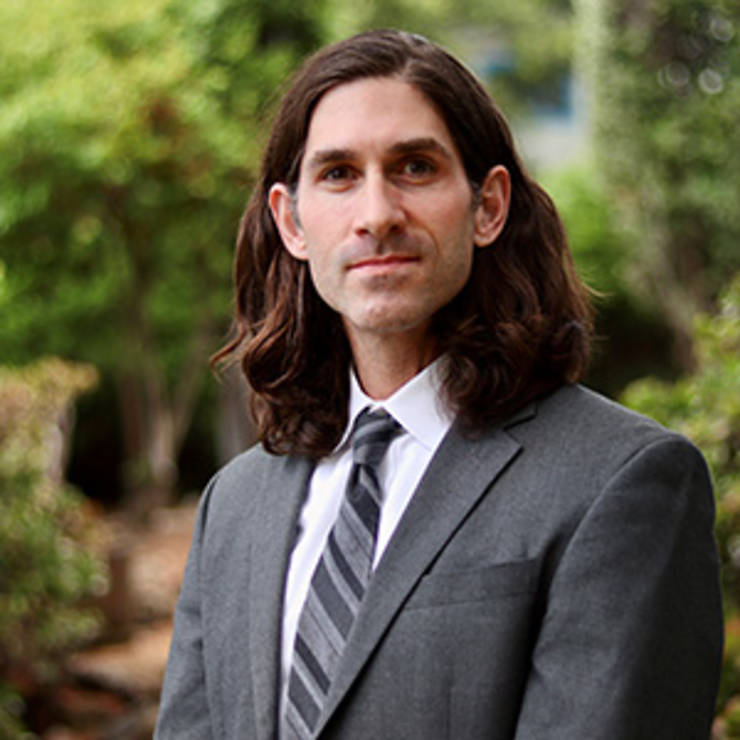
[00:00:00] Speaker A: Hello K SQUID listeners. It's every other Sunday again and you're listening to Sustainability Now, a bi weekly K Squid radio show focused on environment, sustainability and social justice in the Monterey Bay region, California and the world. I'm your host, Ronnie Lipschutz. Local food systems are of considerable importance to the Monterey Bay region and indeed to California as a whole. There's a growing number of small farms being established across the state supplying these systems. What challenges are faced by those farmers? How do they survive?
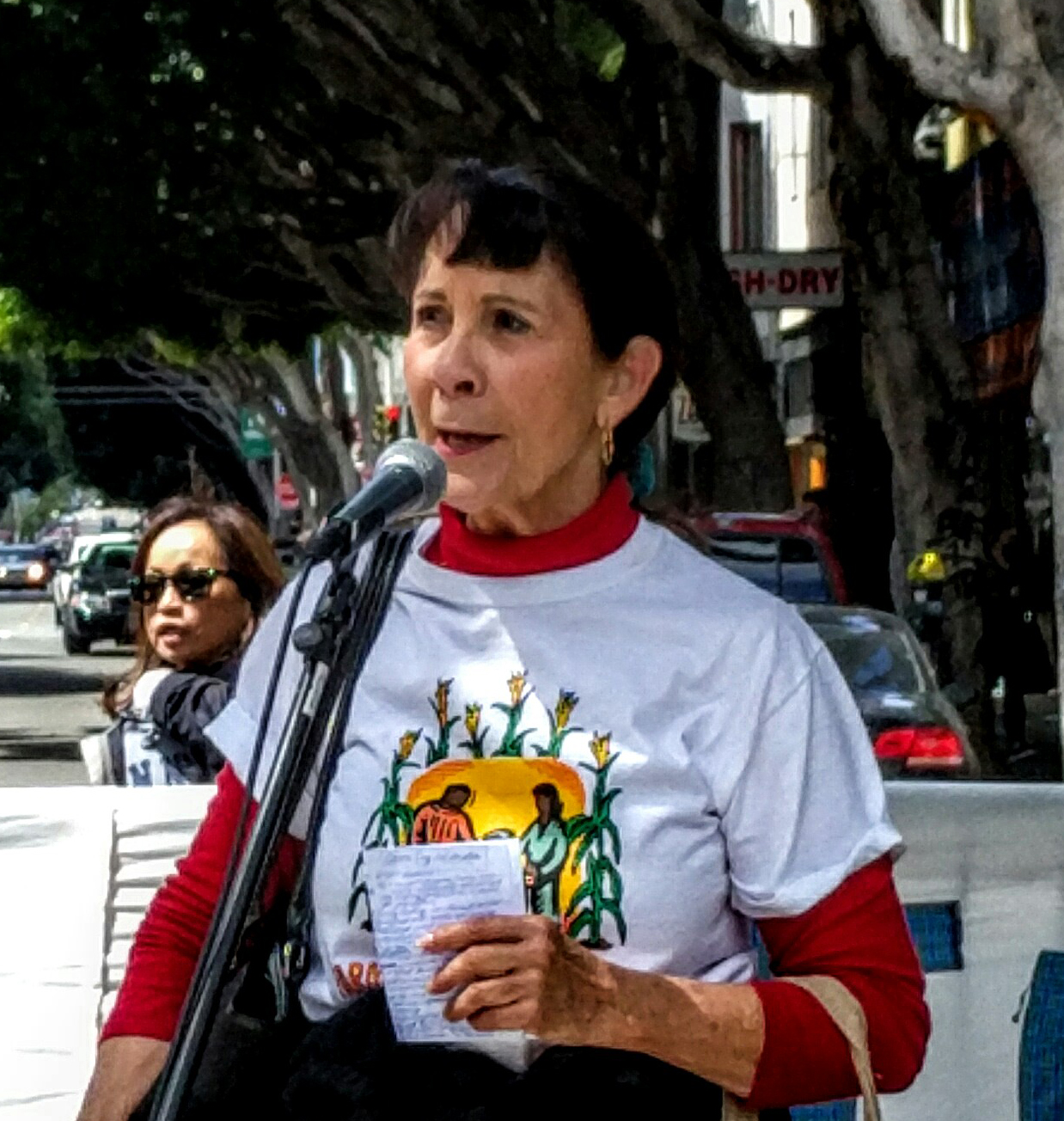
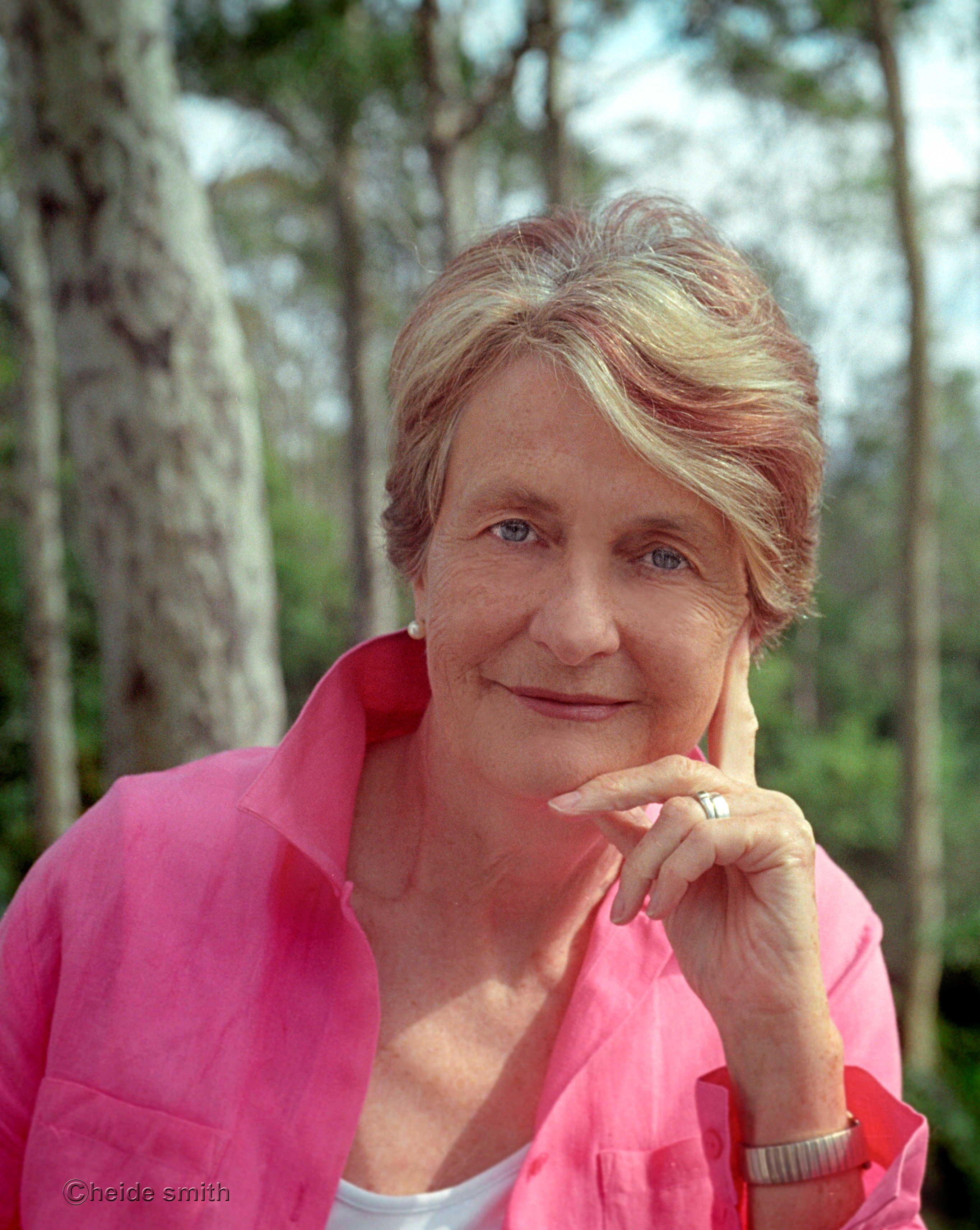
[00:00:33] Speaker B: My guest today is Josefina Lara Chavez, Executive Director of Regeneration la, the Latino alliance in Agroecology and Food Systems, which works with Latino farmers, food workers and agricultural professionals to create a robust food and farming system. Regeneration has has just launched Rancho Coyote Viejo in South San Benito county, an experimental collaboration with Pacinas Ranch, which owns the property.
The Rancho is a 25 acre pilot land access farm for beginning farmers practicing regenerative and organic agriculture, along with a demonstration farm to support regeneration's educational and technical assistance activities.
A quick note here. Regeneration LA is fiscally sponsored by ssrf, the Sustainable Systems Research foundation, and I've been deeply involved in providing administrative and fiscal support to it as a startup. Josefina Lara Chavez welcome to Sustainability. Now, let's start with some background.
What is Regeneration la? What are your goals? How did it get started?
[00:01:41] Speaker C: We got started a little bit from experience, intuition, passion and need.
I would say emphasis on all of them.
I was working in the food system for a long time as a farmer and a food hub owner and then at my work at Community alliance with family farmers doing sales work.
And through that I came to understand what many folks in the local food system understand, which is that there is a need to support the Latino community working in the localized food system.
And from my experience I took a leap and started Regeneration Regeneration.
Through Regeneration, we hope to support the Latino community working in the localized food system, such as students, ACT professionals and farmers to create a more equitable and a more sustainable local food system.
[00:02:40] Speaker B: So farming seems to be of considerable interest to a wide sector of the public.
And most new farmers don't have the capacity or the resources to start really big farms.
So, you know, small farms are defined by the USDA as less than 50 acres. What kinds of challenges do people face in trying to start a new farm?
[00:03:06] Speaker C: I would say one of the biggest factors is understanding the system itself.
Understanding the system as a farmer is particularly the sector of farmers that I support, which are Latino farmers, which are about 16,000 plus in California alone, according to a CDFA report.
But Considerably for that group of farmers. It is understanding the system. The system itself is. Is cater to larger agribusinesses with folks that tend to have experience in formal education.
The Latino growers that I support now specifically come from rural areas in Mexico, have a hard time literacy with literacy and reading in general.
And then the migration itself or remigration is really challenging in adapting what agency does what, what support systems are there, what is a comfortable lease, understanding when they're leasing land, how do I connect with buyers? It's all of these little snippets that make up the system. That is very, very complicated from someone coming in from an outside.
In general, I think it's very difficult for any farmer. But. But I think particularly for an immigrant farmer that doesn't know how to speak English and that struggles with reading and writing, it is substantially even more difficult. And it has nothing to do with their ability to grow. Right. Their ability to grow good organic or regenerative crops.
It has everything to do with the system itself. It's very difficult.
[00:04:51] Speaker B: It's primarily designed historically for. For large farmers and for Anglo farmers, I guess.
[00:04:58] Speaker C: Yes.
[00:04:58] Speaker B: Right. And why, you know, maybe you can tell us some more about this farming demographic and why there are growing numbers of Latino. Latinos getting into actual farming.
[00:05:11] Speaker C: Yeah, let's talk a little bit about why. Why, I think, anyway, and the data show first who they are. I think generally speaking, there are farmers from each part of Latin America, as I'm sure the majority of the farmers that I work with in California and that what is known comes from Mexico, from rural parts of Mexico.
Some of them have farmed here for 40, 50 years. And then there is the newer wave of migration that comes from southern Mexico, and it's largely indigenous. So I guess I would say the remigration or the.
Or the migration that happened 20, 30 years ago in the 90s or even in the night in the 80s was mestizo, which is a mix of Spanish and indigenous blood, like myself.
But now it's pivoted and it's shifted into indigenous.
We're talking about the states of Guerrero in Mexico and then also in Chiapas. And so their second language is Spanish. Actually, those are who the demographics are.
Their challenges is, like I mentioned, reading and writing, not necessarily farming. And then what I would say is the challenges that they face are social, economical and political. Right. We're at a standstill politically where publicly. Right. Latinos and largely Mexicans are scapegoated.
So that's one challenge that doesn't allow us to work or doesn't allow us to contribute in the way that we can.
And many, largely, most farmers are undocumented, largely, which is something that is very unknown, I think, in American society.
But they are a substantial demographic of contributors.
And now I remember your question, Ronnie. Why do you think.
[00:07:08] Speaker B: Why do you think it's about the aging out of the. Of farmers out of the system?
[00:07:14] Speaker C: It's about the aging out. I think it's also that Mexican culture. I think I would argue that it is in our DNA to be connected to farming. And I think that might be tied to our indigenous fruits. Large part of the food system or agricultural system as we know it was born and bred in Mexico. Talk from avocados to corn to chilies to so much, actually so much production originated in pre Hispanic, what we know now as Mexico or Mesoamerica. And Mexicans have continued to cultivate those traditions. So which is actually remarkable. So I think that that is the connection. There is a decrease of retirement in farming as farmers are aging out. And then there's also this group of farmers that know how to farm and that are taking up the reign, you know, and starting to farm here.
[00:08:17] Speaker B: And some people who own, well, relatively large parcels. Right. Are leasing out smaller parts of that.
It's a little bit unclear to me why they're doing that. Do you have any idea that's the
[00:08:33] Speaker C: only suitable messy way of farming? Farming is very complicated. I think historically and even now people still have the conception of, you know, a farmer has their little home, has their animals, has a diversified vegetables, herbs, fruit, maybe some meat.
And that's no longer the case.
It is.
Leasing land is expensive. Buying land is almost impossible for any farmer, for any small farmer. And so one of the ways that the organizations and agencies that have been supporting small scale farmers has been to create different sort of land access programs. The state of California has also pumped in a ton of investment in trying to find the solution into this. And as to why they sublease is it's the easiest, although not the most perfect way of supporting the food system.
When someone has the, the mother lease and subleases to other farmers, other farmers, those small scale farmers are able to lease the amount of acreage that they want that they can actually farm with the employees that they have and with their own ability, you know, and it's a little bit complicated because people will call them hobby farmers, which I completely disagree. There's no such thing as a, as a hobby farmer, but we'll get into that.
[00:10:00] Speaker B: Yeah, yeah. Well, I mean Just to make that point clear, if you look at the Department of Agriculture statistics of all of the farms in the United States, about half of them are ranked as small farms, you know, and they make less than $50,000 a year.
And those are what are called hobby farmers, people who have to have outside jobs in order to support.
Support farming.
Right.
[00:10:29] Speaker C: And that's true in this demographic also. Large amount of. And this is also what I get why I started Regeneration is we have this conception of the Latino community being labor. Right. And even through this administration, there is a constant conversation push as to who's going to do the labor parts of our. Of our society. But in reality, Ronnie, we're massive contributors in creating the entire food system.
So. Which is why Regeneration sort of. I got started with it because there is this misconception about who farms and the origins of farming and contributions. But. Yeah, I think it was just important for me to point that out.
[00:11:11] Speaker B: Oh, no, absolutely. I just wanted to clarify that point about the idea of hobby farmers versus people who are really trying to make a living.
[00:11:22] Speaker C: Yeah. And so from that. And so with this demographic of farmers, large. Large percentage of them farm, and they do work for larger agribusinesses as farm workers as well.
But I would not say that any sort of farmer is a hobby farmer. I don't.
I can't be reductive to that because of my experience in supporting farmers. I think that it's very undignifying to say that because it takes an incredible amount of work to farm anything, even if you're farming microgreens. It's an intense work, mental, physical, everything. Financial.
[00:12:06] Speaker B: The labor question. Right. Kind of leads us to this focus on technology on even small farms. I mean, I know there are folks even in this area, I assume, across the country who are trying to develop technologies that can be used on farms of less than, what, 20 or 25 acres, with the idea, it seems, of substituting for the labor of workers.
And the whole agricultural system is really oriented, and the university, the land grant system, is really oriented to trying to produce scientific answers to what are often very practical questions.
And I'm sort of wondering if you can say something about the utility of this kind of scientific research and technology for small farmers and for this particular demographic.
[00:13:06] Speaker C: Yeah. In reality, on the practical level. Right. And on the capitalist level, it will improve efficiency on farms. And I can't dock or judge negatively a farmer that chooses to incorporate new technologies to improve efficiency and cut labor costs. That's the reality on a personal level, and just values based I am very hesitant as someone that remigrated to California.
My parents were subsistence farmers and then we were sort of. We were subsistence, what we now would consider regenerative farmers. And then through these big policies, through the green revolution. Right. Everything was privatized and we were asked to get bigger. Right. As part of the new technologies. And then we re migrate or migrate to California. And now we're told that this is regenerative farming and regenerative farming is actually what we should all be doing. And then now we're incorporating tools. I see that as a sort of wing of that of like incorporate all this. This is going to be good for you. But I think that it does come at a consequence socially and also our disconnection to the land.
And that's what worries me the, the efficiency again, on the practical level, I understand farmers, values based and experience based being affected by this influence of newness and innovation. Right. That's what sort of it's masked under.
I'm skeptical and just worrisome for future generations and their connections to the land and to each other. Farms are. The spirit of the small farm is community based and it's person to person and it's person to land and it's local economy. And that doesn't align very well. But it doesn't necessarily. It could be a mix of both too. You know, that's just my take.
[00:15:03] Speaker B: You mentioned, we've mentioned regenerative agriculture and maybe this is a good place to say something about what that is and how it differs from organic agriculture.
[00:15:12] Speaker C: Yeah. Organic agriculture is on the prevention side of climate catastrophes or ecological impact is my understanding.
And it's the simplest way to put it. Regenerative agriculture is working with the land to ensure its ecological system is maintained and regenerated.
So it's not a preventative measure of erosion, but it's a continual investment of protection.
[00:15:44] Speaker B: You're listening to sustainability now. I'm your host, Ronnie Lipschitz. My guest today is Josefina Lara Chavez, executive director of Regeneration la, which works with Latino agricultural professionals and in particular Latino small operators of small farms. They're not small farmers. That's a mistake. Problem we always run into. Small farms are defined by the USDA as less than 50 acres.
But most of these farmers farm less than 20 acres and I would imagine, you know, on average about 10 acres.
I want to get to the programs, you know, and projects that you're undertaking. I want to ask one other question. You know, we were talking about efficiency, production efficiency, and there is this paradox In American agriculture, which is that it's so efficient and productive that an enormous amount of food goes to waste. Not the food that is being purchased, you know, and partially eaten, but in the fields. And I imagine these farmers, these operators of small farms run into that problem when they're trying to market their produce. Is that a big problem?
[00:16:58] Speaker C: Yes, yes, very much so. And I think it goes hand in hand with understanding the system and not being a part of the system.
Not being a part of the system, being an outsider and then trying to figure out how to navigate it without knowing how it works at all, potentially around purchasing.
One of the ways around purchasing anyway, that folks are at a disadvantage is that many of the buyers, although obviously there's buyers all the time and there's new markets, but again, the access to those markets is the challenge for any farmer. I would say for any farmer. However, most institutional institutions, most large grocery stores, wholesalers, Wholesalers are a little bit different. But more direct markets are a challenge for small scale farmers because a lot of the farmers that those buyers work with already have agreements and relationships that have been built over years. And so incorporating a small scale farmer is challenging because of the access, limited access, and it's also challenging for a buyer. I would say in defense of the buyers is it's also really, really tough to incorporate a ton of small farmers into your local sourcing because it is quite time consuming instead of, for example. Right. Because this is a capitalist society.
If there's a buyer and natural food store and there is a broker that can, a wholesale broker that can sell them consistent product and every week, or every two weeks, whatever the need is, at a uniform price, with everything prepackaged, everything labeled food safety, everything, versus incorporating even two or three farmers.
It's a ton of work coordinating all of that, especially because small farmers are focused on production usually and have a hard time understanding business because that's not the way they think, that's not why they farm. You know, it's really interesting, the small farm psychology and sociology of all this, but I would argue that those are the two, the three biggest thing is understanding the system, not having enough access to buyers. And then also on the buyer end of things, it's really challenging buying from multiple farms when you could just easily buy from a wholesaler all at once for everything you need.
[00:19:37] Speaker B: Okay, well, let's turn to the programs and projects that you are, you know, that you're doing. And I'm, and I'm wondering if you can say something about the background to them, you know, what sort of activities have you in particular been involved in that provide the basis for the programs and projects that you're now undertaking?
[00:20:00] Speaker C: Yes. So we have our technical assistance program, which we just do general technical assistance. Anything a farmer might need support with, whether it's filling out an application, getting into a farmer's market, getting connected to USDA or any sort of agency or organization. That's one program. The other program is contracted by other organizations that need support or an in. Into the small farm Latino world.
We could do, yeah, programmatic support, program, evaluation, curriculum support, any of that. And then we have brotes, raices y brotes or roots and roots and shoots.
[00:20:48] Speaker B: Roots and shoots or why am I translating for you?
[00:20:52] Speaker C: Why, Ronnie?
It's working. Your Spanish classes.
Yeah. Brutes and Shoots is our educational programming for Latino beginning farmers. But it's open to everybody that's interested in farming and it covers farming as a business, planning before planting, tools, technology, labor, soil, water, life, handling and sales. And of course, the most important of them all, understanding the system.
So that's one program. And then we have the land access program, which is where our demo farm is also.
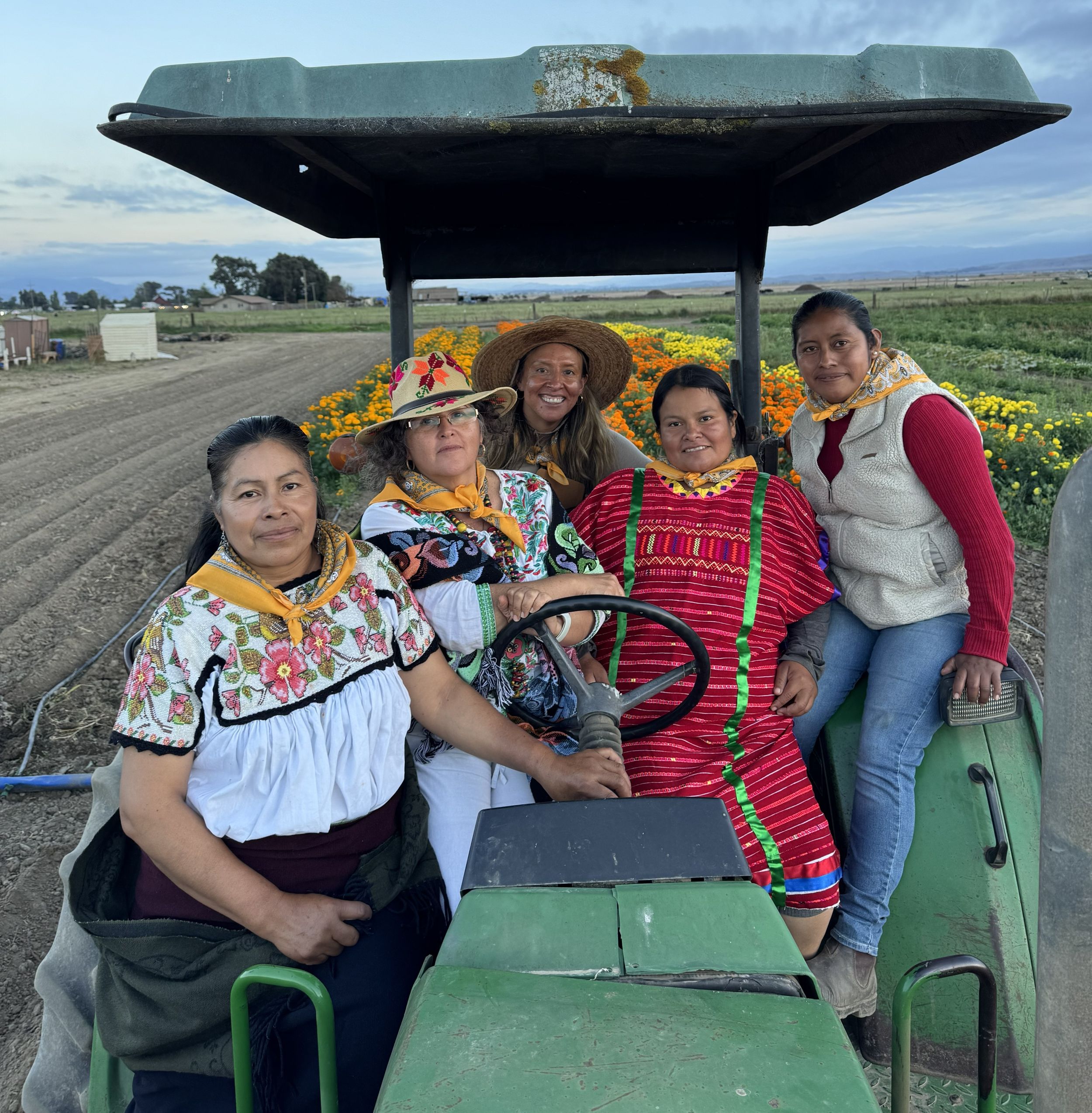
And our Demo Farm is 0.38 acres of the land where we then incorporate. The demo farm is there to serve the community so that the community has access to small scale farming and understanding. On the educational side, we also grow everything for our ancestral crop program, which is focused on ancestral Mexican crops. And through it we educate community and farmers about Mexican ancestral crops like marigolds, chilies, milpa or corn, squash, beans, tomatoes, all the Mexican herbs like alpazote and flowers, zinnias, dahlias, etc. Etc. And then we have the land access program, which is. The land Access program is 25 acres dedicated to supporting small scale farmers. Why? It is a cool program. It is a program specifically designed to see what the impact would be into their businesses if we, if we provided them land agreements that would be suitable for them to be able to participate in USDA program. So leases can go up to five years.
Free electricity, electricity is included. And then the water charges are very minimal. It's $94 per acre per foot, which is very attainable, very cost effective for a small scale grower.
Through that, we have three participating farms right now, small scale.
And we will also be offering refrigeration, which is in the works. Refrigeration, access to packing and washing, and access to an education area where farmers could then bring in groups and educate them on small scale farming. And also.
Yeah, just do that. And then we Have a cooler also where they can store their product. This will cut their cost substantially. But we'll yet to have the data. But you know, this is sort of the hypothesis.
It is a pilot program and we hope to increase in acreage. But again, more than anything, I'm really excited about the data we collect from how much, how much they're able to save, how many programs they're able to enroll in, how pretty much how much easier their life will get and if, if we were able to contribute to that. So that is another big program that we have.
We also have a couple of other projects in the work. One of them is the emergency Response Preparedness program, which I am thrilled and it's a lot of work. But we hope to see a central coast where farmers are prepared so that in case of any natural disaster, pest or any sort of emergency for a small scale farmer, farmers are prepared, they have insurance and have a place to go and can live and respond in a dignified way. That's one of them. And then the other project is the reduced cost bullet box program where we will be hopefully reducing the cost of boxes for many, many producers in the four counties in the central coast that we consider, Santa Clara, San Benito, Santa Cruz and Monterey. And we hope to reduce the cost of small scale, of the cost of boxes for small scale farmers by hundreds of thousands of dollars. We're talking, you know, we're hoping to bring them down from an average of 275 to 75 cents. So it's a huge contribution and we, we're working on that. But that is a project. But yeah, there's lots to say about that and a lot of details, but those, that's the gist.
[00:25:47] Speaker B: The land is being rented from Piscinas Ranch. You know, what is Piscinas Ranch? You mentioned wanting to expand the, the leasing, the land access program. Can you tell us something about the ranch?
[00:25:59] Speaker C: Yeah.
[00:25:59] Speaker B: And about this, you know, potential expansion?
[00:26:03] Speaker C: Yeah. So we started a relationship with Sally at Paisines Ranch. She's the owner.
[00:26:09] Speaker B: Sally Calhoun.
[00:26:11] Speaker C: Sally Calhoun, yes. And she was interested in San Benito county investment. And so are we. Because most of our programming is.
Our programming is housed in different parts. But a large percentage of our programming is housed in San Benito county. And we're very, very invested in investing locally in these regions, in these counties that I mentioned. San Benito, Santa Clara, Santa Cruz and Monterrey.
And there's this big push in small farms now throughout the nation actually given the cost of land and the access to land. And so she had an interest and she has a passion in supporting and creating ways to provide access to land for small scale farmers. And we connected around that and this has taken now about a year and a half.
The program officially launched in July, mid July.
And yeah, the land was leased right away. So within a couple of days actually it was fully committed for by all the farmers.
And from there we've been talking about expanding it to 70 more acres at Paisinas Ranch, which would be incredible, really.
And we also have a connection at in Southern California with a CDC Pueblo Nido that also is starting their land access program in which we hope to sister with them and contribute not just with what we've learned from our land access program, but also for curriculum development, workshops, programming in general.
There is this local hyperlocal support that we're providing now and we hope to provide what we've learned to other organizations and also even be able to replicate it elsewhere in the beautiful state of California.
[00:28:20] Speaker B: Just quick question, what does CDC stand for?
[00:28:24] Speaker C: What does CDC stand for?
[00:28:25] Speaker B: It's Community Development Corporation. Okay, okay, just.
[00:28:29] Speaker C: Thanks, Ronnie.
[00:28:30] Speaker B: Acronyms, Acronyms all over the place.
Listen, you mentioned curriculum and, and that involves teaching and training.
And I know that you were participating in a series of training workshops.
Now it's in the early 20s, right.
And I'm just wondering, how did you go about that?
What sort of methods did you use? What did you learn from that first set of workshops?
[00:29:03] Speaker C: Yeah, I've learned so much. I mean, I can really talk about this all day. But what I will say is farmers don't like to be lectured in general. I mean, who does? But definitely not them. And they are, they work better with their hands. And more than anything, the group of farmers that I work with, they just need an introductory understanding of how to go about things. So there are a ton in understanding the small farm world. The way I see it, anyway, there are all these players agencies, both governmental and local, and there are all these nonprofits that have this great programmatic approach to it. There's tons of programs to support with business planning, land access, even crop planning, everything under the sun. The issue itself is when. How could you, what I always say, right, how could you go mountain biking if you have not yet gotten on a three wheel bike?
And I feel like the curriculum that we're developing is so basic as the three wheel bike. It is a six simple, impactful way of creating the layout that is going to bridge them into understanding how to actually use all of the resources that are available to them. Now, the resources that are available to Them now it would be like for me to speak German.
It's just such a different system. It's such a different system. The vocabulary is so different. And so what we do is we've created this curriculum that is simple, simple, practical, time sensitive in terms of understanding what the right timing is and how to teach someone that hasn't had that formal schooling, conditioning.
Yeah.
[00:31:17] Speaker B: Okay.
And you know, you mentioned they'd like to do work with their hands, right?
What sort of, you know, elements in the, in the program are, you know, involve that.
[00:31:30] Speaker C: So there's no test or no quizzes in the, in the curriculum. All of it is spoken and we have like some cutouts of things that we need to cut out. We mostly it's a group project or groups project.
Then the tools, technology, we've incorporate in our classroom, which is not necessarily a classroom, it is group.
No presentations, no quizzes.
It's just more collaborative, reflective.
And then the outdoor portion that is very hands on is like irrigation system. It's like, well, let's build an irrigation system together and let's criticize it. Let's build a hoop house together and let's see how it's built. How much it costs during our building, how much does it cost?
How much labor will you need? How long will it take? Things that they actually can remember. And, and instead of giving them this massive portfolio of like, these are all the programs. First we show them this is what it is. And then we say, and if you want to access a great program, like equip, let's connect you to that program. And now they have an understanding. Okay, this is how much it's going to cost. Now I understand this. Now I can connect with this person. Now I can ask what I'm going to need.
And then the same thing goes with planning, right? We take them out to the field and we sort of show them these are crops that sell, these are crops that don't sell. Why and why not? And a lot of them, again, Ronnie, which is what's really interested about this, especially this curriculum too, is farmers already know all this. It's just that the conditioning, the social conditioning is so different. And so this is a way to sort of, I wouldn't say acclimate them to the way things work, but it provides them maybe like some comfort in feeling more comfortable accessing these things and actually understanding them and getting their questions answered, I would say.
So in addition to the curriculum and the hands on, we do provide them with the opportunities to go out and to conferences and different events. So that they can socialize also.
And.
Yeah. And get to know folks that are in the field already. That's another way to incorporate it. And then we bring in speakers. So something really important that I almost missed is we have our senior farmer mentor, Philemon Regalado of World's Finest Farms. He has over 35 plus years working as a farmer and he has a viable farm. He's worked both conventionally and organic. And he is the one that has really supported growers can tune into him and ask him questions to sort of get the layout of the land in a comfortable, familiar way. And that's also been a very, very great sense of support for the farmers because it's familiarity in the contents of them transition into socializing a little bit more in the, in the system, if that makes sense. So group activities, basic language, hands on activities on how to doing it together as a group, conferences, events, senior farmer. And then we have speakers come in to also support and provide access to the resources.
[00:35:11] Speaker B: You're listening to sustainability now. I'm your host Ronnie Lipschitz. My guest today is Josefina Lara Chavez and the executive director of Regeneration la, which seeks to support Latinos in farming and in other agricultural professions. And we've just been talking about the curriculum that Regeneration has been developing and offering in the form of workshops for operators of small farms.
You mentioned earlier something the ancestral crop program.
And I'm wondering what does that entail?
[00:35:48] Speaker C: Yes, the ancestral crop program is my heart and joy. And it's a beautiful mixture of art, agritourism and ecological and social history all in one while supporting your local economy and your local farmer. And so the concept is simple somewhat.
The concept is year round we at the demo farm grow one or multiple different ancestral Mexican ancestral crops. Like this season, for example, right now we're growing marigold or Aztec marigold or simpasuchil. What is the historical term?
We have the demo farm folks can come and do Yupik. We have also tours that they can engage with in learning about the ecological and the social history of simpas and the uses of it. It is now a, a a flower that is used worldwide by farmers, but originated in Mexico.
And through it we also do have trainings for farmers to be able to do this exact thing because many, many large grow many Latino growers, but growers in general grow marigolds. So we provide educational materials and training for farmers to be able to host agrotourism events on their land, to provide them direct marketing which it behooves farmers to have as Many direct markets as possible.
And we do that with a series of crops, marigolds.
We were working on poincieras or noche buena flowers that are also sort of the flowers of the Aztecs that was used for dyes, but it's now pretty much considered a holiday or a Christmas flower. Around the world, we have dahlias and zinnias, which are also chilies. Milpa has mentioned.
Yeah, so many other different crops throughout the year that we use in the same model of we bring in the community so that the community has direct access at the demo farm, Rancho Coyote viejo, and they can come and do u pick and learn. But we also provide that training for the farmers for every single crop. And as we develop this program a lot further, we're going to be able to provide them with not just educational materials on the social and ecological history of each crop, but we will also be able to guide them on how to grow best practices and how to sell and. And potentially connect them to different growers. Last year, we started the marigold collective with six different growers, and it was very successful. You know, many times, Ronnie, I think this is probably a point that I'd want to make. So many times I've been told that we can't sell to our community, meaning Latinos can't sell to the Latino community that they would not be interested in.
But, you know, last year has showed us not just from the Latino community, the community in general. I mean, we had a diverse group of folks.
Email me.
Even folks from the central valley, from Southern California that were interested in supporting the work. And I think folks get really excited about that. And I just thought it was a really good. It's a really good program for folks that really love art, that love farmers, that love beautiful flowers and beautiful things, and care about our food system, and are interested in history, too. I think it's a bit of a nerdy thing. And I. Yeah, I think it's a wholesome thing in general to do.
But that is the ancestral crop program.
[00:39:41] Speaker B: Okay. I want to actually go sort of orthogonal for a moment. Right.
We were talking about marketing and sales earlier and the fact that some brokers and distributors don't want to deal with lots and lots of people.
And historically, one of the ways to do aggregation and in fact, to acquire greater market power is through cooperatives.
And I'm wondering whether you have any ideas about trying to start some sort of cooperative as a way of sort of consolidating, especially with the land access program. Consolidating or aggregating the work of the farmers.
[00:40:29] Speaker C: It is a very different co ops.
I'm a fan in theory, not as a practical person that I am in actuality. All of my experiences have been failed experiences.
And I think it has to do a little bit with capitalism and just the core of it. Even in the small farm level competition is just so high that really distorts the social connection of what a co op can be.
Our next attempt will be the box program, but that won't necessarily be a traditional co op model.
[00:41:18] Speaker B: It's more like a collaborative, I guess
[00:41:20] Speaker C: it's more like a collaborative, I would say because yeah, it's
[00:41:25] Speaker B: not formally organized as a company and some sort of operating entity.
Okay, for regeneration. What is your long term vision? I mean you've got these programs for the next next several years, in 10 years. What would you like to be able to say you've accomplished and are doing?
[00:41:52] Speaker C: I would like to say that we've trained hundreds of farmers in promoting Mexican ancestral crops. And I'm talking, you know, any sort of farmer that is interested in that, in doing that. The other thing is our apprentice program.
I'd like to see more apprentices. We currently have three great apprentices, Daniel, Alex and Damian.
And we hope to grow the apprentice program. I also would like to build an education program that will support mentorship by Latinos working as ACT professionals in the local food system that can mentor those coming out of university or colleges.
I think that and doing some workforce development work and increasing the land access program and improving it also, you know, because there's always room to learn and that's what's really fun about farming. You're always learning.
But those things I think are, are what I would like to see. I would love to see more the food system, the local food system be more of a reflection of the people that work the system in leadership. And then I'd also like to work with a lot more chefs and have. And Latino distributors, and distributors in general buyers that are interested in sourcing from farmers and learning how to do that because the local economy is really important to me.
[00:43:34] Speaker B: What sorts of events are you planning to hold over the next six months or so?
[00:43:39] Speaker C: Yes. So thank you for bringing that up, Ronnie. We are having a Semillas del Sol seed saving watch party at Paisinas Ranch October 9th and everyone is invited and we would love to see you there. We would be having a delicious Mexican breakfast.
Seed saving, like folks from the Organic Seed Saving alliance will be teaching farmers, community members, gardeners, people that just love flowers, how to store and save your seeds. We will also be giving out free organic seeds of marigolds. And then we will be having a tour at Rancho Coyote Viejo where folks could also not just learn about the flowers, like mentioned the ecological and social history of the marigold, but we'll also be able to harvest some flowers and take some beautiful photos and just be with community, which is a really great thing.
And yeah, thank you Paisines Ranch for sharing space, providing space for us. And so that is there. And then we would be having a U pick all month long in October except Sundays.
And everyone is more than welcome to to join us. We would love to see you harvesting some beautiful flowers and having a good time. And you know, folks that celebrate Diwali are welcome folks that you know are just interested in marigolds. But Diwali is also in October and we, we'd love to see the Hindu community come out and harvest your flowers for your beautiful holiday. And then also Dia de los muertos is is November 1st or however you celebrated a week before.
And everyone is welcome to sort of join us in that harvest, which is, you know, my favorite season.
[00:45:31] Speaker B: Well, I guess there are two questions here. One is where is the ranch located? Where is the Rancho Coyote Viejo located? Because you know, people have to get there.
[00:45:41] Speaker C: Yes. So Rancho Coyote Viejo is in this beautiful ranch at Paisines in Paisines, California, a little bit outside of Hollister.
If you're going from Hollister towards Pinnacles. Pinnacles national park is like an almost an in between.
[00:45:56] Speaker B: Okay, where can people find out more information about these activities?
[00:46:02] Speaker C: You can find it at our website, regeneration.org events I believe and you could follow us on social mediagenerationla.org and no, we are not based in LA. We are based in Santa Cruz, LA means Latino Alliance.
[00:46:25] Speaker B: Do you have any thoughts or plans about setting up an actual physical building or place to send outside? Not in Santa Cruz, but in more agricultural area in the region?
[00:46:40] Speaker C: Yes, we will be having our so part of the land Access program, our demo farm there. We will be having a small office there in addition to the one in Santa Cruz that we now don't really use use.
But we will be having one in at the farm to make it accessible to farmers to provide technical assistance and then just general operation.
[00:47:11] Speaker B: Is there anything else that you'd like to talk about? We have a few minutes left, I think.
[00:47:19] Speaker C: Could I just make asks of people maybe?
[00:47:22] Speaker B: I suppose so, yeah.
[00:47:24] Speaker C: Okay. First I think I'd like to say that please consider purchasing from your local farmer.
It does a great good, a great deal of good.
Please consider that farmers most, for most part, don't have access to health care or retirement.
So your contribution does go a long way for them and their families.
And I would say that if you would like to support us, which we would really greatly appreciate, because although not mentioned, our operation was started on a shoestring and a half and it sort of continues.
It continues to do so in a way.
Please Support us by 1, you can follow us on social media and share our work, which doesn't cost anything and it does a great deal of work, a great deal for us to be able to do more of an outreach.
Two, you can volunteer with us by emailing inforegeneration.org we are always looking for volunteers and people that would want to support.
And three, you could make a donation, any sizable donation. It could be a dollar, it could be $5, it could be $10, it could be $1 million.
[00:48:46] Speaker B: Well, you know, I think the station wouldn't approve of that.
[00:48:50] Speaker C: Oh, no.
[00:48:50] Speaker B: Of a million dollars.
You know, we have to raise our own funds too.
[00:48:54] Speaker C: Okay. I was like, what?
Yeah. And you can make a donation on our website, regenerationla.org well, this has been
[00:49:06] Speaker B: really interesting and I want to thank you, Josefina, for being my guest on Sustainability Now.
[00:49:11] Speaker C: Thank you, Ronnie, for having us.
[00:49:13] Speaker A: You've been listening to a Sustainability now interview with Josefina Lara Chavez, executive director of Regeneration la, the Latin alliance in agroecology and the food system. Regeneration seeks to strengthen networks of Latin farmers, food workers and agricultural professionals through education and capacity building to create a robust food and farming system.
Regeneration has just launched Rancho Coyote Viajo in South San Benito county. It's a 25 acre pilot land access farm for Latino farmers practicing regenerative and organic agriculture, along with a demonstration farm to support Regeneration LA's educational and technical assistance activities.
[00:49:55] Speaker B: If you'd like to listen to previous shows, you can find
[email protected] sustainability now as well as Spotify, YouTube and Pocket Casts, among other podcast sites. If you'd like to hear about forthcoming shows, please drop me an
[email protected] so thanks for listening and thanks to all the staff and volunteers, especially Eliza, who is our engineer today, who make case good your community radio station and keep it going. And so, until next every other Sunday, Sustainability Now.