[00:00:08] Speaker A: Good planets are hard to find. Now temperate zones and tropic climbs and run through currents and thriving seas.
Winds blowing through freezing trees and strong ozone and safe sunshine.
Good planets are hard to find. Yeah.
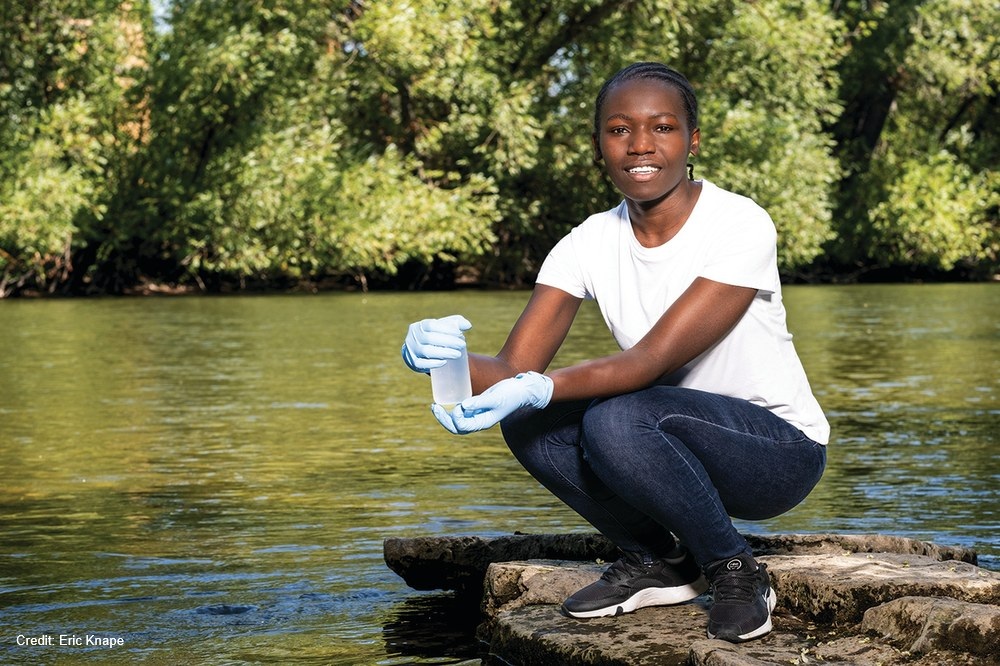
[00:00:36] Speaker B: Hello K SQUID listeners. It's every other Sunday again and you're listening to Sustainability Now, a bi weekly K Squid radio show focused on environment, sustainability and social justice in the Monterey Bay region, California and the world. I'm your host, Ronnie Lipschutz. Per Fluoroalkyl and polyfluoroalkyl substances, commonly known as PFAS and also as forever chemicals, have become ubiquitous in the environment and are being found almost everywhere in soil, water, plants and bodies. The Trump administration has lowered drinking water standards for PFAS presence, but that does not mean that the stuff has gotten safer. You might know PFAS is in the form of Teflon, which for many years was applied to non stick cookware. So those eggs slide off the pan, but if you overheat that pan, the Teflon might also slide off. PFAS slide off of many other things as well. And the environmental and health impacts of PFAS are almost totally unknown, although they're beginning to look pretty bad. My guest today is Dr. Faith Kibuya, a Water Resources Extension specialist in the Department of Ecosystem Science and Management and the Institute of Energy and the Environment at the Pennsylvania State University.
Kibuya specializes in environmental engineering focusing on water quality, aquatic chemistry, cyanobacterial blooms and contaminants like pharmaceutical and pfas and their fate, transport and transformation as they pass through the environment.
Dr. Faith Kibuye, welcome to Sustainability Now.
[00:02:12] Speaker A: Thank you for having me, Ronnie. It's a pleasure.
[00:02:16] Speaker B: Why don't we begin by having you give us a little bit of your history, your background, how you started, got started in water quality and aquatic chemistry and then in pfas.
[00:02:29] Speaker A: Absolutely.
So my undergraduate was in environmental health science, which I got from Benedict College, which is a small HBCU in Columbia, South Carolina.
As I was doing my undergraduate degree, I had a wonderful opportunity to from one of the advisors. I had to do some research in the lab and at the time I was the focus was on understanding how some biomass materials or just things that are considered waste in the environment, like pine cones, could be transformed into powders or biochar, which is just that material that is burned at a high degree and then using that powder to see how well it performs to remove heavy metals from water.
So that got me very interested into the realm of scientific evaluation of water quality, water chemistry and also research, because it was my first gateway into the whole field. So that's how I got into this.
When I graduated, I was interested to stay in the field. So I pursued graduate degree opportunities, which landed me at Penn State University.
And that's where I got my PhD in biorenewable systems. And my degree, while it was not directly linked to water resources, it was very environmental focused. And my research at that time was very specific to another group of emerging contaminants, which is what I could categorize PFAS as. But at the time, I was focusing on pharmaceuticals and personal care products and understanding how they move in the environment, their risk to human health and aquatic life, and how they removed during treatment processes like wastewater treatment and also drinking water treatment. So after graduating, I left Penn State and came back sometime in 2023. And when I came back in this role as an extension specialist, there was a gap and also a need when it comes to PFAs. And there were already some existing research going on on campus about pfas. So I got involved in some of them, naturally, since they were also contaminants of emerging concern. And that's how I was looped in and stayed in the field, I guess.
[00:04:53] Speaker B: Well, what are PFAs? Okay, what's their chemistry?
Who invented them, and how have they been used?
[00:05:02] Speaker A: So pfas, it's an acronym that stands for PA and polyfluoroalkyl substances. So it's not just one chemical. It's a group of chemicals that right now can be argued can contain up to tens of thousands of chemicals that can be characterized as PFAs. So they have a unique chemistry. And that is that if we think of like a methane. So let me take people back to high school chemistry a little bit. So if you think of a methane, where we have a methane molecule, where we have a carbon atom that is then bonded to another carbon, but eventually these carbon atoms are bonded to hydrogen atoms. So with pfas, it has the same chemical backbone where we have carbon atoms in it, but instead of hydrogens, these hydrogens are replaced with fluorine. In some cases, depending on the PFAS chemical, it might be all of the hydrogens that would be present in that carbon chain are replaced with fluorine, or in some cases, some of the hydrogen atoms are replaced with fluorine. So the carbon would be very strongly bonded to the fluorine, forming a very stable molecule.
But apart from that carbon chain, which is commonly referred to as the tail of the chemical, there is also the head of the chemical that is attached to the chain, the entire PFAS molecule will be consisting of a long chain of carbon atoms bonded to fluorine atoms, but then attached to another head that essentially gives this chemical some unique properties.
That is in a nutshell, what the chemistry would be described as. But what renders them very unique in a sense is that they have that carbon fluorine link. And also the chemical head gives these properties, such as the ability for that chemical to be resistant to oil, can be resistant to water, but then it's also very stable because it's strong, strong bonds between the carbon and fluorine atoms. So this is why I guess they're very commonly used in the environment and they've been used since the 1940s, give or take. I don't think I would say somebody invented pfas, but I can comment that it was invented. I think it came to be as a result of some research and development initiatives around that time with companies like 3M and Dupont.
And after it was developed, at that time its use expanded globally to some materials that we use in as consumer products, but some that are also very essential in other sectors in our day to day lives.
[00:07:59] Speaker B: Well, I read somewhere that they were discovered basically by a scientist who was messing around with fluorine, fluorine chemistry back in 1938.
It's sort of fascinating to think about how these things then spread into the world. In the introduction I mentioned Teflon as one form which makes eggs slide easily off the pan. But then the Teflon can also slide off the pan if the temperature is too high. You said there are other uses, applications. Can you give us some examples? How widely used are they?
[00:08:38] Speaker A: Yeah, so I get that question a lot. But I like to remind people to think about some of the niceties or the luxuries that we enjoy on our day to day life from a variety of products. So if I go to buy a product that I want to wear so that I can go collect samples in the field so I don't get rained on, I'm going to find something that is waterproof, right? And in some cases, others might look for home products that are either stain proof or waterproof, depending on some of the uses they are seeking from those products. And then you mentioned that non stick, so that nonstick property. So these are just. If you think of these properties and then expand a little bit, in what other area would you like to see those properties, then it's very likely that in those areas that some PFAS Aspect was involved to create that beloved property that we are seeking from some of these products. So some of these are in our consumer products that we use on our day to day. But if we think beyond that, there are in some industries that they are also very essential. So if we think, for example in electromagnetic industry we might need things that are thermally stable that don't break down at high temperatures. And in some cases we want things that might not be impacted with water in some cases.
So the use of PFAS is very widespread and it's owing to just those unique properties that those chemicals have. And it's a very, it's a challenge to that you to list all ways that we might be using pfas. But they can be available even in some cases in building and industries.
Maybe some paint that some people might use for painting. If you think of some, for example, shipping, you might want some boxes or some cases that are not that are waterproof or what's the word for takeout containers?
[00:10:49] Speaker B: Repellent.
[00:10:50] Speaker A: Oh yeah, repellent. So something to repel the oil. Even in some material or coatings, it's the stability, right?
[00:10:58] Speaker B: I mean it's essentially non reactive.
[00:11:01] Speaker A: And so it's very stable and stable.
[00:11:05] Speaker B: Okay.
But then you have this paradox, right? It's, it's everywhere.
They're everywhere, right? So you know, if they're stable, how come, you know, they're everywhere, right?
[00:11:18] Speaker A: So if you think about how stable they are, this property that we end up seeking them for in different industries, these are the same properties that give them opportunity to last long in the environment when they're released.
So I guess we can talk about now how PFAS can get into the environment and a little bit and answer that question, why they're still there.
Perhaps if we look at opportunities that PFAS chemicals might have. Let's look back a little bit to an industrial manufacturing scale first of all. So, so during that process of manufacturing, there are opportunities for release either through wastewater or emissions into air.
And then when we are using these products that contain pfas, some of those chemicals can be washed off or just degraded into the environment.
We many times don't use all these products until their life cycle is reached. But if in any case whether we use them to that point, we end up needing to dispose of them. So that disposal aspect to some of these products will end up in landfills. And that's another way that they could be released back into the environment.
But an important pathway or source right now is wastewater treatment plants. So they are at the center of it right now, not because they are producing PFAs, but because they are receiving PFAS from everywhere. So they will receive PFAS from industrial discharges. They will receive PFAS from us in our domestic settings, where the wastewater coming from our homes that end up going to sewage treatment plants will contain some of these PFAs from what we use. And then eventually also in some cases, landfill leachate is tapped and then taken back to these wastewater treatment plants to treat.
So the wastewater treatment plants are at the center of it because they are pollution control facilities that are very important in our communities right now.
And the challenging part is that as much as they're receiving all these chemicals, that initial design of these facilities was not for removal of PFAs. They were just to break down microorganisms and also biological organic matter in our waste and then improve that water to a certain degree before discharging it back into the environment.
So inadvertently, wastewater that leaves the wastewater treatment plants can contain a mixture of pfas, but also the solid part, which is known as sludge. So the sludge is just the solid aspect that is generated during wastewater treatment. So some of the PFAs can also stick to the solids and end up being reused after treatment in form of biosolids.
So they are kind of in the middle of it all here.
[00:14:18] Speaker B: But I read recently that the was it the EPA had encouraged or the USDA had encouraged use of sludge on farmers fields, and those are now can't be used because of the contamination.
[00:14:35] Speaker A: Yeah. So the biosolids or sludge have been used for a very long time because they contain very valuable nutrients that can be used to by farmers to replace the use of synthetic fertilizer. So the use of biosolids is very regulated and has been, but it's been regulated for all these years, but not for pfas, Because PFAS is just now coming into the light as a potential concern for biosolids. It's regulated for microorganisms and heavy metals. But because back then there was no analytical capabilities to effectively analyze for these PFAs in the environment, they were not necessarily considered during that regulatory, initial regulatory aspect for reuse of biosolids. So right now, in some communities, especially those that have been impacted severely with contaminated biosolids reuse, I think some communities are considering limiting the use of biosolids and trying to figure out alternative ways to get get rid of them.
[00:15:44] Speaker B: And this leads in two different directions. Right. One has to do with the reactivity in the environment, I guess the pfas and the other has to do with drinking water, but not from. Well, only from wells. Municipal drinking water. You're listening to Sustainability Now. I'm your host, Ronnie Lipschutz. My guest today is Dr. Faith Kabuye, who is a water resources extension specialist at Pennsylvania State University and whose research now is concentrating on perfluoroalkyl and polyfluoroalkyl substances in the environment.
They're known as pfas and sometimes as forever chemicals. And I wanted to follow up with two questions. The first one is do PFAS break down in the. Once they get into the environment? I mean, they're forever chemicals. And do they react with anything or can they be treated with anything that would break them down? And would that address the problems, you know, the issues that we still have to talk about?
[00:16:51] Speaker A: Yeah. So that I can say in a nutshell is a question that researchers are trying to figure that out right now in different aspects of it. But in general, PFAs are very stable and they take a very long time to degrade. And that carbon fluorine bond that I was explaining earlier is a contributing factor to that stability in the environment.
As a consequence, then they will move the environment with water. So the head of the compound is, for some of them can be very soluble. That means that they will dissolve in water and then transport along with water movement as a result, that there is concern about contamination of surface and groundwater sources and also potential accumulation in soil. And also, in some cases, there might be uptake of PFAs in crops and also exposure to animals.
All in all, this kind of brings back a concern where the humans are the center of where it's just human health exposure in one way.
And so there are technologies for removal in different media.
But right now, the most evolved or the most available management techniques are in water. So management in water is possible, whereby we have technologies that can remove pfas in drinking water. These include activated carbon systems, reverse osmosis systems, ion exchange. So what these technologies do is in a way they're just transferring that chemical from water to another.
Some can argue that that's not complete removal. Right. It's just transfer, which you have to deal with it again in that media that is transferred to. But there is more research that's needed in all sectors right now. Management removal in other medium like soil is. It's very expensive and not necessarily practical yet, especially if we are looking at it, for example, on a farm that is impacted from a farmer's perspective, Depending on the size of the land, there's limited resources available right now that can effectively manage that in the field scale. There's a lot of work being done right now in that area with different universities.
[00:19:28] Speaker B: Given what you said then, drinking municipal drinking water is being filtered through these VAR in these various ways with the PFAS being taken out. I mean, is that uniform across the United States or is it just in some places that that's being done?
[00:19:47] Speaker A: Yeah. So to answer that question, I wanted to add that right now in the US we are blessed with the an agency that regulates public drinking water. So that's US epa. So US EPA through the Safe Drinking Water act, implements maximum contaminant levels for a variety of pollutants in water. And that means that public water systems are required by law to make sure that they're meeting those standards.
And so the US EPA passed drinking water standards for PFAS around 2024. And utilities that provide water to public have until 2031 to ensure that they are going to meet those maximum contaminant levels.
[00:20:37] Speaker B: What levels are we talking about here?
[00:20:39] Speaker A: So for example, PFOA is One of those PFAs and PFOS is another one that are being regulated at 4 nanograms per liter. It's very, very small.
So it's thinking about almost like droplets of water in Olympic size pools kind of deals. It's very tiny. So by then utilities will be required to meet. So that's at a federal level. Public utilities, but before they implemented this, some states already took some actions to implement their own regulatory guidelines. For example the state of Pennsylvania, so they implemented different MCLs for those two compounds. So already right now, although public utilities are waiting for 2031 to implement the EPA level in Pennsylvania, they're already required to meet different MCLs for those two chemicals.
And although the Pennsylvania MCLs are an order of magnitude higher than what you would be For USJPA once 2013 comes by, public utilities will be required to meet the most stringent rule.
So this doesn't apply for public water for private water systems. Excuse me. So if people who are on private wells, private springs assistance, while they are encouraged to ensure that they test and treat their water to meet those safety guidelines, whether it's those provided by the state or federal, they're not necessarily required because they're not included in that Safe Drinking Water act mandate.
[00:22:16] Speaker B: So you recently did some research looking at wells in rural Pennsylvania. Tell us about that.
[00:22:25] Speaker A: Yeah, so I was a CO PI on that project. So the lead PI for that project was at Penn State, as Dr. Heather President that was leading that research with other collaborators from within Penn State and also outside of Penn State, was seeking to look at just have a baseline of levels of PFAS in Pennsylvania groundwater. So because the private wells are not regulated, they're often excluded from monitoring initiatives, especially since they only provide one household at a time. They're not providing to millions of people, as some utilities might. So there was a gap in understanding overall exposure to people in private water systems. So that study was just trying to survey private water users and measure their PFAS levels and try to see if there were some hotspots in some communities that might warrant targeted extension programming to teach people about PFAS and how to manage their risk of exposure.
And so that study has since been published, and I could share a link for it to attach to the program in case some listeners might be interested in reading more about it.
[00:23:45] Speaker B: I actually linked to it in the. In the blurb for the show, so.
[00:23:48] Speaker A: Awesome.
[00:23:49] Speaker B: Okay, but what did you find?
[00:23:52] Speaker A: Also, in general, we were finding that PFAS was detected. So I think they were detected in at least 65% of the wells had at least one PFAS present.
But what we were finding when we were comparing with the drinking water standards, majority of them were meeting that standard. So it seems like some population that we were sampling from in that study, most people were within the safety thresholds that were set at the time.
And then the student was that did most of this work also did some GIS analysis and found that in general, occurrence was linked to surrounding land use, such that in some cases, developed land uses tended to have, in general, slightly higher detection of pfas or higher detection frequencies. And this is just perhaps because there might be developed land uses might be linked to more people sources within that region.
[00:24:58] Speaker B: When you say developed, you mean you're not. Are you talking about farming or are you talking about more industrial and urban?
[00:25:05] Speaker A: So, yeah, that's a good question, a good point to clarify. So land use could be, if we think about forested land use and developed could be urban areas, for instance, where we might have more industrial uses, perhaps more landfills in some cases. But it could also be some select land uses nearby, like airports or military bases nearby.
[00:25:32] Speaker B: So going back to the groundwater issue, the. The groundwater recharge comes from rain and, and I guess from. From flowing. Right. Flowing streams and rivers and the like.
Is there PFAS in rain at this point?
[00:25:50] Speaker A: Yeah. So some researchers have found that atmospheric deposition is a pathway for PFAS atmospheric deposition is another way of saying that sometimes it might be that in some regions, PFAS might be emitted to the air. So you might have dust particles that perhaps contain PFAs.
And so when it rains, some of those PFAS could be again, further deposited in a region.
So, and that can also translate to the fact that in some areas, depending on what's going on, inhalation can be another human exposure pathway apart from ingestion of water and food.
[00:26:36] Speaker B: Well, okay, why don't we go on?
I'm sure there are many other things that, you know, with respect to the pathways in the environment, we could talk about.
Let's talk about the health impacts.
Okay. Now, I mean, these things have been in use since 1950. This is kind of like similar to the microplastic issue, right? That the massive increase in all these chemicals started in the 1950s, basically after World War II, began with World War II, but really took off in terms of consumer products after the war, World War II. And I guess one question would be, when did scientists become aware that these things were in the environment, in. In water, and that they might have deleterious impacts on, you know, on animals and plants and human beings?
So there's sort of two questions there.
[00:27:36] Speaker A: Okay, so maybe I can begin with just offering some type of timeline. And these are rough estimates. So around 2010 or maybe the early 2000s, I would say if you look at some of the scientific publications, there was an increase in applications for the occurrence of emerging contaminants. So these are the things like pharmaceuticals and personal care products, et cetera. So what happened during that time frame is that the analytical capabilities improved so much that the researchers were able to use existing methodologies to detect emerging contaminants at very low concentrations in the environment. So these are those parts per trillion parts per billion levels, very small amounts, which were not very sophisticated earlier on. So around that time, more monitoring started to happen in different environmental systems to understand occurrence. And so there was now more evidence to say that there is prevalence of emerging contaminants, but also PFAs, since that's the topic for today in different environmental matrices.
So prior to that, however, I think the US cdc, the NHANES program, had done a survey of trying to figure out potential PFAS exposure in the general populations in the US and they were estimating that about 95% of people have some detectable levels of PFAS in them. And that's just as a result of just the prevalence of PFAS in the environment. But they were finding that's possible that people who have occupational exposure could have higher levels of PFAS in them later on. If we go to the 2010, 2011 time frame, US EPA I think initiated some assessment of PFAS. So there was that more testing in drinking water systems, but also more focus on understanding what it means to us general populations.
So some health advisories were given much later on. So health advisories is whereby they're trying to initiate that there could be some concern to help. But they're also trying to use scientific, valuable scientific information to understand what that impact is.
Right now there are standards based on existing scientific information that will be implemented in, in 2031. But to answer your other question, what is that impact on human health in general?
There is, to say the least, more research that's needed to understand what PFAS means to human health. Right now PFAS are linked or associated with different human health implications. For example, they've been linked to some cancers. They've also been linked to other impacts like high cholesterol levels or kidney damage, for instance. So the keyword there is being linked to or associated. But what that is telling us that there is more work that's needed for them to come up with a statement that say this PFAS at this concentration is causing this health implication on human health. It's just challenging because there are so many PFAs that we could be exposed to at a point in time, time, but also each person's exposure could be very different. And then we have that genetic aspect that is unique for each of us. That can also play a very important role. So more population studies I guess need to happen before significant clearer understanding of what that health implication is would be made. But nonetheless, some action is being taken, especially with the drinking water side based on information that's available right now.
[00:31:46] Speaker B: I mean, it's interesting. It's a sort of a 70 year experiment so far, 75 year experiment. But there are so many other chemicals. Right. It's. It's a bit difficult. No, it's very difficult to separate presence and causality.
[00:32:00] Speaker A: It is right, yeah.
[00:32:03] Speaker B: Do PFAS have any kind of hormonal impacts, impacts on hormones?
[00:32:09] Speaker A: So it's possible that there's some potential impacts like that, but I have not. Like I was saying, with the other general human health effects, there is more work that's needed to find that. So I'm not able to comment on that one directly.
[00:32:24] Speaker B: Okay, yeah, fair enough, fair enough. And what about animal studies? Have there been animal studies with with pfas, like on mice or something like that. And, and you know, have there been results from that?
[00:32:37] Speaker A: Those two I haven't looked at. And it's perhaps an area that I need to look into more.
But what I have seen so far is with regards to farm animals, where they're trying to understand how the PFAS might move in the body. So there's some studies that have been done trying to see if animals on the farm exposed to perhaps contaminated drinking water or contaminated food, and they were finding that indeed there was absorption, there was increased PFAS levels within the animal. The interesting thing is that they haven't found health impacts on the animal body themselves. Despite that, they've confirmed that the animal can uptake some of these PFAS that they're exposed to through diet. But the other neat thing that I think, at least to me, was the fact that some research was showing that if the source of PFAS is eliminated for the animal, then the animal can slowly start reading themselves of the PFAS within their body.
So it's a long process and varies from one animal to the next, but at least there's some hope in the horizon for that. But it would require identifying what's the source of PFAS for that particular animal, whether it's food or water, and eliminating it completely before the animal can have that opportunity to free their body of EFAs.
[00:34:05] Speaker B: Well, that sounds, that sounds a little bit tricky, right? If, if, if they're everywhere, finding a source of food and water that doesn't, you know, have PFAS in them is a pretty difficult.
[00:34:16] Speaker A: Yeah, it is. And I think if you look at it from a farmer's standpoint, they would need testing done on variety of farm resources to figure out what's the active source and also testing to make sure that the food that, or water that they're receiving at a new time does not have elevated PFAS levels in it. So it's, it's a challenge that. Is there, I guess, PFAS providing challenges at different sectors.
[00:34:44] Speaker B: I mean, and is there bio concentration of that sort in plants? In food crops, yeah.
[00:34:52] Speaker A: So depending on the levels of PFAS in the soil or in the water that perhaps is used for irrigation of crop land, the cultivated crops can uptake some of the PFAs. So overall uptake will also vary from one area to the next, also vary from one plant to the next, but considerably vary also based on the type of chemical that is there. So some PFAS chemicals might be uptaken more than others, just based on their physical and chemical properties. And so they can concentrate in different parts of the plant too. So that is also an active area of research right now to understand what that means across different plants, but also what it would mean for human health with gas to exposure.
[00:35:48] Speaker B: You're listening to Sustainability now. I'm your host, Ronnie Lipschitz. My guest today is Dr. Faith Kabuya who is a water resources extension specialist at Pennsylvania State University who studies water contaminants. And we're talking about pfas, about these forever chemicals which are being used everywhere and are turning up everywhere.
You mentioned earlier about municipal utilities can take some of this stuff out of the water with various kinds of filters. Of course, then they have to do something with the filters. Right. And I presume those end up in, in landfill or something like that where they can probably leach out again. But is remediation possible for, for soils? Let's say you mentioned that if sources of water and food to animals are.
Let me rephrase that. That if the water and food fed to farm animals does not have the chemicals in them, then the levels in the animals decline.
So clearly, you know, if we were to somehow go cold turkey. Well, I should say clearly if we were to go cold turkey on these things, then they would start to flush out and be excreted. Right. But are there any other possibilities? It's very hard to see how if they're everywhere and they're used in all kinds of goods and, and, and industrial processes and what have you, getting rid of them would be very difficult.
[00:37:27] Speaker A: Yeah.
[00:37:27] Speaker B: And are there any other possibilities in terms of, of reducing levels or controlling the flow into the environment?
[00:37:39] Speaker A: Yeah, so maybe I'll start with the soil side of things. So again, some, most of these are the research scale and some of the research that I have read about on this topic because it's a topic of interest.
So some researchers are evaluating products that can be mixed with soil. And these products will kind of attract the PFAS chemical and lock it. So it's not necessarily now available to move with water. So that's one way
[00:38:14] Speaker B: the chemistry of that. I mean, what, what will. What bonds to them?
[00:38:19] Speaker A: So some of them are like carbon. So things if you think, for example, like biochar, it's just one example. So it's a carbon carbonate, carbonaceous material that has an affinity to PFAs. So some PFAs molecules, especially those that have really long check carbon chain, so the monocarbon numbers, they tend to not like to be dissolved in water. And so that means that the opposite would be true. So they like to, they're more likely to be attracted to the soil or things that have high organic carbon content. So some of those are products like biochar or carbonaceous materials that some cases are being experimented with to see how well they might work at field scale. So some of them are working in small scale experiment plot experiments, but then they're not trying to figure out how it might work at a field evaluation and what it means to being mixed with the soil to trap some of the PFAs. So the challenge with that is that the total PFAS in the soil might not necessarily reduce. So they might still be there, but at least they are not being actively available to be transported with water into the environment.
The other thing that is being researched is.
[00:39:44] Speaker B: I'll tell you why I'm curious about this.
[00:39:47] Speaker A: Yeah, yeah. The other one that is actively being researched is one of those known as phytoremediation. So phytoremediation is where they plant something on a field that is impacted and see if that planted material can absorb enough PFAS to reduce the overall level or concentration within the soil or plot that is planted in. So while some plants have been shown to accumulate a lot more PFAs, then there is that other aspect of it, figuring out how to, what to do with that plant material after the fact.
Other management strategies might involve excavation of soil removal, which is still very, is not as resource friendly from a farmer perspective.
But considering how well the scientific community is working on this topic, it's giving me hope that at some point some management solution that is feasible for both looking at a cost, resource and scale perspective is feasible.
[00:40:58] Speaker B: You mentioned that carbon containing materials would be dispersed in the soil to attract PFAs. But given the, I mean, given that, you know, organic material is mostly carbon, this, this, this stuff, the, the, the char and whatever. Yeah, it's not going to break down. So how does that, you know, that one escapes me. Yeah, sorry to our listeners who are not into chemistry, but, but I have to ask this question.
[00:41:28] Speaker A: Absolutely. So that's the thing. So if it attracts the PFAS molecule, it will attract it and it binds to it. So some of these carbonaceous materials have high surface area or pore spaces that can, the PFAS can be transferred into, the chemical can be transferred into, but it's basically not removing it from the environment. Right. Because it's going to be challenging for a farmer to go back and try and get the biochar that has the PFAS and leave the soil. So I think there's more work needed to be there, perhaps finding materials that can be used to trap the pfas and then remove them from the site and figuring out how to even apply them on site too.
The other challenge is that, remember I was mentioning we have some pfas, chemicals that are long that will be more attracted to those carbonaceous materials. We also have pfas, chemicals that are referred to as short chain pfas. So they tend to be more soluble in water, so they have less carbon atoms. So they tend to like water more than the ones that are longer. So those might not be well removed as the longer chain PFAS that will be absorbed by the biochar. So we start difference or variability also across types of pfas.
[00:42:55] Speaker B: Okay, one more question about this and that is that you mentioned some, some crops preferentially take up PFAs, right. Presumably the PFAS is in the soil from irrigation.
Right. Because I mean, you know, farms as a rule use. Well, they use wells or they're, they're dependent on water large scale distribution systems as in California.
So it's not exactly.
Even if you could accumulate them in plants, you would still have them coming in, I presume, via the water sources.
You know, it's a, it's a kind of an endless, that's an endless chain. That's the, the worm, right? The, the snake that eats its tail.
[00:43:43] Speaker A: So I guess.
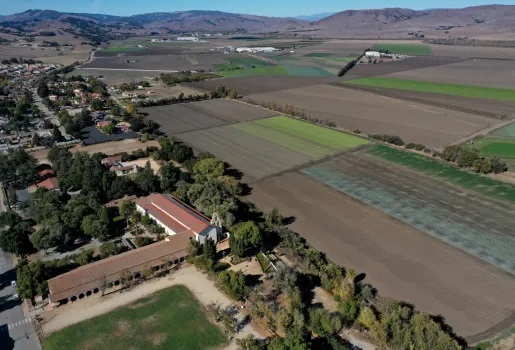
So I wanted to point out perhaps that in some cases contamination on the farm can originate from outside of activities that are done on the farm. So a farm could be close to a facility like a military training facility that perhaps used firefighting foam in the past that had high levels of pfas. So the farm is just by proximity impacted.
And so perhaps it's the soil near them or the water that is flowing under the ground or surface water that ends up being the source of impact for the farm.
So you are trying to ask if we grow crops that are uptaking some of these PFAs and you're trying to figure. Your comment was to say that it's not necessarily removing the PFAs, right. If there's a continuous source of PFAS nearby.
So that is true. So if we keep, if the water that is used for irrigation is still high in PFAs, for instance, then any remediation that is being done using crops, for example, might not be successful.
If they had a good candidate that was going to work well, then the other sources might also need to be Kind of removed in some sense. But I think the phytoremediation was the focus perhaps would have been taking up any PFAS that was accumulated in the soil or the soil water air interface for instance. But yeah, I agree. So if they, if the source was irrigation water that is contaminated then there would be a need to reduce the overload overall load going into the farm from those sources if they can manage that.
[00:45:39] Speaker B: So. So we only have a few minutes left and I don't know if this is something that you, you've addressed is what if people are concerned about exposure to these chemicals, Is there anything that they can do to reduce their direct exposure?
[00:45:54] Speaker A: Yeah, so I think we like to point out that as consumers we have a lot of power because sometimes we can drive change, especially if we are informed. So one thing we like to tell people perhaps look at some of your things that you use like a low hanging fruit might be that nonstick pan that you enjoy using for eggs for instance.
So making some decisions that especially if you know of them. So picking products that are not marketed as nonstick. So for example stainless steel cast iron stuff might not have that coating that is PFAS considered to be ptfe.
And then right now I think some products have that starting to advertise and say this is PFAS free or PFOA free. And so trying to just to be cognizant of of your purchases and looking for brands that might not. Sorry, go ahead.
[00:47:02] Speaker B: Yes, clothing a major pathway to.
Because you mentioned repellent, you know, repellent materials and stain resistant.
[00:47:12] Speaker A: It can be especially if the coating that is providing that properties particularly from PFAS products. And so there are also some brands and I'm forgetting the names right now that might be.
They're switching to non PFAS coatings to provide those characteristics for repellents that we look for. So I think consumers can be drivers in this and can also help drive the change in some of the sectors in my view.
[00:47:51] Speaker B: Well, as we, as we finish off our conversation, is there anything else that we might not have addressed that you'd like to tell us about?
[00:48:02] Speaker A: I'm sure there's plenty that we didn't address today. It's a very large topic of investigation. But I think oftentimes when we talk about this topic, especially for people with private water systems, we try to encourage people to do some type of testing if they're concerned about PFAs. So if you are on private water system and you're like ah, I'm located near a potential PFAS source, then the only way to truly know for sure if you're in an area that you are suspecting to be of PFA like potentially impacted is to test the water. Testing is relatively still expensive right now, unfortunately. But there are laboratories in different areas that can help test and you can compare your results with standards to see how, how, how they are and if you need to at least treat that water to a certain degree to lower your exposure.
And then for people in private public water systems, I just want to point out that although you might not be your water is already treated and you get water from the tap, you might also be able to find out more from your utility about PFAs. So utilities often send this thing that's called as consumer confidence reports, so ccr. So these are sent in some cases on an annual basis. They're required to do that and they will tell you a variety of how your water is trending over time. And they will also tell you in some cases if they are exceeding the required thresholds.
So this might be particularly helpful for people whose states have already implemented some kind of standard and they can tell you that so we are meeting this standard for pfas. So it's a way to either just learn what your utility is already doing because they are doing something already. They're either monitoring to figure out what's their levels and also trying to figure out how to manage this source, this source of water to lower the PFAS levels.
And then another thing I wanted to point out is wastewater utilities or wastewater treatment plants, they might be at the forefront right now with regards to challenges with PFAS impact just because they are considered a source of PFAs. But let's work with our utilities because they are not the producers of PFAs. They are indeed recipients from us, from our home states, but also from the communities that they are serving as a service. So I just wanted to point that out because it's such a challenge for some utilities figuring out what to do now when they in some cases public outcry for some of their byproducts.
[00:51:07] Speaker B: Good thing to think about and no. Dr. Faith Kabuya, thank you so much for being my guest on Sustainability now.
[00:51:16] Speaker A: Yeah, thank you for having me. I've enjoyed talking with you on this relatively challenging topic, but I welcome your readers to explore more about PFAS from their extension resources or just scientific studies that are being published right now to stay informed on the topic.
[00:51:34] Speaker B: You've been listening to a Sustainability now interview with Dr. Faith Kabuya about perfluoroalkyl and polyfluoroalkyl substances commonly known as pfas, as well as forever chemicals, which have become ubiquitous in the environment and are being found almost everywhere in soil, water, plants and bodies. Faith Kabuya is a Water Resources Extension Specialist in the Department of Ecosystem Science and Management and the Institute of Energy and the Environment at the Pennsylvania State University.
If you'd like to listen to previous shows, you can find
[email protected] sustainability now and Spotify, YouTube and Pocket Casts, among other podcast sites. So thanks for listening, and thanks to all the staff and volunteers who make K Squid your community radio station and keep it going. And so, until next every other Sunday, Sustainability Now.
[00:52:35] Speaker A: Good planets are hard to find now Tempered zones and tropic climbs and run through currents and thriving seas, Winds blowing through breathing trees and strongholds on safe sunshine shine.
Good planets are hard to find. Yeah, good plan.