[00:00:08] Speaker A: Good planets are hard to find out. Temperate zones and tropic climbs and merge through currents and thriving seas.
Winds blowing through breathing trees and strong ozone, safe sunshine.
Good planets are hard to find. Yeah.
[00:00:36] Speaker B: Hello K SQUID listeners. It's every other Sunday again and you're listening to Sustainability Now, a bi weekly case good radio show focused on environment, sustainability and social justice in the Monterey Bay region, California and the world.
I'm your host, Ronnie Lipschitz. Everyone talks about the climate, but no one does anything about it. In recent months, parts of Maui were nearly washed away by Kona lows that dropped 46 inches of rain.
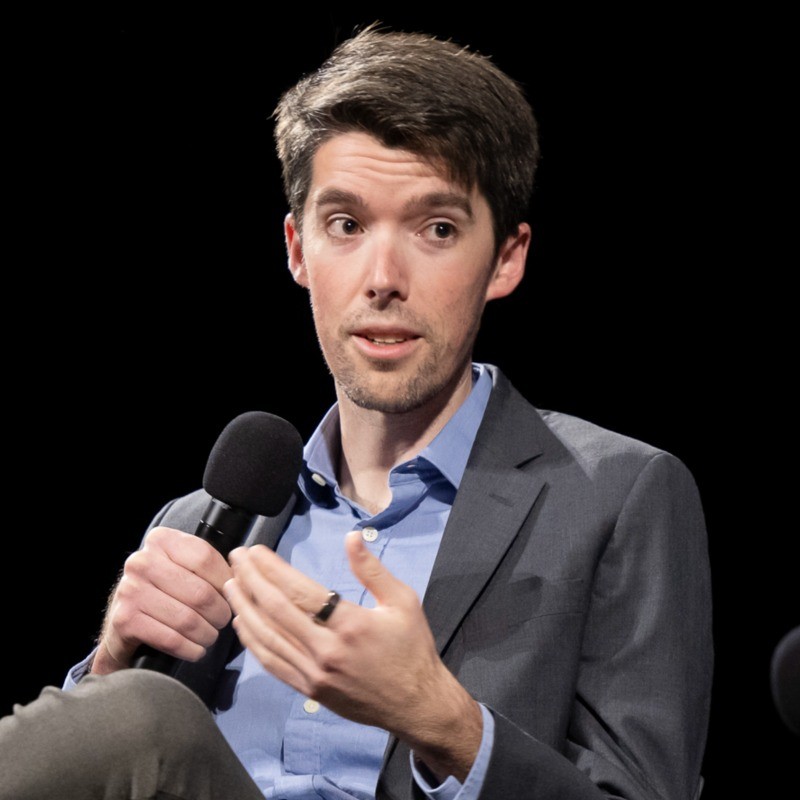
Tropical cyclones on both sides of the equator have been bringing up cold water to the ocean surface and sending heat toward the poles. And now we've been promised that a new El Nino is building up in the Pacific Ocean and it's likely to be a record setting one. And there's more. Are you having trouble keeping track of all of these phenomena? My guest today on sustainability now is Dr. Daniel Swain, a weather and climate scientist with the University of California at Agriculture and Natural Resources Division. He's the go to guy when journalists need someone to explain the latest climate research and findings. Swain engages extensively with journalists and other media partners, serving as a climate and weather science liaison to print, television, radio and web based outlets. Dr. Daniel Swain, welcome to Sustainability Now.
[00:01:51] Speaker A: Thanks for having me.
[00:01:53] Speaker B: Why don't we begin with you? You're a climate scientist at the UC Agricultural and Natural Resource Div, AKA ucanr. Why is a climate scientist working for ucanr? How did you get there and what do you do there?
[00:02:09] Speaker A: Well, it is actually a fairly long, long story. Whether it's interesting or not, I'll leave for the listener to decide. But the short version really is that I, in the course of studying the weather and the climate, I am actually both a weather and a climate scientist. My background is in meteorology. I have an undergraduate degree in atmospheric science from UC Davis as well.
But as it turns out, you know, a lot of my work actually is very public facing. It is talking to people about weather and climate and then coming back to the scientific world, the academic world, and saying, okay, what are the most relevant unanswered questions with respect to extreme weather and climate change and natural hazards and disaster risk and things like that and sort of bringing that to bear not only in the research that I do, but in the research I'm trying to convince the rest of the academic community to pursue as well in the interest of public benefit. So believe it or Not, I guess the official categorization of my career stage is mid career. But at this point in my career, the UCANR feels like a home that I didn't know was the right place to be all along. In the sense that, you know, I have such a strong public facing component in my work. I speak to hundreds of journalists every year. You know, you know, I'm engaging constantly on social media and having in person events in public in California and around the country. And it just seems like that sort of the, the extension, the knowledge extension part of the University of California system just turns out to be a very logical place to be for me personally.
[00:03:43] Speaker B: How did you get there?
[00:03:44] Speaker A: Yes, well, as I mentioned, a fairly long time ago I was at UC Davis as an undergraduate student. I got my degree in atmospheric science, thinking I wanted to be a federal meteorologist. So to work as a forecaster for the National Weather Service, for example, I of course didn't end up doing that, but at some point along the way realized with some, with some input and insights from some mentors in the field at the time that, you know, there obviously at this point, you know, we were already talking about climate change. It was already clear that it was a big problem, but we were sort of at that point still in, in this era of even climate scientists saying we can't draw any clear links between extreme weather events and climate change. And that was kind of a blanket statement at the time. And I just thought that was both probably not true, and I think most scientists knew it wasn't true, but felt their hands were tied by methods and statistical significance and evidence.
But I think that since that time we've seen kind of a transformation in that part of the field where it really is very clear that climate change has affected actual individual extreme weather events that many of us have experienced, that other people have experienced, and is continuing to do so with greater frequency and amplitude as that warming continues. And so I think I was sort of an entrant into the field right at the moment when that question became a potentially scientifically tractable one. I thought that was very compelling both intellectually and, you know, in terms of the societal impact of understanding extreme weather and how it's changing in a warming world and actually also know understanding it scientifically and also getting the word out and then doing something about the implications. And so that led me to get a PhD at Stanford InterSystem Science, which then led me to UCLA to do some postdoctoral training precisely on these kinds of things and worked there for a number of years.
And in the process I also have an affiliation with the National Science Foundation, national center for Atmospheric Research. Lots of long names here, so that's a weird business card, but that's in Colorado. And I actually live these days in Boulder despite the UC affiliation. And I actually have since 2018. So I'm in California frequently. I'm often in Davis or the Bay Area or various parts of Southern California. But I also have an office and a desk at NCAR in Boulder. And so I wear a lot of different hats. Those are only some of them. There's even yet more, but I won't belabor the point there too much.
[00:06:24] Speaker B: Well, I mean it's a contradictory moment, isn't it? The evidence is accumulating and I want to talk a bit about that. But the current administration seems to deny, want to deny that reality more and more. And I seem to recall that there was a proposal to zero out NCAR's budget. Is that correct or am I wrong about that?
[00:06:45] Speaker A: You're right. Really. This has been. For whatever reason, weather and climate and disasters have been a major focus of the current federal administration.
Of course there have been many targets of the current administration, but that notably has been one of them.
And yes, NCAR remains today at considerable threat of being dismantled. This is an unresolved tension. One could call it a crisis because NCAR kind of is the Global center for Atmospheric Research. I mean it's kind where a lot of the knowledge we have today about weather and climate and disasters and hazards and how to mitigate them and how to understand them arose over decades since its formation in the mid 20th century. I mean, this is an institution that's been around at this point since the 1960s contiguously and has grown since then and has never before had an existential threat to its existence in its entirety of that period. And of course there have been lots of different presidents, lots of different ideologies of presidential administrations over that period, period. But it's only now that this globally renowned institution is seriously at risk of being dismantled for what I think is fair to say overtly partisan political reasons. I mean that's the given reason. The given reason is not, this is inefficient, they're not doing good work, this is not beneficial. The argument is that it is essentially weather and climate science is viewed as being in the current administration essentially too left leaning, just ideologically the concept of extreme weather incline.
[00:08:19] Speaker B: Do you get harassed or have problems with, with this? I mean, do you know you're being there and doing this work? Is this becoming a problem in terms of, you know, your ability to do it.
[00:08:31] Speaker A: I mean, I think it's interesting that in the 2020s, anybody with any level of public visibility whatsoever, and I do end up in the newspaper and on TV fairly often, it just is a target of all sorts of weird and concerning correspondence and you should, you should see my email inbox. But yes, I mean, I think the difference now this year and last year is that some of that does come directly from the federal government. I mean, they're, you know, the White House press office has issued a couple of statements about me personally in, in their comment on my comment that where they bring up my personal campaign contribution history, for example, or my perceived ideologies just on the basis of my public appearances. So yes, that's not normal. I mean, just to really re. Emphasize, not only is that not normal, but that's deeply concerning, not just because of the personal targeting, but what it's presumably intended to achieve, which is not only a chilling effect, but it actually goes, you know, beyond that. It's not really veiled at that point. It's pretty overt.
[00:09:34] Speaker B: Yeah, well, I hadn't intended to ask you about that, but, but that's, you know, it's interesting to hear from somebody who was in, in the thick of things. In March, the World Meteorological Organization, which is a branch of the UN, issued the State of the Global Climate 2025, which included a whole set of metrics and indicators. Some were rising, some were falling. What's the gist of that report?
[00:09:59] Speaker A: Yes, well, the, the one sentence summary of that report and of recent reports that have been similar is essentially that anything that's positively associated with warming, meaning that it increases with warming, is increasing. Anything that is decreasing with rising temperatures is decreasing. So specifically, the number of extreme heat waves, the Earth's average temperature, the temperature of the oceans, the amount of energy, the amount of heat accumulating in the oceans, all of those things increasing, some of them increasing, by the way, at an increasing rate. So that's acceleration.
Things that are decreasing.
Well, anything that relates to ice, for example, the continental ice sheets, Arctic and now also Antarctic, which was not the case until the current decade. Sea ice decreasing as well.
Wildfire, smoke emissions increasing, terrestrial carbon storage in some of these boreal forests decreasing. So, you know, these, these reports do paint a pretty stark picture of where we are. And I think to scientists, these annual reports are never really that surprising in the sense that we know already that we're headed in all of these directions and that all of these things are happening. But I think that sometimes, you know, the fact that in a lot of cases we are breaking these records year on year, or at least breaking a new one, you know, every couple of years as we progress toward warmer and warmer temperatures and you know, the Earth system, large pieces of the Earth system and by which I mean, you know, all of the spheres, the atmosphere, the hydrosphere, the cryosphere, the biosphere on Earth, you know, some of them can behave somewhat linearly where you perturb it a little bit and it changes a little bit up to a point. But many of them have inbuilt intrinsic thresholds somewhere along the line where you, then you keep pushing it a little bit more and a little bit more and eventually you do reach a point where the system's response is no longer incremental. And the challenge is we often don't know exactly where those thresholds lie. We know that they're there in a lot of these systems somewhere and we have maybe some general sense of where they might lie. But in a lot of cases we don't really have any idea whether we're butting right up against them or whether they're still a little ways off. And I don't find that uncertainty, I think, reassuring at all.
It just means that we might not know until we've actually passed one of these in retrospect, when things start changing even faster. So all of it is in context, you know, neither dramatically surprising given the science as we've known it the last 5, 10, 15 years, but also, you know, we have not yet bent that carbon curve in the way that we need to really, to really stem the tide.
[00:12:39] Speaker B: Well, that's I guess, the notion of tipping points. I never quite know how to regard them, but given sort of in broad terms. The Potsdam Institute for Climate Impact Research recently published an article showing that global warming has accelerated significantly in recent years. And my question is, are we starting to approach some kind of global tipping point with this?
[00:13:04] Speaker A: So I think this is a, this is a bit of a fraught topic. I mean there's a lot, there's a lot of commentators in this space. And I think one of the real challenges here is that from my perspective, I think a lot about risk, I think a lot about what we might call in the statistical risk management world, tail risk, meaning risk in the rarefied upper echelons of a statistical distribution, the really thin, narrow part that you don't experience often, but often by virtue of being rare and uncommon, they are actually very large, high impact types of situations. And I Think a good example of this is, and I often use this because the numbers are actually somewhat equivalent to one really concerning tipping point that's in the news a lot right now, which is the North Atlantic overturning circulation. This huge global current system centered mainly in the Atlantic Ocean that sort of regulates global climate, keeps Europe, you know, 5, 10 degrees warmer than it would be otherwise, and helps move energy all around the planet. And there's some concern that this system could significantly slow down or even collapse. The Hollywood overly dramatic version of this is that the Day After Tomorrow type movie. Now that's obviously not a realistic depiction, but that is the sort of, the kernel of something that sort of is what is at stake there right now. The range of legitimate scientific estimates from people who have studied these systems is that the range of likelihood of that critical climate system collapsing, which if it did, would be utterly calamitous everywhere in the world because it would, it would result in even more rapid climate change. But climate change in opposite directions in some regions, Europe would get dramatically colder. Other parts of the Earth would get dramatically warmer. Very quickly is somewhere between like, you know, 1% and 30 to 50%. I mean, that's a huge range of uncertainty, right? And a lot of folks, I think the consensus is mostly on the lower end, but there are some people who really do study this who think it's a lot higher.
So first of all, that's a good example of how uncertain this is. And there's general consensus that there can be tipping point behavior in the system if you give the system a big enough kick. But essentially some scientists believe that even with the worst case warming scenarios, we're nowhere near big enough kick. And there's some scientists who believe we're nearly there at our current warming level already.
But my point is this.
Even if the odds really are something like 1 or 2% at the low end of that estimate from some, from some scientists over the next 50 to 100 years, the consequences of a really low probability event matter a lot. Now, if you think there's like a 2 to 5% chance that it's going to rain today, you might be strongly inclined to leave the umbrella at home, right? I would. I'm a meteorologist. I'm going to leave the umbrella at home and count on my, my, my degree there.
But that's mainly a function of the fact that the consequences of you being wrong are low. I get wet and it's, and that's the end of it, end of story. If you were to be, you know, you're boarding a plane or something and you're informed at the boarding door that there was a 98% chance that you were going to make it to your destination safely, would you be very reassured even though there is 98% chance nothing will go wrong? I would not get on that plane. Right, that 2% because the consequences are very high, even though the probability is equally low. And so that's the way I think about some of these things. Things is that it would be very alarming if the odds were 30 to 50%. But even if they're 2%, this should still be something that informs our priors and our risk management strategies and should give us a little bit of pause. And there's a lot, one really dramatic specific example. But there are so many things like that. I mean everything from, you know, the Amazon rainforest to the ice sheets, the risk of a really big flood in California to extreme wildfires, all of these things kind of exist along that spectrum of ordinary versus extraordinary risks. And the notion of tipping points may or may not be relevant for some versus others, but at least in some places it is and there's a lot of uncertainty in it. But with all of that said, there isn't really a singular global tipping point. So there isn't a geophysical amount of warming, any earth relevant amount of warming anyway. You know, in the next few thousand years that would suddenly result in the Earth looking completely different or would result in a sudden increase in the rate of warming itself. In other words, a self reinforcing or a positive feedback. So far as we understand the science, which is actually there's, there's very high confidence in this. But there are individual pieces of all of the Earth systems that do have tipping points that could still be very bad and we don't want to breach them. And so all of that said, it does look like the recent rate of warming is faster than the rate of warming before it. But also that's not really unexpected. Unfortunately this was exactly what we thought would happen around the mid-2020s. Because unfortunately we're continuing to emit more and more greenhouse gases into the atmosphere. And also ironically, because we've actually made more progress with another kind of pollution, aerosol pollution, the kind of soot in the atmosphere that would block out some of the sunlight was actually offsetting some of the airstrip warming that was coming from those greenhouse gases. Well, we're still pumping out ever more amounts of greenhouse gases, but we actually are cleaning up the air in terms of aerosols globally. And the irony here is that we've actually increased the rate of warming partly because we solved one of those pollution problems before the other one and we solved the one that was partially offsetting the larger warming from the greenhouse gases. So we did sort of see this coming. We did expect that around a quarter way through this century we were going to start cleaning up the aerosols and we'd see, see that additional warming effect on top of the greenhouse gas related warming effect. And indeed it looks like that's what we're seeing. There's some questions as to whether the recent rate of warming is even faster than we should have expected from that. But I think at this point what is true is that mathematically the current rate of warming is faster than before. But what is less clear is whether that's actually something that is surprising given predictions even from 15 or 20 years ago.
[00:19:20] Speaker B: It's time to take a break, but I want to talk, come back and talk about three things. One is to address the risk question briefly. The second is the question can you get a cascade of, let's say, tipping points? If the Atlantic circulation were to, to break down, would that potentially trigger a whole set of other changes that would accumulate into something much more significant?
And then this aerosol question, because I'd like to come back a little later and talk about geoengineering. You're listening to Sustainability Now. I'm your host, Ronnie Lipschitz. My guest today is Dr. Daniel Swain who works at the national center for Atmospheric Research and the University of California Agricultural and Natural Resources Division and is the go to guy these days for people who want to know something about what's going on with the climate. And we've just been talking about several different things. I wanted to pick up the topic of risk because two things, you know, what you're talking about sounds a lot like the, the efforts to model nuclear reactor performance. Right. And to model the potential accidents that might happen. And one observation is that the accidents that happen are always things that weren't taken into account in the original modeling. They're usually, I, I don't know, maybe black swans is the right term. It wasn't something that anybody really thought about. So that's just an observation that of course there's always the possibility, I suppose, of something turning up that nobody really thought about. The second thing is that I recently did hear a talk about tails and climate and it was a kind of interesting presentation because the distribution of risks changes as the climate changes as well. And then there's that cascade question. So start with the risk. Yeah, we can proceed.
[00:21:16] Speaker A: Yeah. And you know, I, as I, as I said earlier, I do spend a lot of time thinking about risk and talking about risk. I have lots of conversations increasingly with insurance companies and their data providers. Because if there is an industry that is predicated on correctly assessing risk, it is insurance and reinsurance. That is, that is the entire business model. Because, because if you overestimate it, you lose your clients. If you underestimate it, you go out of business because you have to pay out more than you're taking in. And so you really do actually have to be brutally honest about what the risks are to remain viable in that world. So it's always interesting to hear the insurance industry perspective on risk. But I think, yes, I mean, in general, I have in the past also invoked this nuclear design analogy because this, that, that and actually commercial aviation are both domains where very unlikely events cause almost all of the actual dangerous things that have happened and all of the hypothetical ones. And really the key in mitigating them has historically been being circumspect and essentially using your imagination to think about the myriad ways that things can go wrong in ways they haven't gone wrong before.
Because usually in a reasonably well engineered system, right, you've built safeguards in whatever context to protect against the things that you know can go wrong, have gone wrong in the past, not always, but in general and with aviation safety, the way this has worked historically, and this is the reason why, you know, there are other issues with aviation, but in general, you know, it is a very safe way to move from point to point. And that's partly because it's an industry that's really learned its lessons and has actually taken failures of the past, including really just tragic, weird things that have happened in terms of mechanical failures or personnel or whatever, and put into place very specific procedures to avoid that particular scenario, as well as ones that could stem from it from happening again. So really using your imagination and with nuclear safety, that was partly why the early nuclear era had so many accidents and so many radiological contaminations, is that this was an era when that, that was not neither a priority nor, nor a practice. And I think one of the more interesting recent examples for anyone who followed it, following the great quake, I believe is 2011 in Japan, the Fukushima Daiichi nuclear disaster. There, that power plant survived an earthquake that was significantly more intense than was believed to even have been possible. So it was so over engineered from a shaking perspective perspective that it would have been totally fine if that's all that had happened. But it was, you know, the black swan, or as I'll tell you in a moment, the gray swan. Sort of the really unanticipated piece of this was a hundred foot tall or more tsunami. This was not a huge tsunami. This was a record breaking extreme event. It was so far beyond what had been modeled to be possible that this tsunami came in and then switched swamped the emergency backup generators in the basement and there was no longer any way to cool the reactor core. It was in some ways the most frustrating way to have a nuclear disaster because it literally was just because they ran out of gas at the power plant. I mean literally. But it was because the secondary hazard, the tsunami, hadn't been adequately anticipated because they were up on like a 50 or 60 foot coastal bluff. Like surely this is enough for any foreseeable tsunami. And in this case it was so extreme that in fact it was not. And you know, that's the kind of problem that we run into sometimes in natural hazards world and how it intersects with human society and the engineered and built environment, is that if you only use your historical priors, and really in most places in the world, we only have a direct written historical record that is detailed in that kind of way, going back a couple hundred years in some instances, or oral traditions that can be relied upon to go back further, farther, or in a few parts of the world there's written traditions that go back, but we don't really have a snapshot of what thousands of years of even non climate changing nature can throw at us. We just have a snapshot from the past century or so at best, which is not enough to anticipate these really extreme tail events. And the problem of course is that in a warming climate, as you alluded to, the tail events are not what they used to be. Whatever the tail events of the 20th century were, the they're not like that today.
And especially when it comes to anything meteorological or earth system related.
So too it's true that the shape of the distribution in many cases is changing as well. So we often have this sort of, this mental model and I even have used figures like this for simplicity, where you sort of have a bell curve and it kind of shifts left and right along some axis of temperature or whatever. And you get this, you know, but the notion being that, well, it's the same distribution statistically of temperatures historically, but shifted up by a few degrees, and that's global warming in a nutshell. It works okay for some variables in some context. But the challenge is it's actually not true for many relevant variables. And it becomes less true, in fact, the farther out into the tail of the distribution you go, you start to see some wonky behavior, some nonlinear effects. And exactly how that looks depends on the variable and the hazard in the context. But. But yes, and this is a problem because a lot of our built world, our engineered world, which is essentially everything we rely on, our homes, our businesses, our roads, our bridges, our water pipes, our electrical distribution, everything is predicated on a certain set of design standards that are again, predicated on a climate that existed at one point when that infrastructure was designed and built and does not exist anymore today. So, you know, that's, that's a, that's a challenge for sure. Oh, and I said I was going to differentiate between gray swans and black swans. There is an interesting paper from a research group at MIT that studies hurricanes that differentiated between what? Black swans. This notion of completely out of left field, unforeseeable extremes that have huge consequences specifically because they blindsided us to such a large degree. They were unforeseen because they were essentially unforeseeable with prior knowledge. But then there's this class of events that is more like gray swans.
They're still swans, they're still dark in color, but they're not unseeable in the dark of night. If you really think about it. If you concatenate various other tail events you have seen, or if you use your imagination a bit, you extrapolate a little beyond what your previous experience will tell you. Events that perhaps should have been foreseeable in retrospect, from the information you did already know, they were not completely out of left field. They were not completely unforeseeable. They were merely unforeseen.
And this is, you know, this is applied in that particular paper in the context of extremely intense hurricanes occurring in very unusual places like Dubai, for example, which has no history of tropical cyclones, but does have extremely warm water, which is the fuel source for hurricanes right up against its shores.
So just an example of how. And I think that's a useful frame for all of this. And it's a lesson that in all of this, you know, it turns out that using your imagination is an important asset in this, in this risk, in this risk world, but also that often we're quite confident, maybe overconfident in our understanding of the range of what's possible in any number of geophysical or hazard design realms. And I think that that, that can translate to a certain level of hubris that can be dangerous if we don't acknowledge that, you know, it's one thing to say we can only afford to build it to the standard, and we realize that things can go beyond this, but we're making a conscious decision that there's some level of acceptable risk. I think that's a much more reasonable decision to make, actually, than to say we're going to build it to this level and nothing is ever going to exceed it. Which you might think would. You never hear that from an engineer. But I've heard it many times from engineers designing life critical stuff. And so I think that that's, you know, that's. That's an increasing point of tension too. And then to talk about the Cascades, which is somewhat related to that, actually, this, this notion of being circumspect about what's possible in the Earth system that we do not. We incompletely understand, and we have predictive tools that are amazing and also woefully inadequate at the same time, depending on the context.
There's a lot we still don't understand about the way our world works. You know, obviously we know that the Earth is warming. We know why it's warming, which is to say the increasing accumulation of greenhouse gases. And we know a lot about what that means in macro, global regional scales. But there's also a lot that we really still are struggling to understand in terms of how these different Earth systems, these, the hydrosphere, the biosphere, the land surface, the atmosphere interact and the oceans, cryosphere, you know, they're constantly exchanging fluxes and flows of quantities. And, you know, whether it's nutrients or momentum or temperature or information even, I mean, there's just this constant flux and flow going on in ways that we are still working to understand. We understand it better today than we did 50 or 100 years ago, of course, but, you know, at 50 years from now, I think we're going to understand it a lot better than we do today. And the reason I emphasize that level of uncertainty is that, you know, sometimes we play around with these models, these predictive models for these systems, and you perturb things, right? So the way you might test a question about, for example, the Atlantic overturning, circulation slowing down or suddenly collapsing is you have to do something. You have to give it a big artificial kick somehow. And the way that a lot of scientists will do this is they'll just magically inject. Because you can do this in a numerical model because you're essentially a magician. Just put it gazillion tons of cold, fresh water Right in this part of the North Atlantic where it would need to be sinking. And this would sort of prevent that circulation from occurring. So saying, well, we don't really know what would cause this. Let's just say this happened and shut down. Or for the Amazon rainforest, you know, you just keep, and I've even, you know, this was something I did in graduate school, built a toy model where you incrementally take more and more and more moisture away from the Amazon rainforest, or incrementally add more and more deforestation to this critical rainforest in the tropics that gets a lot of its moisture from recycled water. So the moist winds blowing from the Atlantic, it rains in the forest, the forest transpires, the tree canopy puts that water back into the atmosphere, it forms thunderstorms, it rains back. And so there's moisture recycling. So you either get rid of some of that initial moisture and you have less recycling, or you get rid of the trees through deforestation or drought or whatever and you then lose the straws in the soil to actually do the transpiration. So either one, and eventually you reach a point in your model where the forest starts to die back and then you stop getting the rain. But the question is, do you need to lose 90% of the forest or only 20%? Does the rain need to decrease by 10% or 60% for this to happen? And it's really, it really matters what the numbers are, because if it's the lower end of that, we are going to get there. If it's the upper end of it, we might manage to squeak by. And it's like this with everything, you know, it's like this with all these tipping points. And the problem as you mentioned, is that some of them are cascading. If you do have a big shift in oceanic current systems and it could actually be other current systems other than the North Atlantic, but that's just the one, you know, that's in the news right now. Then yes, you probably would then have concatenating effects where that could result in large scale shifts to toward drought in the Amazon, which could trigger the tipping point there. Or if you have a sudden change in the ocean circulations, it could cause certain continental marine terminating glaciers in the Antarctic to suddenly collapse and that would suddenly increase the rate of sea level rise quite dramatically. We know that in the Arctic, you know, we have, we have the boreal, the permafrost in the high latitudes in the Northern hemisphere that is thawing and it is releasing carbon as it does so, which of course the release of carbon is going to result in more warming and therefore more thawing. And so some people claim, you know, some people will be very worried about some of these and talk about runaway warming like the carbon in the Arctic, for example, the thaw, and that somehow this is enough carbon to not only somewhat augment the amount of warming already seeing, but just cause it to self, in a self perpetuating way, accelerate beyond and beyond. And it just does not appear that that's the case. I mean, it's a good thing. It's not because, because that would be even worse. But it still is not good that once you give the system a kick, it does in some parts of it want to continue more aggressively down that path. It doesn't mean that it's self perpetuating, but it means it takes that much more active human intervention and active human effort to bring us back down to where we need to be. Because instead of being able to take the slow and easy path toward reducing carbon emissions, it means that we really have to be quite aggressive with it if we're going to out pace these, these, these Earth system feedbacks that might otherwise kind of perpetuate the warming longer.
[00:34:17] Speaker B: What color swan was Hurricane Harvey?
[00:34:20] Speaker A: I'm not even sure that was gray. I think that was just maybe a dappled swan with some, some darker coloring in the sense that it was, it was really just a relatively ordinary hurricane that sat in the same place for a long, very, very, very, very long time amid bathtub warm water. So it brought together both the known risks from the past and a new flavor from climate change. Because in this, in warm ocean basin regions like the Gulf of Mexico, it's, you know, rising temperatures increase the amount of water vapor that's in the air by about 7% per degree Celsius, 4% per degree Fahrenheit of warming. And you know, the Gulf of Mexico at times recently it's been about 3, 4 degrees Fahrenheit above average. So you do the math, you know, and you're talking about 15, 20% more moisture, but not just on one day. It's over the days that it sat over Southeast Texas. And so then you start to accumulate that additional 15, 20, 25% of potential rainfall. And then you put that entire volume day after day after day in the same place and you can start to see how it's done kind of this foreseeable combination of known historical hazards. A slow moving tropical system near warm water, near, you know, in a very flood vulnerable place. Houston is an infamously flood flood, vulnerable location, and then supercharging it, right? Saying like, let's take the worst historical scenario and then add 25% more water volume to it. And, you know, that's, that's, that's what happened essentially. So I don't, I think that, you know, I'm not even sure that's on the grade of Black Swan scale, really.
[00:35:58] Speaker B: It's weather, not climate.
You're listening to Sustainability now. I'm your host, Ronnie Lipschitz. My guest today is Dr. Daniel Swain, a climate and weather scientist with the University of California and the national center for Atmospheric Research, when we've just been talking about swans, colored swans, and the likelihood of cascades in terms of changing phenomena associated with climate. Daniel, I want to get to El Nino. The story on the streets is that we're heading for an off the charts El Nino. And I'd like to hear your thoughts about that. But before that, maybe you can explain briefly for our listeners who may not know or may have forgotten what El Nino and La Nina are.
[00:36:44] Speaker A: Yes, this is definitely the buzz of the month, maybe of the year in terms of global weather and climate, California and beyond. I actually just had a nearly two hour live stream on YouTube. I do these virtual weather and climate Office hours on YouTube to talk with people. It's part of my public engagement role as part of the UCANR to talk about exactly this. So if you're interested in the, in the 95 minute version of this, go over YouTube and check that out. But in a nutshell, El Nino is periodic warming of the eastern tropical Pacific Ocean. That is literally what it is. El Nino is defined as anomalous warmth in the surface ocean in the eastern tropics of the Pacific. And now that might sound kind of esoteric and head scratching as to why everyone gets so up in arms about it, but the reason it matters so much is the Pacific, and in particular the tropical Pacific as an engine, a driver of global climate change in a pretty profound way. And El Nino represents a large change in the state of things relative to how they usually are. So typically, there's very warm water in the western tropical Pacific. The western tropical Pacific is much warmer than the eastern tropics because due to various relatively technical reasons, there is upwelling. So cold water rising from beneath in the eastern tropical Pacific Ocean near the Galapagos Islands west of Peru, and there is not in the west Pacific. So the tropical sun and the accumulation of warm water is kind of constant in the west Pacific and the East. You still have that Warm tropical sun, but it's constantly being counterbalanced by this cold, nutrient rich water up underneath. That's actually why the Galapagos are such a biodiversity hotspot, it turns out.
[00:38:30] Speaker B: Let me intervene here for a moment for our listeners. Remember that the eastern Pacific is off the west coast of the Americas and the western Pacific is off the eastern coast of Asia. And it's always confusing to hear those terms.
[00:38:44] Speaker A: Yes, that is true. So essentially, Pacific in the tropics is warm near Indonesia and cold near Peru. That's sort of the geographic anchor to the typical state of things. El Nino essentially is this differential largely levels out where warm water from the west essentially sloshes to the east. And I use that term somewhat figuratively, but it's also kind of literal because in the typical state of things, tropical easterly winds allow the ocean surface to be sloped by about 2ft. So the Western Pacific Basin is about 2ft higher than the eastern Pacific. So, you know, over those thousands of miles, there's about 2ft of gradient that are held in place by the constant east to west winds that push some of that water and keep it to the west. El Nino occurs essentially when those easterlies weakened for a variety of reasons that are a little bit complicated. Some of that warm water literally does slosh east. But the other thing that happens is when those easterlies weaken, that the upwelling near the coast of Peru also weakens. So not only do you get some warm water actually moving from west to east across the basin, it takes weeks for this to happen, of course, but it does eventually get there. But also you lose the cold water source locally coming up from beneath. So you have two different mechanisms driving warming. That's El Nino. La Nina is actually the opposite, by the way, which is where the easterlies strengthen and further accentuate that sea surface slope, further accentuate the temperature differential, making the west even warmer and the east even cooler. But the reason it really matters ultimately is because it certainly has large local and regional effects, as you'd expect, where the water temperature can be 5 or 10 degrees warmer off the coast of Peru, that's quite a lot. But the global effects come from the fact that the tropical Pacific drives global weather patterns. The ridges and the troughs in the atmosphere, the high pressure systems, the low pressure systems, where they are, how strong they are, the position and strength of the jet stream, all of these things are driven in part by perturbations to mid latitude wind patterns from these big tropical thunderstorms. And really, the point is, El Nino shifts the longitude of where the big tropical thunderstorms occur in the Pacific, normal conditions that are occurring in the the west. El Nino conditions are actually occurring closer to the central or even the eastern Pacific. And that just is like ripples in a pond that ends up affecting weather in California and all around the world. Because essentially you're shifting where you're dropping those pebbles in a pond, so you're still having that, you know, that radial pattern of ripples emanating outward, but it's from a very different location. And so you're going to have very different effects. The other thing that El Nino does is it unearths a lot of heat stored in the subsurface ocean. So in fact, that essentially appears to be El Nino's function from an Earth system perspective is it is a temperature release valve for heat content stored in the tropical oceans, which of course is increasing over time as global temperatures increase over time. So as we go through time, these big El Nino events have the potential to release even more and more stored heat from the oceans into the atmosphere where it gets redistributed all around the world and eventually radiates out to space. At least most of it does. Hopefully this is why this year is potentially a big deal, because it does right now look like we're almost certainly headed for El Nino of some magnitude. And in particular, and this is why it's really, I think to me, especially interesting for California. It does look like we're probably headed for a strong, if not very strong one.
There is a reasonable chance of what has colloquially been called a super El Nino event, meaning sort of this top tier historical, you know, one of the top five kind of historically observed El Nino events. We could well end up in that territory by not in the next couple of months, but by the time we get to fall, that could be what we're looking at. There's still some uncertainty, but you know, that looks like that maybe where we're headed this year and that does profoundly affect global climate. It will result in global average temperatures that are probably record breaking late in 2026 and 2027 will probably bring a new all time global temperature record once again. That often happens on our stair step global warming pattern where the La Nina years are kind of the years where temperatures level off and then the El Nino years may spike to a new record level and then they level off during La Nina and then the next El Nino it spikes up to an even higher new record. That's kind of how we're experiencing global warming actually.
So there's global climate implications. There's, you know, record breaking global heat, probably later this year or next year, record breaking global hydroclimate extremes. Because globally speaking, extreme downpours of rain and droughts and wildfires are driven in part by the expanding atmospheric sponge effect. This notion that a warmer atmosphere can both hold more water vapor when it is saturated and also evaporate more water whenever it isn't saturated, which is essentially in a place like California more often than not.
And so, you know that between that and the shift of the weather patterns, you know, it's, it's potentially pretty consequential. And in California, you know, there's been this back and forth in recent years.
2015, 2016, you may remember, was another big El Nino event that did not deliver big rains to California, despite predictions that it probably would. I do use the word probably intentionally here because there's never, you know, it's always a shift in the odds. It's never a guarantee of anything even at that point. Point. But some folks, including some scientists I think, who should know better, have taken that N equals one example and said, oh, El Nino doesn't matter as much as we thought it did. You know, that one failed. So we can't possibly say what the next strong El Nino event might bring. And I just want to remind folks that I just don't think that's true. Based on the evidence that we have, it is true that El Nino is but one factor in California's winter climate, that it certainly isn't the only thing that drives wet or dry years. And also it's true that if we have a weak or moderate event, it really doesn't tell us very much. Other factors can certainly override it in importance. But if we do end up having a strong or especially a very strong event, then the failure essentially of 2015, 16 doesn't change my priors at all regarding the likelihood that this winter will probably be, if we end up in that territory, a wet one for much of California and the south, which, you know, again, can be a blessing or a curse. California is not in a severe drought right now, but the interior west certainly is. The Colorado Basin certainly is, and this would actually be good news for them.
But also it would increase the risk of significant flooding if we get a strong event by the time next winter comes around. So, you know, it's, it's, it's a mixed blessing in that sense. But, you know, there's a lot of moving parts.
But it does look like this year could be particularly consequential this is not your ordinary El Nino forecast. It does look like there is a real potential for something extraordinary. And as we were talking about earlier, you know, I'm somebody who thinks about risk and the tails and, you know, the upper end of the distribution.
What we know a big El Nino event does is it means we're living farther out in the tail later in 2026 and 2027. So it doesn't guarantee anything in particular, but it does widen the range, I think, of what is possible both locally in California and globally.
[00:45:58] Speaker B: How might it compare to 82 and 83?
[00:46:02] Speaker A: Well, no two El Nino events are alike, even strong ones. And we've had, depending on which one, we're talking about, you know, 30 to 40 plus years of global warming since then, which is. And that effect is considerable because we've actually had more global warming over that period by a significant degree than the degree to which El Nino increases temperature temporarily. So believe it or not, as profound as those effects were in those big El Nino years, the global warming effect on its own is still larger. But we have not experienced an 82 or 83 like, or a 97, 98 like El Nino event with global temperatures this warm, with this much energy in the climate system in modern human history.
And so we would expect the effects to be different, but also more accentuated. They may actually be similar in terms of the pattern for to those events because the magnitude of this event could end up being quite comparable to those ones potentially. Again, we're still early, but that is right now what the forecasts are looking like. But with, you know, an additional degree centigrade of global warming. And remember, you know, that that right off the top of things increases, you know, the amount of moisture in the atmosphere by around, you know, 7% or 10% or so, depending on which period of time we're talking about. That's a lot of extra moisture, a lot of extra evaporative drying potential, a lot of extra energy potentially to work with.
So I think, you know, that's one reason why, why weather and climate scientists are so focused on this potential right now because, you know, it could be very consequential. And again, it's still a forecast for now, but the forecast is consolidating in a direction that continues to suggest as we get closer to the event actually materializing and peaking, that it could very well be a big one.
[00:47:56] Speaker B: I mentioned earlier this proposal to dam the Bering Strait in order to, I guess, reduce the flow of cold water back into the Pacific. What do you know about it. And what is the logic behind such a proposal?
[00:48:12] Speaker A: There have been any number of large scale geoengineering and by large scale I mean just extraordinarily orders of magnitude larger than any physical infrastructure that's ever been constructed on Earth. And also at the bottom of the ocean kind of proposals in recent years to ostensibly stabilize various parts of the potentially unstable Earth system in a warming world. We've heard similar proposals too. So this one presumably is to sort of dam the Bering Strait and I guess prevent the sort of the exchange of warm water from warmer oceans to the Arctic hot, somehow preserve the Arctic coolness artificially. There have been similar proposals to build giant underwater dams under the marine terminating glaciers in the Antarctic, which would be an even more extreme project because right now we can't even get a single ROV to go under there without crashing.
There have been other plans to you know, put I don't know how many thousands or millions of tons of glass beads or microplastics directly into the Arctic Ocean to minimize the, the rate of energy loss.
The reason I'm emphasizing these as sort of flights of fancy is really that's what I think they are. I mean they're interesting thought experiments. Somebody once proposed building a 3,000 foot wall in the Great Plains stretching 2,000 miles to prevent tornadoes by essentially preventing the Gulf of Mexico moisture from ever making it west of a certain longitude in the U.S. these are the kinds of like toy model projects you might have a graduate student try and run just to sort of get them to learn how to build was weird things in toy model land. But these are not realistic proposals for the actual planet that we live on. And so while they're interesting kind of as a sensitivity experiment, scientifically saying what if you damned the Bering Strait? That's an interesting scientific question. The answer is it would change a lot. It would change ocean currents, it would probably change global climate as well. You're permanently changing the exchange of moisture and energy through a key conduit. I think my, my point is that we'll do anything but the obvious thing that will definitely work, which is actually address the underlying problem of global warming. And the way we do that is by quickly, as quickly as we possibly can, bringing down and eventually essentially zeroing out net carbon emissions. I mean really that's, that's the answer to the problem.
And you know, I appreciate there's folks doing interesting studies on these huge geoengineering projects to sort of try and offset pieces of it, but it really to me strikes it really does strike me more as a flight flights of fancy than anything that's remotely practical, desirable, or tractable. And would they work is almost irrelevant because it's such a dramatically extensive kind of terraforming project that would, you know, be harder than just dealing with the actual problem at hand.
[00:51:07] Speaker B: People are always looking for silver bullets, single silver bullets. I guess we're just about out of time. Is there anything that you would like to, to mention that we haven't covered?
[00:51:18] Speaker A: You know, we've covered actually a remarkable number of topics. And in this hour, you know, I think I would just remind folks that the atmosphere and its interaction with all our systems should also be a source of awe, hopefully for people, as well as concern about disasters and hazards and things that can go wrong and extreme events. I mean, that's partly why I am in the field. I also want to constructively help people and make things better and avert harm and reduce risk. But also, I just think the atmosphere is genuinely fascinating, you know, and there are other parts of the Earth system, right? If you're a geologist and you study mountain ranges or something, that's cool, too. But no geologist is ever going to live to see the evolution of a mountain range, right?
But a meteorologist, atmospheric scientist, you do get to look out the window and see things changing hour by hour, day by day. And that's, you know, to me, that's, that's pretty cool.
[00:52:16] Speaker B: Well, Dr. Daniel Swain, thank you so much for being my guest on Sustainability Now.
[00:52:22] Speaker A: Thanks again for having me.
[00:52:23] Speaker B: You've been listening to a Sustainability now interview with Dr. Daniel Swain, a weather and climate scientist with the University of California Agriculture and Natural Resources Division. He's the go to guy when journalists need someone to explain the latest climate research and findings.
Our conversation covered the coming El Nino and the effects of global warming on the Earth's oceanic and atmospheric systems. You can find the long version of Swain's El Nino presentation by searching online for the phrase rising odds. A very strong El Nino event in 2026. What might it mean for the US west and the rest of the world? If you'd like to listen to previous shows, you can find
[email protected] SustainabilityNow as well as Spotify, YouTube and PocketCasts, among other podcast sites. So thanks for listening, and thanks to all the staff and volunteers who make K SQUID your community radio station, and keep it going. And so, until next, every other Sunday, Sustainability Now.
[00:53:33] Speaker A: Temperate zones and tropic climbs through currents and thriving seas and winds blowing to breathing trees strong O Zone and safe sunshine.
Good planets are hard to find. Yeah.